Last updated November 18, 2026

Free written scope consultation - allowances, timeline, and change-order rules on paper before a single trade is scheduled
DIY vs Professional Bathroom Remodeling: What’s Safe to Do Yourself
Painting a bathroom vanity is a reasonable weekend project. Moving a drain 18 inches is not, and the difference between those two decisions can be a $12,000 subfloor replacement. That gap exists because bathroom failures are rarely dramatic. They are slow. A shower membrane installed backward does not leak the day you finish it. It seeps for eighteen months behind a tile wall until the subfloor gives and the joist below it shows rot. This guide draws the DIY line by task and by reversibility, not by confidence. We’ll separate what is genuinely safe to handle yourself, what sits in the gray zone, and what opens your wall cavity to water. For Arlington homeowners, the stakes are practical too, because how a bathroom project is permitted, inspected, and insured in this city affects what your policy covers when something goes wrong.
Quick Answer
In a bathroom remodel, painting, hardware swaps, mirror installation, and swapping a vanity without moving plumbing are genuinely DIY-safe. Tile backsplashes and vanity replacements that touch existing supply lines are a gray zone, manageable for a careful homeowner. Anything involving wet-area waterproofing, drain or supply relocation, or new electrical circuits in Arlington is contractor-required, because those tasks fail invisibly, trigger permit and inspection requirements, and can void portions of a homeowner’s insurance if done unpermitted.
Styles & brands we work with
- Kitchen remodeling
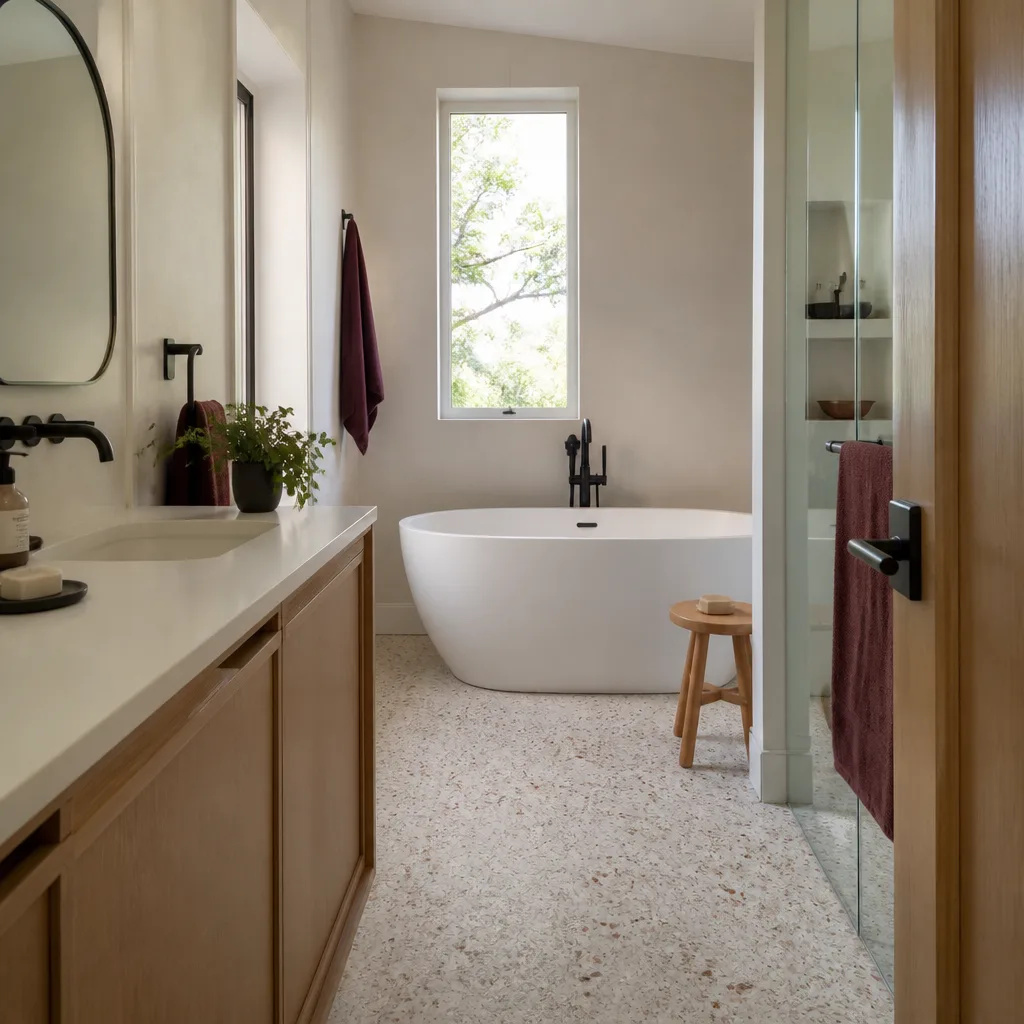
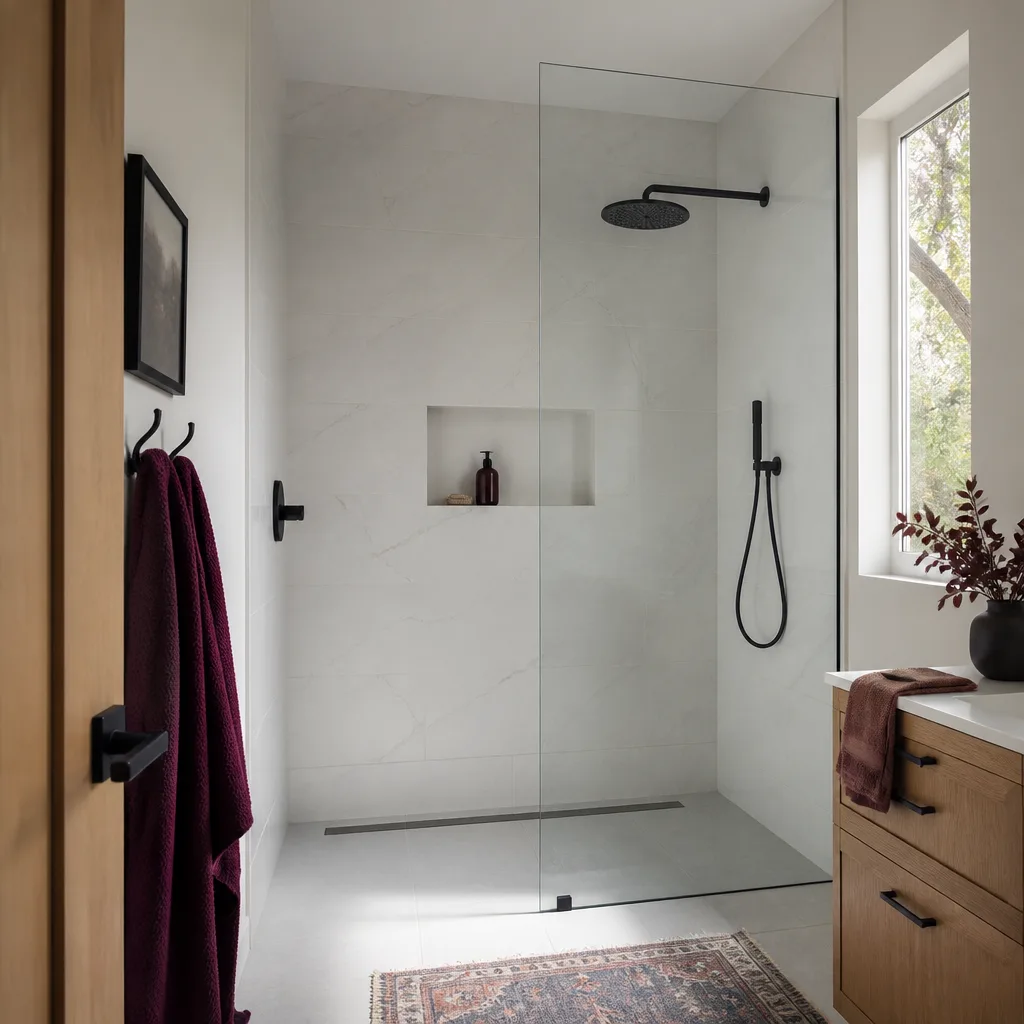
- Bathroom remodeling
- Home additions & ADU
- Roofing
- Windows & doors
- Driveway & pavers
- Fence
Table of Contents
- The Reversibility Test: Why Most DIY Advice Gets It Backward
- Task-by-Task: What’s Safe, Gray Zone, and Contractor-Required
- Waterproofing: The One Failure That Costs Thousands Later
- Arlington Permits and Why They Matter Beyond Safety
- The Liability Gap Most Homeowners Don’t See
- The Task Almost Every DIYer Skips: Reading the Subfloor
- Where DIY Saves Real Money and Where It Doesn’t
The Reversibility Test: Why Most DIY Advice Gets It Backward
The usual DIY-versus-hire conversation is framed around skill. Can you tile? Can you sweat a copper fitting? That framing misses the actual point. The real question is: if you get this wrong, how long until you know, and how much does it cost to undo? A crooked outlet cover reveals itself immediately. A back-sloped shower pan with a compromised membrane can sit behind finished tile, quietly wicking water into a stud cavity, for a year or more before it surfaces as a soft spot on the bathroom floor or a bubbling stain in the ceiling below.
That’s why we grade bathroom tasks by three factors, not by whether they look hard:
- Reversibility: Can the mistake be undone without tearing out finishes? Painting a drawer front is reversible. A failed shower pan is not.
- Visibility: Will you see the failure within a week, or will it hide behind tile for two years?
- Consequential scope: Does the error stay local, or does it compromise subfloor, joist, and the unit below?
In our experience across North Texas bathrooms, the underlying construction matters too. Much of Arlington’s housing stock from the 1970s through early 2000s sits on wood subfloor assemblies over pier-and-beam or slab foundations, and the climate swings hard from humid summer to dry winter. That seasonal movement is unforgiving to a poorly bonded waterproofing membrane and to grout lines that weren’t installed over a properly stable substrate. A task that gets a pass in a dry climate can fail faster here.
The key takeaway for anyone starting this guide: lower your skill-based anxiety, raise your reversibility-based caution. A bathroom remodel is a chain of decisions where the invisible ones own the outcome.
Task-by-Task: What’s Safe, Gray Zone, and Contractor-Required
This is the working list we hand to homeowners who ask what they can reasonably take on themselves. The categories are deliberate. If a task is in the gray zone, the right choice depends on your tolerance for the risk described above.
DIY-Safe (low risk, reversible)
- Painting walls, trim, and a vanity or cabinet box (proper sanding and a bath-rated paint matter).
- Swapping hardware: cabinet pulls, towel bars, faucet handles that are cosmetic only, toilet seats.
- Installing a mirror, floating shelves, or a new vanity light fixture on an existing circuit (kill the breaker, verify no power, use the existing box).
- Replacing a shower head and standard shower curtain or glass-on-track door where plumbing is not touched.
- Recaulking around tubs, sinks, and backsplashes with a quality silicone rated for wet areas.
Gray Zone (doable with care, real consequences if wrong)
- Tile backsplash behind the vanity. Manageable, but the substrate and adhesive choice decide whether it holds.
- Replacing a vanity without relocating drain or supply lines: pulling a like-sized unit in the same footprint is a reasonable DIY job.
- Regrouting tile walls that are already sound. Not the same as rebuilding a shower.
- Swapping a toilet in the same flange location.
Contractor-Required (invisible failure, code, or permit territory)
- Wet-area waterproofing: shower pan, membrane, and any bond-break or flashing detail.
- Any drain or supply line relocation, including moving a drain a few inches to fit a new shower.
- New or relocated electrical: GFCI circuits, in-floor heat, exhaust fan ducting.
- Structural changes: removing a wall, moving a load-bearing element, framing a curbless entry.
For larger structural or layout-changing scope, that overlap often leads into our Home Additions & ADU in Arlington work, because a bathroom that gains a closet or moves a wall is no longer just a bathroom remodel. When the scope expands beyond the bathroom envelope, plan it like a small addition.
Waterproofing: The One Failure That Costs Thousands Later
If one task defines the line between DIY-safe and contractor-required, it’s wet-area waterproofing. A shower is a contained reservoir, and the tile and grout are not waterproof. They are a wear surface over a membrane that does the actual sealing. Get that membrane wrong, and the water doesn’t stop at the shower floor.
In North Texas labor and material rates, a redo of a 60-square-foot shower membrane with subfloor repair typically runs $3,500 – $6,000. That figure assumes the failure is caught before the joist damage. When it climbs into structural framing and ceiling repair below, it goes higher. Compare that to what a licensed waterproofing step costs on the front end. This is the single best argument for putting waterproofing in the contractor bucket in Arlington bathrooms.
What the membrane needs to get right:
- Slope: A shower pan has to pitch to the drain. A flat pan holds water at the edges.
- Continuous sealing: Corners, curb, and drain flange transitions are where failures start.
- Flood test: A proper installation holds water for a set period before tile goes down. Skipping the test is like skipping the inspection.
We’ve seen the failure pattern repeatedly in older Arlington homes: a DIY shower rebuild that looked perfect for a year, then a soft thud underfoot, then a bathroom floor replacement and the tile coming off to access the pan. By then the wall behind the shower has usually been wet long enough to show in the paint on the opposite side.
That’s a job that belongs to the contractor side. We can talk through what we’d do in your particular shower so you can compare against any estimate you’re weighing. A bathroom remodel that gets water management right is one you won’t revisit for a decade or more, which is the entire point of doing it once and doing it carefully.
Arlington Permits and Why They Matter Beyond Safety
A common assumption is that permits are bureaucratic. In Arlington, permits and inspections are also how a future buyer, an insurance adjuster, and a title company know the work happened. Plumbing and electrical work that should have been permitted, and wasn’t, creates problems that have nothing to do with safety.
Broadly, in Arlington, major bathroom scope tends to pull permits when it involves:
- Relocating or adding plumbing fixtures and the associated drain or supply lines.
- New or moved electrical circuits, including GFCI for wet locations and vent fans.
- Structural changes, including framing, wall removal, or layout modification.
- Water heater changes and anything touching the gas line.
A like-for-like vanity swap with no plumbing moved and no new electrical typically does not trigger a plumbing permit; anything that opens a wall around plumbing fixtures usually does. When in doubt, call the city’s permit office before you cut, because a phone call is far cheaper than the answer that follows an unpermitted job.
The downstream problems of unpermitted plumbing and electrical work:
- Title and sale: A buyer’s inspector finds evidence of unpermitted work, and the closing stalls while the seller pays for permits or retroactive corrections.
- Insurance: A water-loss claim traced to unpermitted plumbing work is frequently denied or excluded, which brings us to the next section.
- Resale value: A future buyer discounts the bathroom because they can’t confirm it was done to code.
Permits are the paper trail. A contractor pulls them and shows you the signed-off inspection page, which is exactly what our Haven Standard discipline is built around: documentation, not assurances. When we quote a bathroom, the permit plan is part of the written scope. That’s the kind of clarity you want to insist on regardless of size. A smaller project still benefits from the same discipline, the same “measure twice, say it once” posture we bring to something like fence installation in Arlington, where even a modest job gets a written scope and a clean paper trail.
The Liability Gap Most Homeowners Don’t See
Here’s the part that surprises people: the biggest financial risk in a bathroom remodel isn’t the one-time repair bill. It’s the coverage gap. Homeowner’s insurance policies often exclude or limit water damage when the source can be traced to unpermitted or unworkmanlike work. That exclusion can sit dormant for years.
The chain usually goes like this. A DIYer relocates a shower drain, or runs a new supply line, without a permit and without an inspection. Eighteen months later a slow leak finally shows as stain on the ceiling below. The adjuster asks for the permit records and the plumber’s documentation. Neither exists. What might have been a covered water-damage claim becomes the homeowner’s bill for subfloor, ceiling, and mold remediation.
In Arlington’s older neighborhoods, where bathrooms often sit above finished space or adjacent to unconditioned areas, that chain is short.
- Unpermitted plumbing: Water damage claims frequently excluded or denied.
- Unpermitted electrical: Fire claims tied to unpermitted work are a known exclusion area.
- No documentation: An adjuster cannot verify what was done, which is a separate skill from installing a fitting correctly.
It’s not about fear. It’s about understanding that the insurance answer depends on the paperwork that came before the claim. If you’re tempted by the gray zone, ask yourself one question: if this fails, can I prove who did it and that it passed inspection? If the answer is no, keep it out of the DIY bucket or get it done through a permitted, documented process. A written estimate and a documented record are what let a homeowner’s insurance company take the claim seriously.
The Task Almost Every DIYer Skips: Reading the Subfloor
Before any tile goes down, someone should take a moisture meter to the subfloor. Very few do. This is the one step we see skipped in nearly every DIY bathroom, and it’s one of the cheapest to get right: a moisture meter costs a few dollars, and a reading takes seconds.
Here’s why it matters before you set a single tile. On wood subfloor, a reading above the acceptable range means either an active leak (a supply line, a drain seal, a shower pan) or a dry rot condition that a tile layer would seal in. On slab, related moisture problems in older Arlington homes can lift tile and ruin adhesive. Once the tile is down, you’ve hidden the evidence.
A contractor with a documented process takes that reading, records the number, and documents the substrate condition before tiling. That’s part of the photo record, not an optional add-on. A responsible bathroom contractor puts the number in writing. This is a good test to apply when interviewing any contractor: ask what they use to check the subfloor before installing tile, and what number they expect.
Where DIY Saves Real Money and Where It Doesn’t
DIY saves real money on low-consequence finishing. It doesn’t save much when the task is contractor-required, and it can cost more when the failure is invisible. A rough cost picture for a mid-size Arlington bathroom:
- Painting walls and vanity: $100 – $250 in materials, zero risk if you prep correctly. This is real, satisfying money saved.
- Cosmetic hardware and mirror: $50 – $300 in materials, trivial risk.
- Vanity swap without plumbing moved: $600 – $1,500 in materials, modest savings, but a wrong move can lead to a leak at a supply line – worth the exercise in care.
- Tile backsplash: $300 – $800 in materials for a typical vanity wall, with real savings if the substrate and setting method are right.
- Shower waterproofing or drain relocation: where a DIY failure can cost $3,500 – $6,000 or more to undo, the savings put you one mistake away from a much bigger bill.
That last number is the one that puts the whole equation in perspective. A homeowner weighing a $4,000 – $7,000 professional shower rebuild against a $1,000 DIY version has to account for the probability and cost of the redo, not just the current spend.
How to decide in five steps
- Name the task and the footprint it touches.
- Ask whether the failure would be visible within a week (reversible) or would hide behind a finish for months (not).
- Check whether it triggers a permit or inspection in Arlington.
- Confirm whether it involves wet-area waterproofing, drain or supply relocation, or new electrical. If yes, contractor.
- Compare DIY materials cost against the quote’s line-item price. If the difference is under $500 and the risk is invisible, hire it.
Where you are handling low-consequence exterior work and want to keep it in-house, the same logic applies; our Driveway & Pavers in Arlington page covers what belongs on the professional side there. For the bathroom itself, the honest answer is that the visible finishes are yours and the hidden work belongs to someone who will be accountable for the failure.
Common Mistakes to Avoid
- Skipping the moisture reading before tile. Once the tile is down, the number is hidden. Read the subfloor and record it first.
- Treating waterproofing as a product, not a system. A membrane is only as good as its slope, corner detail, and drain seal. A tube of sealer is not a waterproofing system.
- Moving a drain “just a few inches.” In an Arlington home, a small drain shift changes the pan slope and can mean a new subfloor when the leak shows. Small move, big consequence.
- Trusting tile and grout as waterproof. Neither is. Forgetting this one mistake is behind most of the expensive rework we see.
- Doing permitted work without the permit. A future buyer’s inspection and your insurance claim both depend on the permit record, not on how neatly the work was done.
- Buying fixtures before checking the rough-in. A new toilet or vanity that doesn’t match the existing rough-in turns a simple swap into a plumbing relocation.
- Running an exhaust fan that vents to nowhere. A vent fan that dumps into the attic instead of outside creates a moisture problem in a different room.
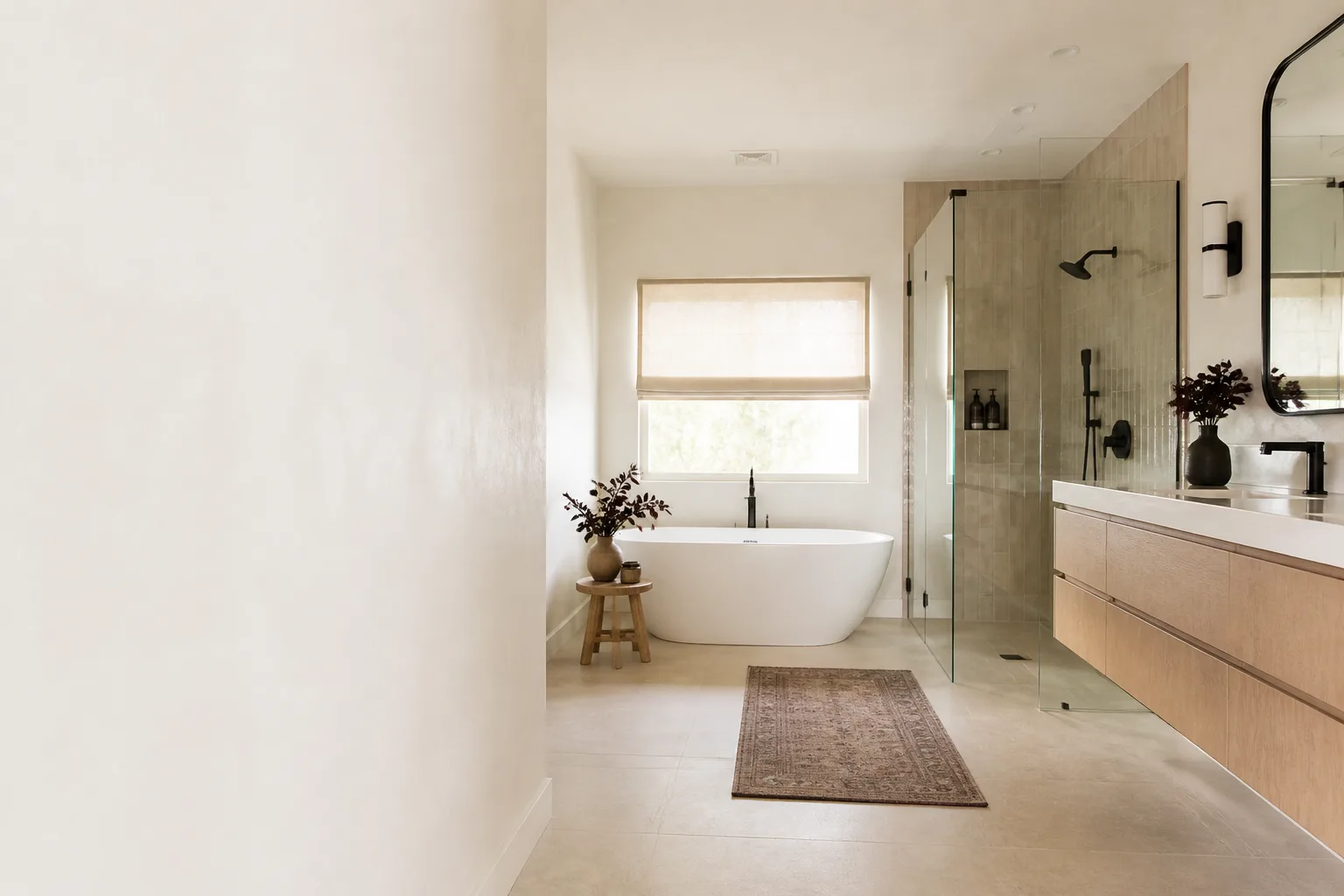
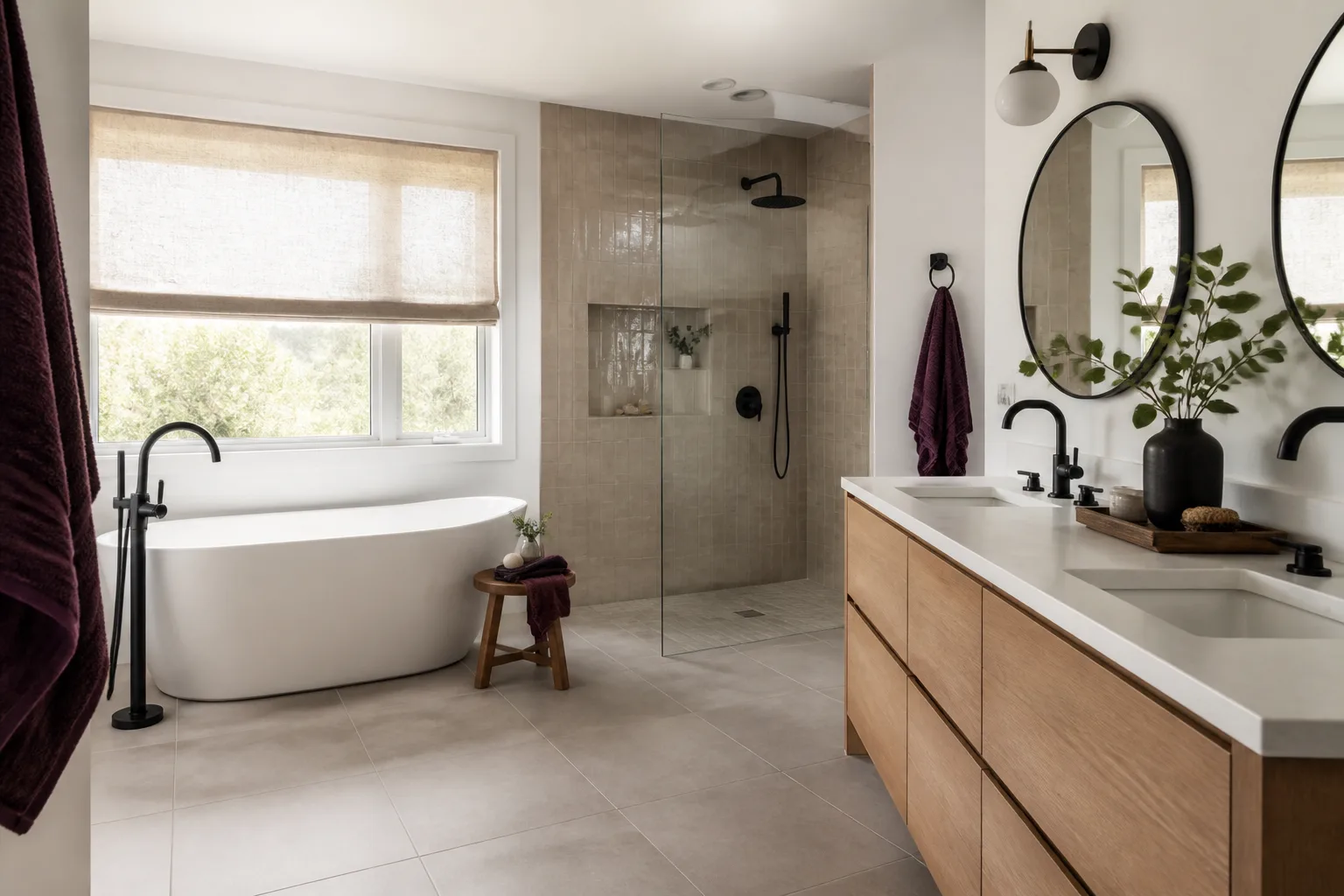
See the difference
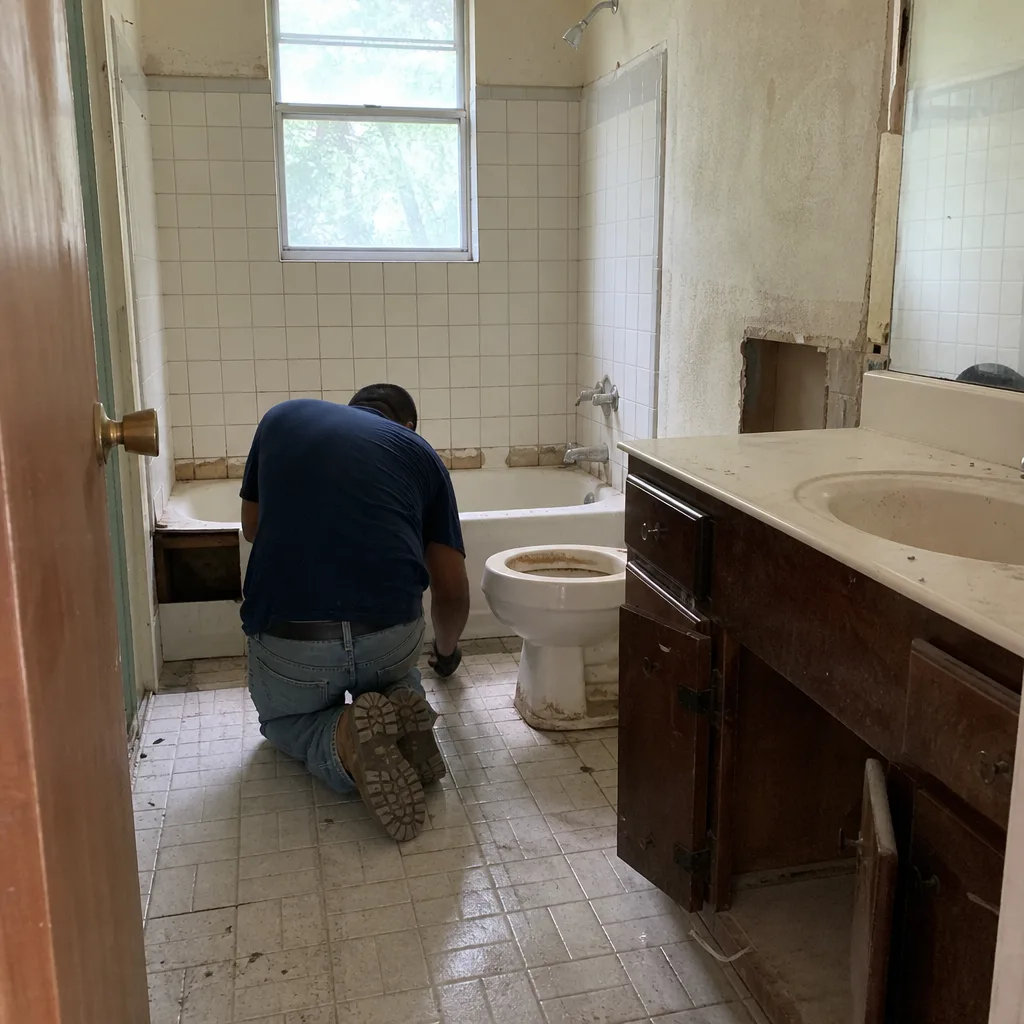 Before
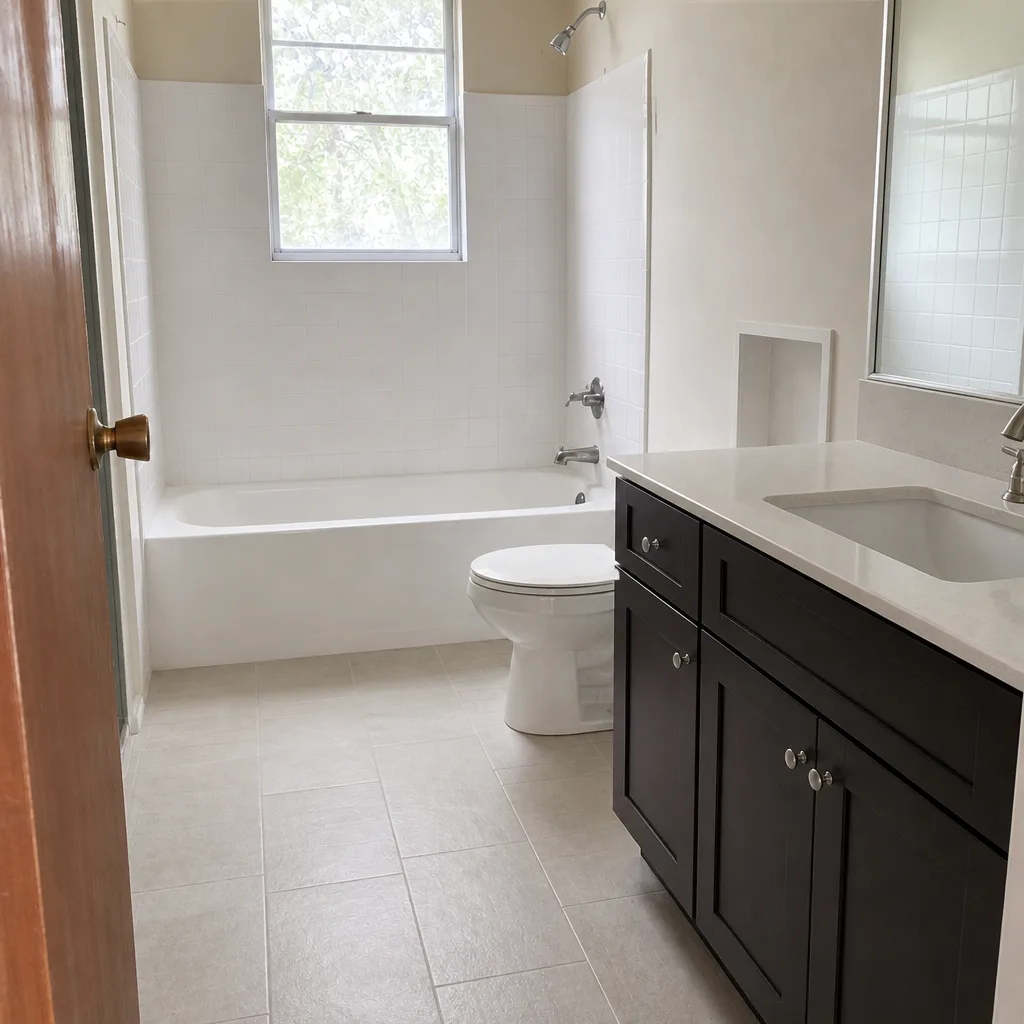 After
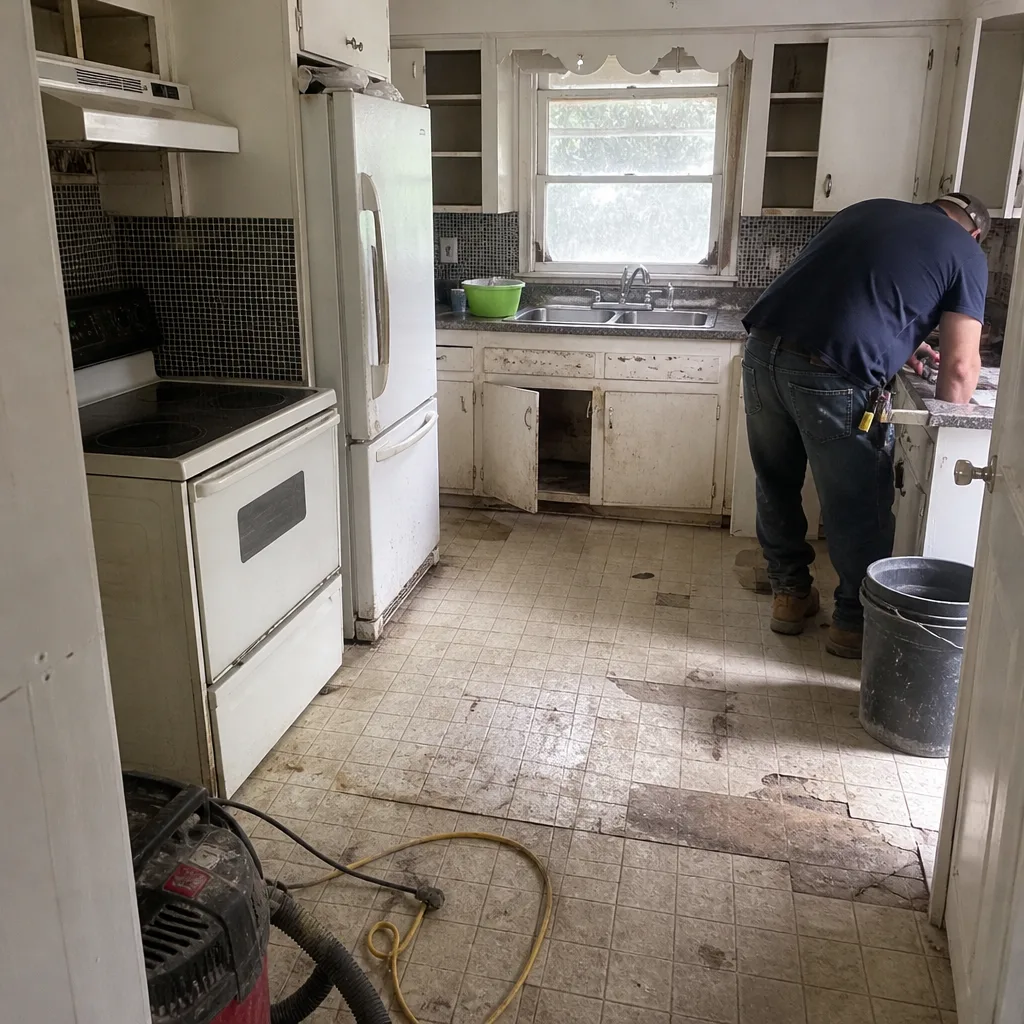 Before
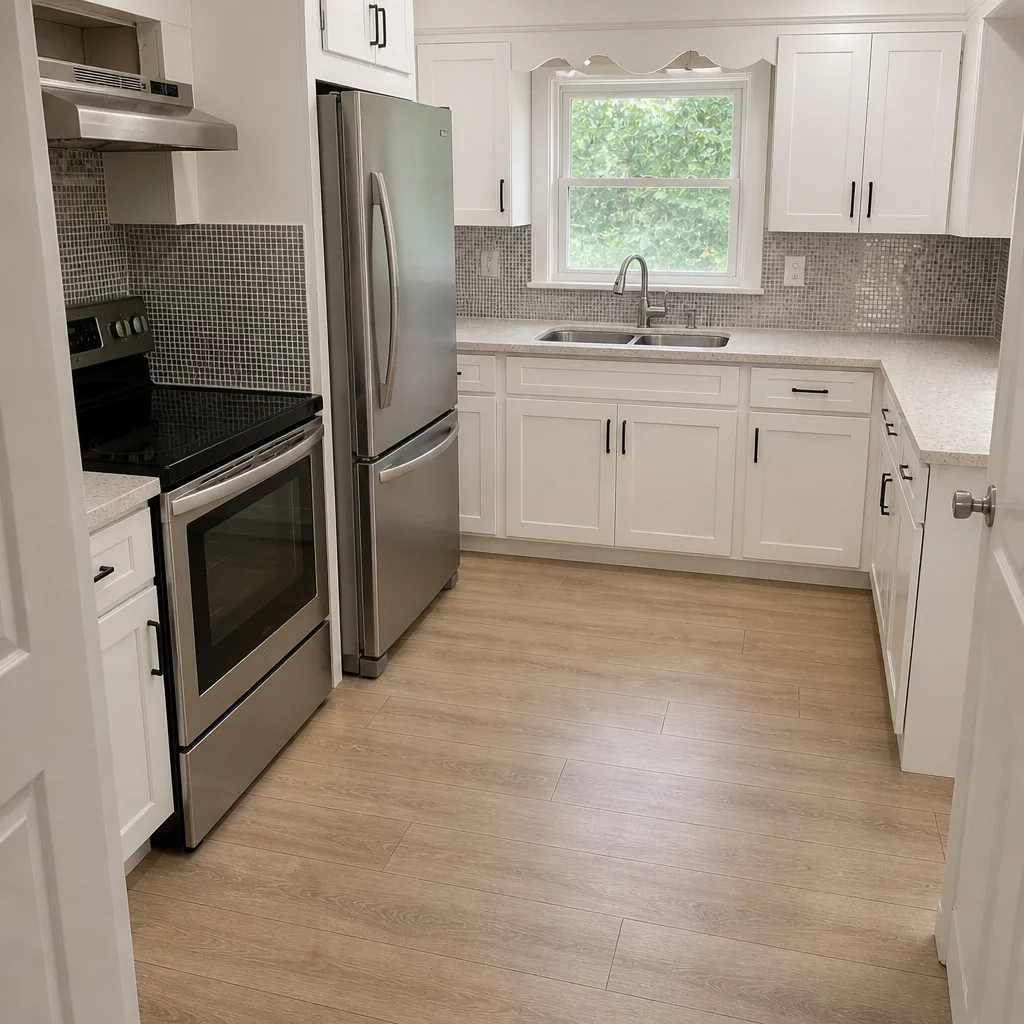 After
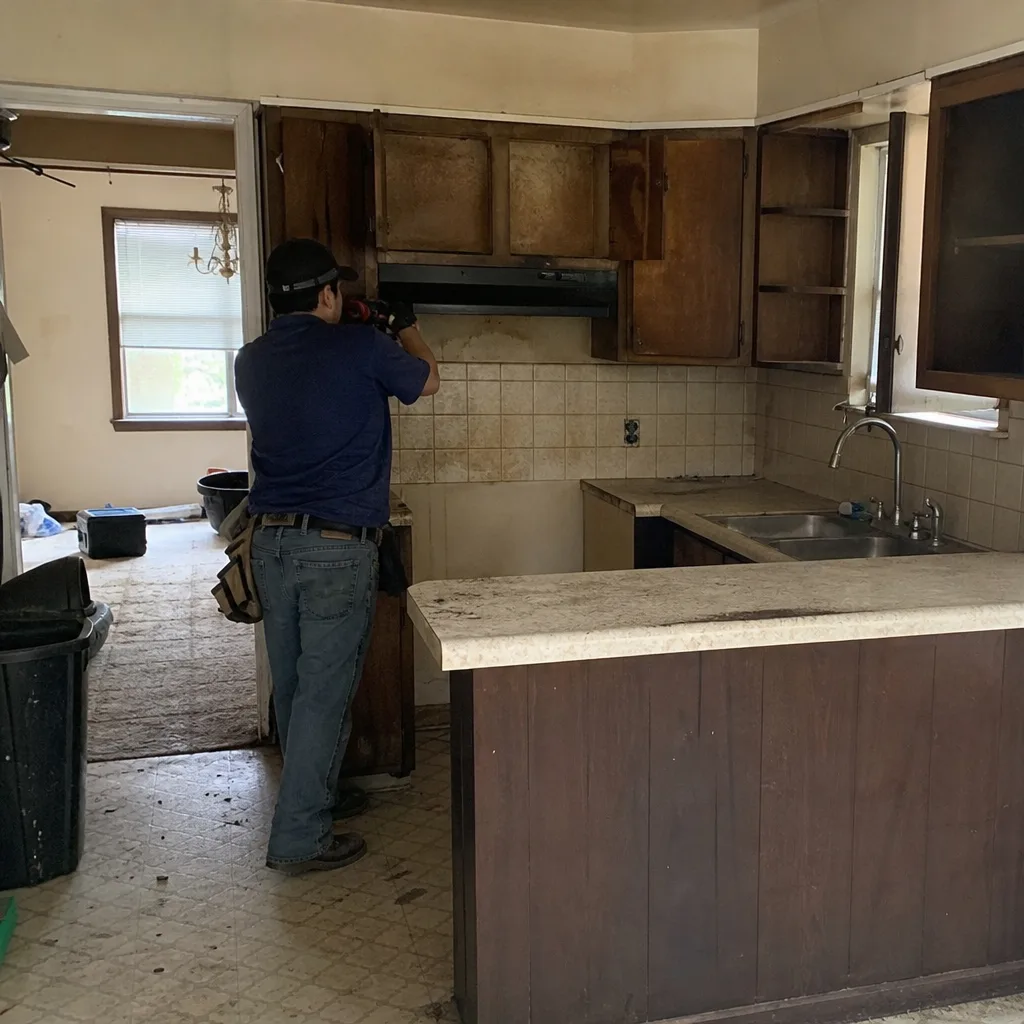 Before
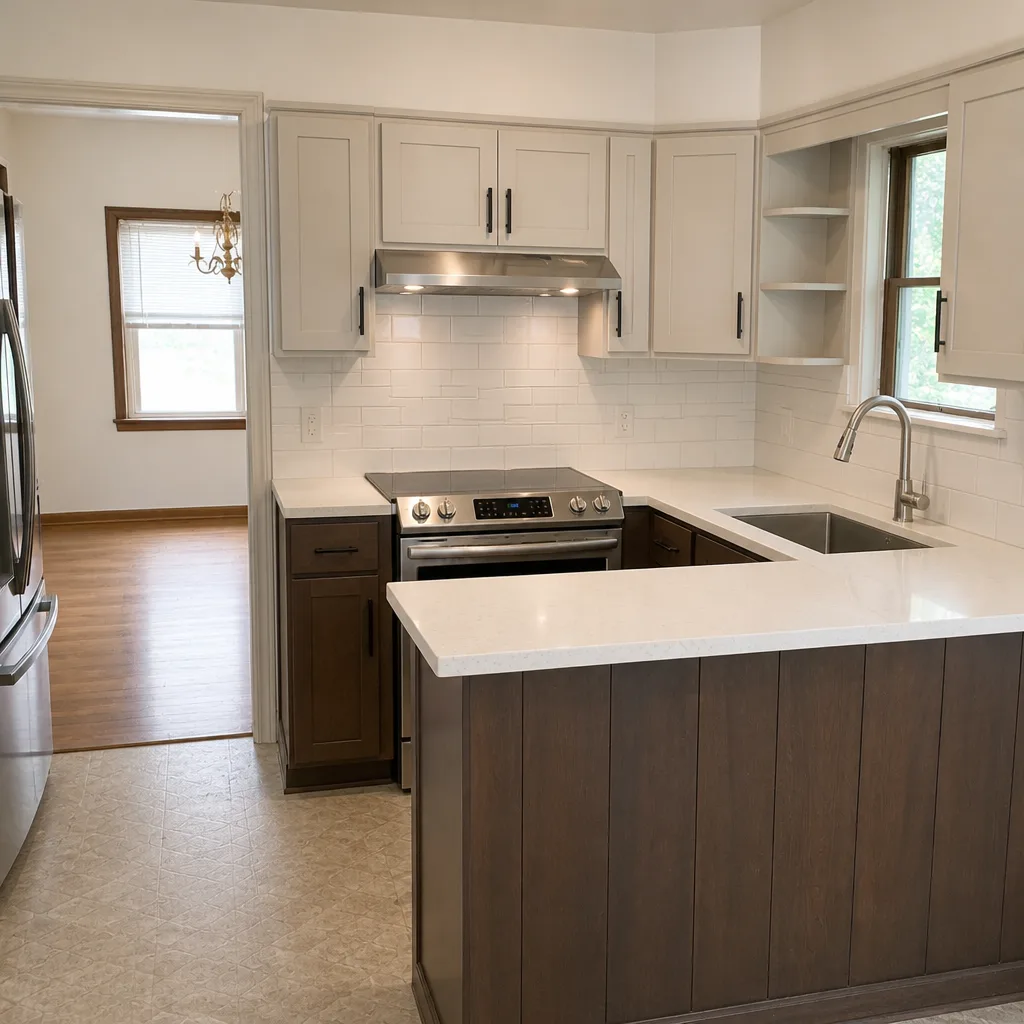 After
When to Call a Professional
Call a professional the moment the scope touches wet-area waterproofing, a drain or supply line move, a new or relocated electrical circuit, or any structural change. Those four trigger the reversible-versus-invisible math, and they are the tasks where an Arlington permit and inspection record is the difference between a covered claim and a denied one. If a mistake would hide behind finished tile, it belongs on the contractor side. Rowan Construction Group offers free estimates in Arlington with a written flat price and a written scope before anything starts, backed by our 365-Day Done Right Promise. Call (844) 761-7521 for a free estimate, and we’ll also give you a no-charge second opinion on any written estimate you’re comparing.
Frequently Asked Questions
Yes, for the low-consequence finishing: painting, cosmetic hardware, mirror installation, and a like-for-like vanity swap with no plumbing moved. Skip the DIY route for waterproofing, drain or supply relocation, and new electrical, because those often need an Arlington permit and can create insurance problems when unpermitted.
In North Texas labor rates, redoing a 60-square-foot shower membrane with subfloor repair typically runs $3,500 – $6,000. If the leak reaches framing or the ceiling below, it climbs higher. That’s why waterproofing is the single best task to hand to a contractor.
A like-for-like vanity swap that doesn’t move plumbing or electrical usually doesn’t require a plumbing permit. Once you relocate a supply line or add a new circuit, you likely do. Confirm with the city permit office before you open a wall, and keep the signed-off inspection page for your records.
Often not. Policies frequently exclude or limit water claims traced to unpermitted or unworkmanlike plumbing and electrical work. The permit and documentation record is what lets an adjuster process a legitimate claim, so permit the work if the scope requires it.
Reading the subfloor with a moisture meter before any tile goes down. It’s a cheap, fast step that reveals active leaks or rot a tiling job would hide. A contractor documents that reading; a DIYer usually skips it.
Painting, cosmetic hardware and mirror installation, caulking, a shower head swap, and regrouting sound tile are all genuinely safe. Tile backsplash and a plumbing-free vanity swap sit in the gray zone. Everything wet, hidden, or structural goes to a professional.
If you want a second set of eyes on your scope or a competitor’s estimate, our Rowan Construction Group Arlington home page and a free call are the place to start. We’ll review a written estimate line by line at no charge, so you know exactly which of your planned tasks is worth doing yourself and which one is worth hiring out.
The Bottom Line
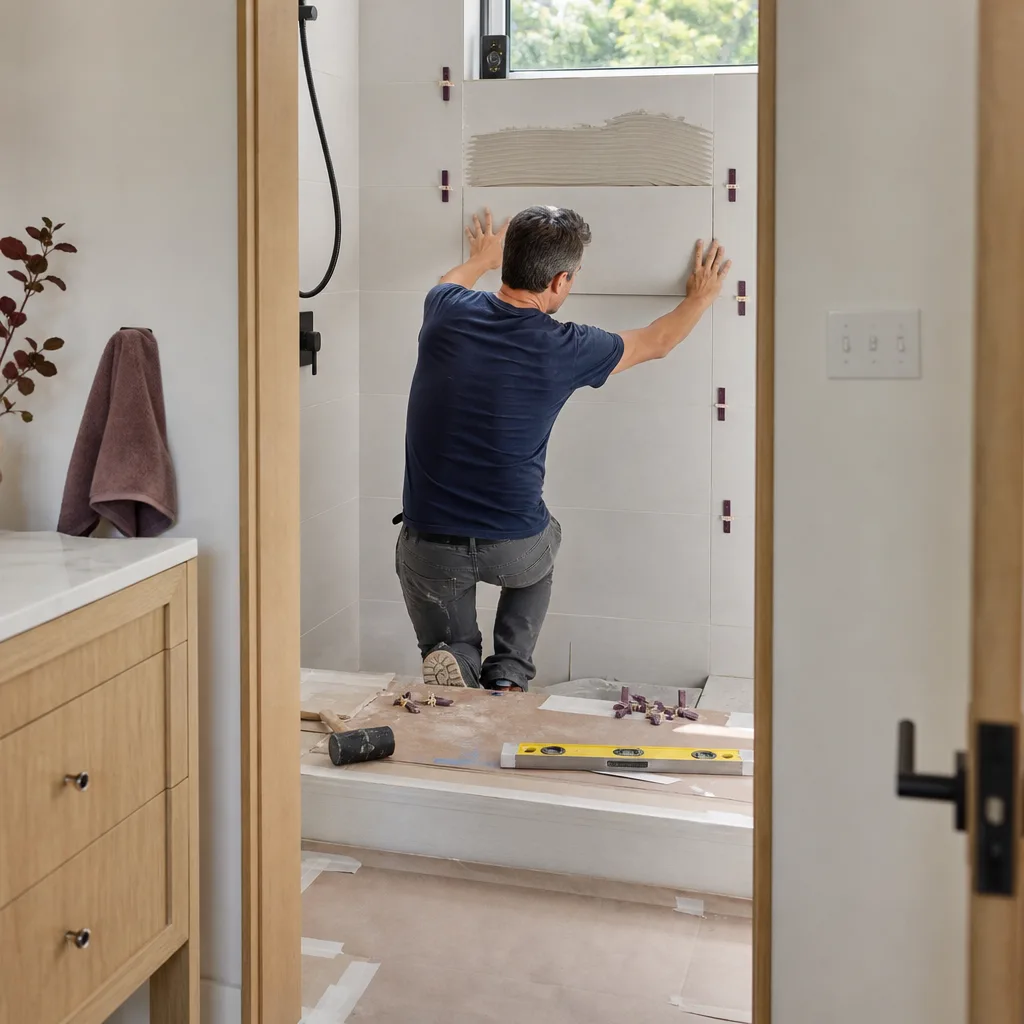
DIY the finishes, hire out the hidden work. Painting, hardware, and dry-area installs save real money with low risk. Waterproofing, drain and supply relocation, new electrical, and anything structural carry invisible failure modes, trigger Arlington permit and inspection requirements, and can leave the homeowner holding a water-damage bill insurance won’t cover. The reversibility test settles most decisions you’ll face. Use a moisture meter before any tile, get a written price before any work starts, and if a failure would hide behind a finish for a year, let a documented professional do it.
Rowan Construction Group brings seven trades, a written flat price before work starts, and signed change orders to every project, standing behind business days and a 365-Day Done Right Promise on the finished result. Call (844) 761-7521 for a free estimate and a free second opinion on any written quote you’re weighing.
Written by the team at Rowan Construction Group Arlington.