Last updated November 18, 2026
Free written scope consultation - allowances, timeline, and change-order rules on paper before a single trade is scheduled
DIY vs Professional Fence Installation: What’s Safe to Do Yourself
Here’s the number that surprises most homeowners: a gate post set just a half inch out of plumb at installation will hang a gate that drags on the ground within about 18 months as the post settles into North Texas soil. Fixing that isn’t a hinge adjustment. It means pulling a post set in cured concrete and starting over. In our experience around Arlington, the fence failures we see three years out almost never trace back to the panels. They trace back to the four precision tasks underneath them. This guide walks through which parts of a fence build you can safely handle, which parts compound errors, and where we draw the line on hybrid projects.
Quick Answer
Fence panel installation, string-line layout, and post-hole digging with a rented auger are genuinely DIY-safe with care. The four tasks where small errors compound into a fence that sags or fails inspection are post layout, post-hole depth, concrete volume calculation, and gate-post plumb alignment. Gate hanging and anything that touches the permit are best left to a licensed contractor. A 100-linear-foot cedar fence in Arlington typically runs $2,400 – $4,800 installed, or $900 – $1,600 in DIY materials plus rentals.
Styles & brands we work with
- Kitchen remodeling
- Bathroom remodeling
- Home additions & ADU
- Roofing
- Windows & doors
- Driveway & pavers
- Fence
Table of Contents
- Task-by-Task DIY Viability Assessment
- Equipment Rental Costs vs. Labor Costs
- Can You Pull Your Own Fence Permit in Arlington?
- The Four Measurements That Make or Break a Fence
- Concrete, Augers, and Post Holes: What the Numbers Look Like
- Why Gate Hanging Is the One Task to Skip
- Hybrid Projects: How to Split the Scope and Cut Cost
- Common Mistakes to Avoid
Task-by-Task DIY Viability Assessment
Not every step of a fence build carries the same risk. Some tasks forgive small errors. Others lock in a failure you won’t see for two or three seasons. Here’s how we’d rank each one for a homeowner working at a measured pace.
- String-line layout (DIY-safe). Running a string from corner to corner to mark post centers is low-risk and forgiving. Re-run it whenever it gets knocked.
- Post-hole digging with a rented 2-man auger (DIY-capable with caveats). The auger will punch holes fast, but in Arlington’s clay-heavy soil it also binds up and can torque your wrist. Two people, gloves, and a breaker bar for rock work are non-negotiable.
- Concrete mixing and pour (DIY with measurement discipline). Fast-setting mix in a trough works, but the volume calculation matters. Underfill and the post sways; overfill and you’re hauling 80 lb bags to no benefit. See the numbers below.
- Panel attachment (DIY-safe). Driving pickets and stringers is straightforward work once the posts are set correctly. It’s the only step that gains you back real labor time.
- Gate hanging (professional recommended). A gate is a moving load on a fixed anchor. Hinge spacing, sag allowance, and post plumb all have to line up within eighth-inch tolerances.
In other words, the visible fence – the panels you can see from the yard – is the easy part. The hidden work under the turf is where the days go, and where the cost savings actually live. If you’re framing your project against our Fence Installation in Arlington service, this breakdown is exactly how we scope the split on hybrid jobs.
Equipment Rental Costs vs. Labor Costs
Homeowners usually undercount the equipment side of a DIY fence. Let’s run the honest numbers on a 100-linear-foot cedar privacy fence with roughly 13 posts.
- 2-man gas auger: $70 – $110 per day at most Arlington-area rental yards, plus a second day for the bit change on rocky sections.
- Post level: $12 – $22 to buy (rental is not worth it for this).
- Mixing trough: $25 – $40 per day, or $55 – $75 to buy outright.
- String line, stakes, and a good tape: $30 – $50.
- Materials only (cedar pickets, rails, posts, concrete, hardware): $900 – $1,600 for 100 linear feet.
Total rental and consumable cost lands around $140 – $220 for the equipment, on top of the materials. Compare that to the labor cost on a professional install in Arlington, which typically runs $1,200 – $2,400 for the same 100 feet – roughly half the total all-in price. The equipment isn’t where the savings come from. Labor is. And you’re only pocketing that labor cost if you can do every step without a redo. A single pulled gate post, or a re-dig on a wrong-layout section, eats the entire savings in an afternoon.
Can You Pull Your Own Fence Permit in Arlington?
Yes. Arlington homeowners can file their own fence permit and pull it under their own name. The permit application requires a property survey or plot plan, a site drawing showing the fence line and setbacks, and the intended height and material. Most simple residential fence permits in Arlington are reviewed either same-day or within a couple of business days depending on staff load.
Where homeowners get tripped up isn’t the filing. It’s the inspection trigger and the setbacks. Arlington’s zoning rules restrict fence height – six feet is typical for a side or rear yard – and fences at a corner lot’s sight triangle can’t block visibility. Anything over the standard height, or a fence on a property line, requires a variance and that is where DIY paperwork starts to break down. Inspection is usually kicked off when the permit is closed out, and the inspector will look at post depth, concrete, and gate swing clearance.
If you intend to handle the layout and panels yourself but leave the permit and gate task to a licensed contractor, the contractor of record pulls the permit. That’s the cleaner arrangement on a hybrid job: the licensed party carries the legal exposure on the structural and permit work, and you carry the labor on the tasks that don’t. It’s the same discipline we apply on Driveway & Pavers in Arlington projects, where the base prep stays under contract even when the homeowner does finish work.
The Four Measurements That Make or Break a Fence
These are the numbers we drill into every new crew member before they touch a post hole. They’re not arbitrary.
- Post spacing (within 1/4 inch of spec). Cedar and treated pine panels don’t flex. A quarter inch off per bay compounds over ten bays into a visible gap or a panel that won’t seat. Measure the string line, don’t just eyeball it.
- Post plumb (within 1/8 inch per foot). A 6-foot post out by 1/8 inch per foot is 3/4 inch out at the top. That’s a leaning gate post, and it isn’t going to straighten.
- Concrete cure time before panel attachment (minimum 24 hours, 48 hours in cold weather). Loading panels onto uncured posts is the most common DIY cause of a post that softens and leans. If the overnight low in Arlington is below 50°F, give it 48 hours.
- Post-hole depth (below the frost line isn’t the metric here – it’s below the clay layer). In Arlington, most fence failures come from holes that stop at 18 inches in topsoil rather than reaching the packed clay at 24 to 30 inches. Deeper is not always better than wider; a 10-inch-diameter hole at 24 inches holds more concrete than an 8-inch hole at 30.
All four of these are things a careful DIYer can hit. Most don’t. That’s not a knock on the homeowner – it’s the reason the trade has separate roles for layout, post-set, and finish, even within a single crew.
Concrete, Augers, and Post Holes: What the Numbers Look Like
Concrete volume is where DIY fence projects most often go sideways. Too little and the post sways; too much and you’re buying bags you don’t need. The rule of thumb for a standard 4×4 fence post is three 50 lb bags of fast-setting mix per hole in an 8-to-10-inch diameter hole set 24 to 30 inches deep. That’s a post that will hold through a North Texas summer drought and a spring downpour without shifting.
Rough math for a 100-foot fence with 13 posts: 39 bags of fast-setting mix, $7 – $10 each at most Arlington-area home centers, or roughly $275 – $390 in concrete alone. Add the auger rental, the trough, and the stakes, and the equipment line item is no longer the small part of the budget. The 2-man auger is also the piece of equipment most likely to injure an inexperienced operator – in clay, it kicks back hard and can spin with the bit. Gloves, closed-toe boots, two people minimum, and no shortcuts on the bail handle.
If you’d rather not put your back into it, this is where we’d point you to a full-scope quote. We see enough posts pulled and reset after a shortcut to know that the labor saved on the first attempt rarely survives the second.
Why Gate Hanging Is the One Task to Skip
Every other task on a fence build forgives an eighth-inch. Gate hanging doesn’t. A gate is a moving load on a fixed anchor, and it has to stay true through wind load, daily use, and seasonal ground movement. Three things go wrong when a homeowner hangs a gate themselves.
- Hinge placement is unforgiving. Top hinge 3 – 4 inches below the top rail, bottom hinge 6 – 8 inches above the ground rail. Get it off by an inch and the gate sags in a season.
- Post plumb multiplies the error. A gate post at 1/8 inch out per foot translates to a gate that swings itself open or closed depending on the wind direction.
- Inspection counts it. Arlington inspectors check gate swing clearance and self-closing hardware for pool-area fences. A DIY gate that fails inspection means a re-do, not a note.
This is the one place in the build where we’d recommend hiring out even on an otherwise DIY project. A gate install is a two-to-four hour job for a licensed crew and the single highest-risk item on the punch list. That said, if you’re mid-project and the gate alignment is already fighting you, stop and call us – it’s cheaper to reset a hinge and re-plumb a post now than to pull and replace it in 18 months.
Hybrid Projects: How to Split the Scope and Cut Cost
Hybrid is the arrangement that actually saves homeowners real money without exposing them to the failure modes above. Here’s the split we see work most often on Arlington fence projects.
- Under contract: permit filing, layout, post-hole depth, concrete pour, and gate hanging. These are the tasks where the compound errors live.
- Homeowner-performed: material pickup, panel and picket attachment, and finish work like sealing or staining.
- Split: demo of the old fence if you have one. Homeowners can save $300 – $700 doing their own demo, provided the old posts are pulled clean and not left in the ground.
We structure hybrid quotes with a written line-item price on the contract work and an owner-performed scope clearly identified, so there’s no ambiguity about who’s responsible for what. Under Clause 1 of the Haven Standard, the price for the contracted portion is written before anyone starts – and no change to that scope moves forward until a change order is signed. That discipline is what keeps hybrid projects from drifting on cost.
For a fuller sense of how we price fence work alongside our other trades, take a look at the Home Additions & ADU in Arlington guide, which handles a similar scope-split question on larger structural jobs. And if you want a second set of eyes on a contractor’s written estimate, we offer a free line-by-line review of any written quote – bring it to us and we’ll flag what’s missing.
Common Mistakes to Avoid
- Loading panels onto uncured posts. Wait the full 24 hours, or 48 in cold weather. This single mistake causes nearly every fence sag we’re called out to correct in Arlington.
- Stopping post holes at 18 inches. Arlington’s topsoil over clay makes 18 inches feel solid; it isn’t. Go to 24 to 30 inches into the clay or the post will move with the first hard rain.
- Eyeballing post spacing instead of measuring off the string line. A quarter inch per bay compounds to 2.5 inches of gap at the end of a ten-bay run. Panels won’t seat.
- Skipping the permit because it’s “just a fence.” A fence over six feet or on a property line requires a variance, and inspectors do check gate swing clearance on pool-area fences. Unpermitted work can force a full demo.
- Assuming a 2-man auger is safe one-handed. In clay soil the bit binds and the machine kicks back. Two operators, gloves, no exceptions.
- Under-buying concrete. Three 50 lb bags per 4×4 post in an 8-to-10 inch hole is the standard. Fewer bags equals a post that sways under wind load.
- Hanging the gate as the last task when the posts have settled unevenly. Hang the gate first, or re-plumb the gate post before you hang it. An 18-month sag is expensive to correct.
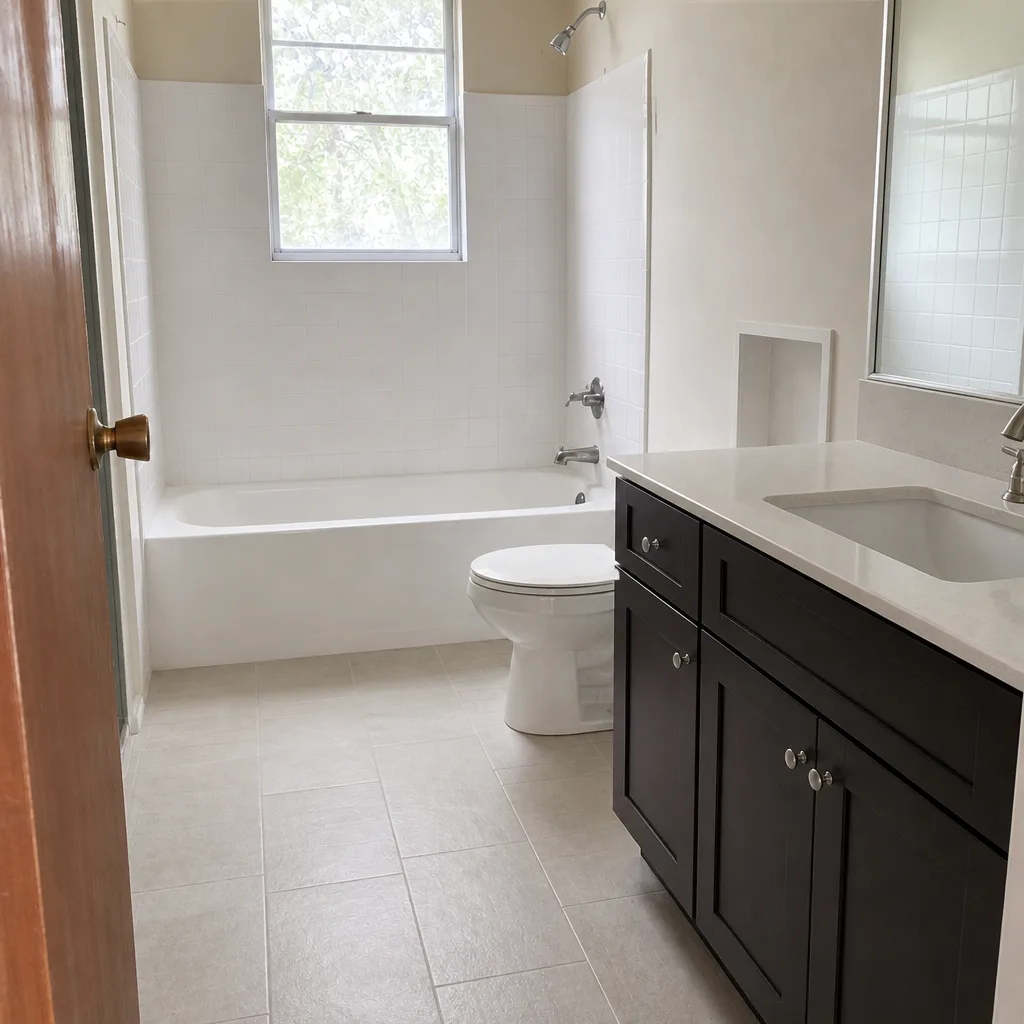
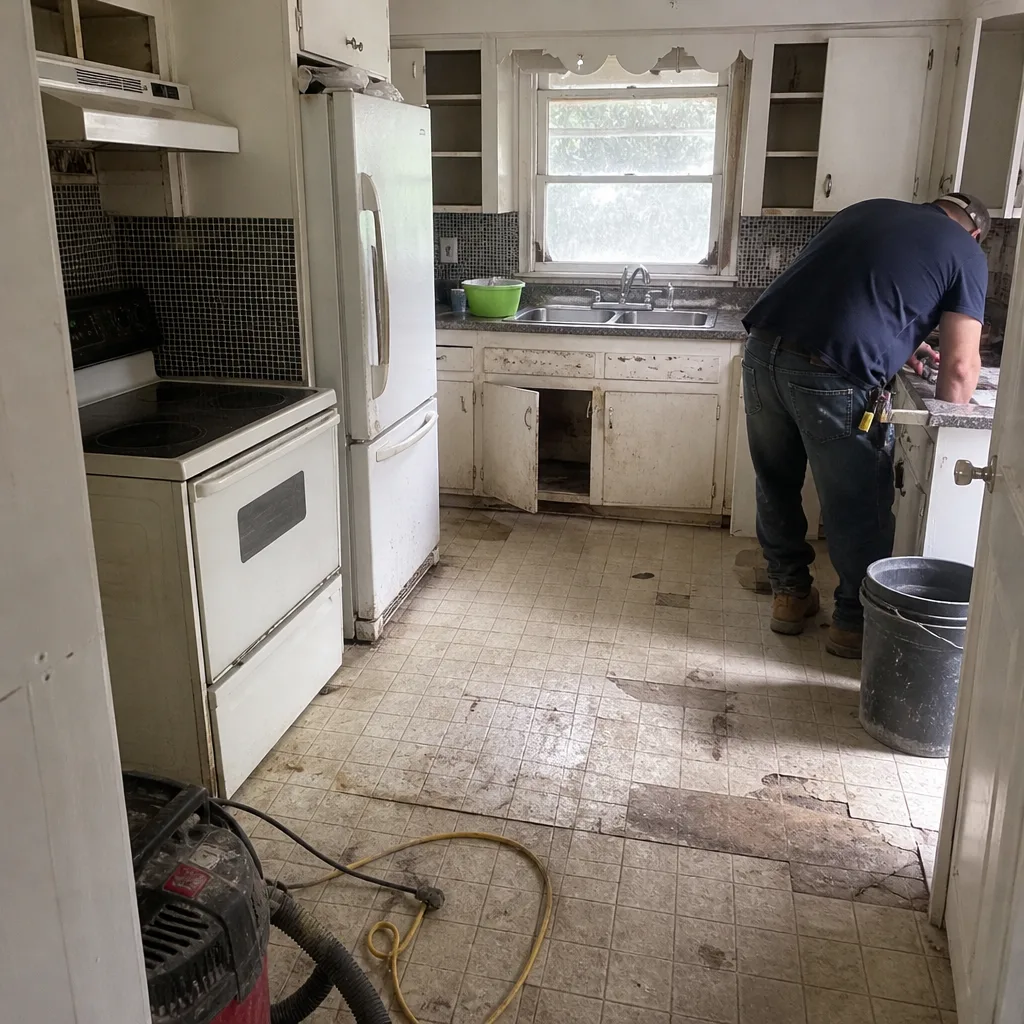
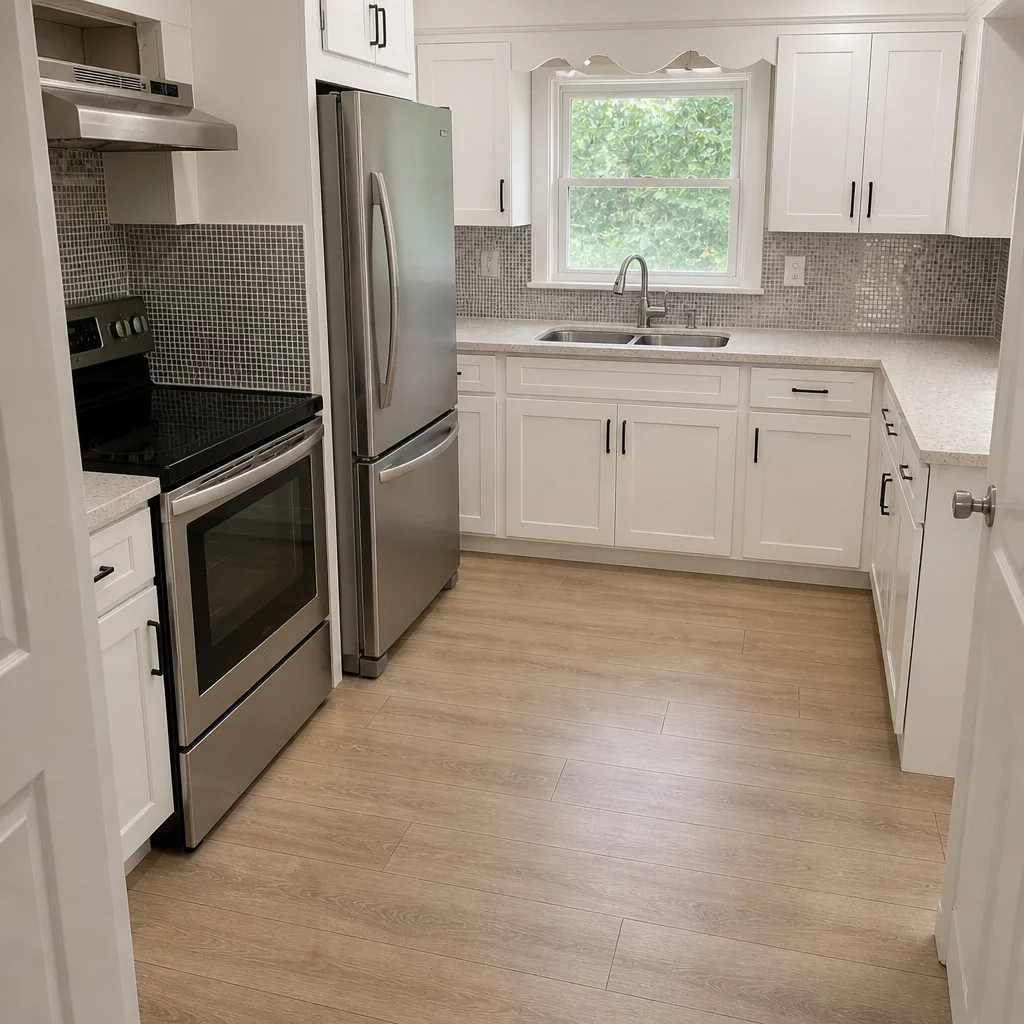
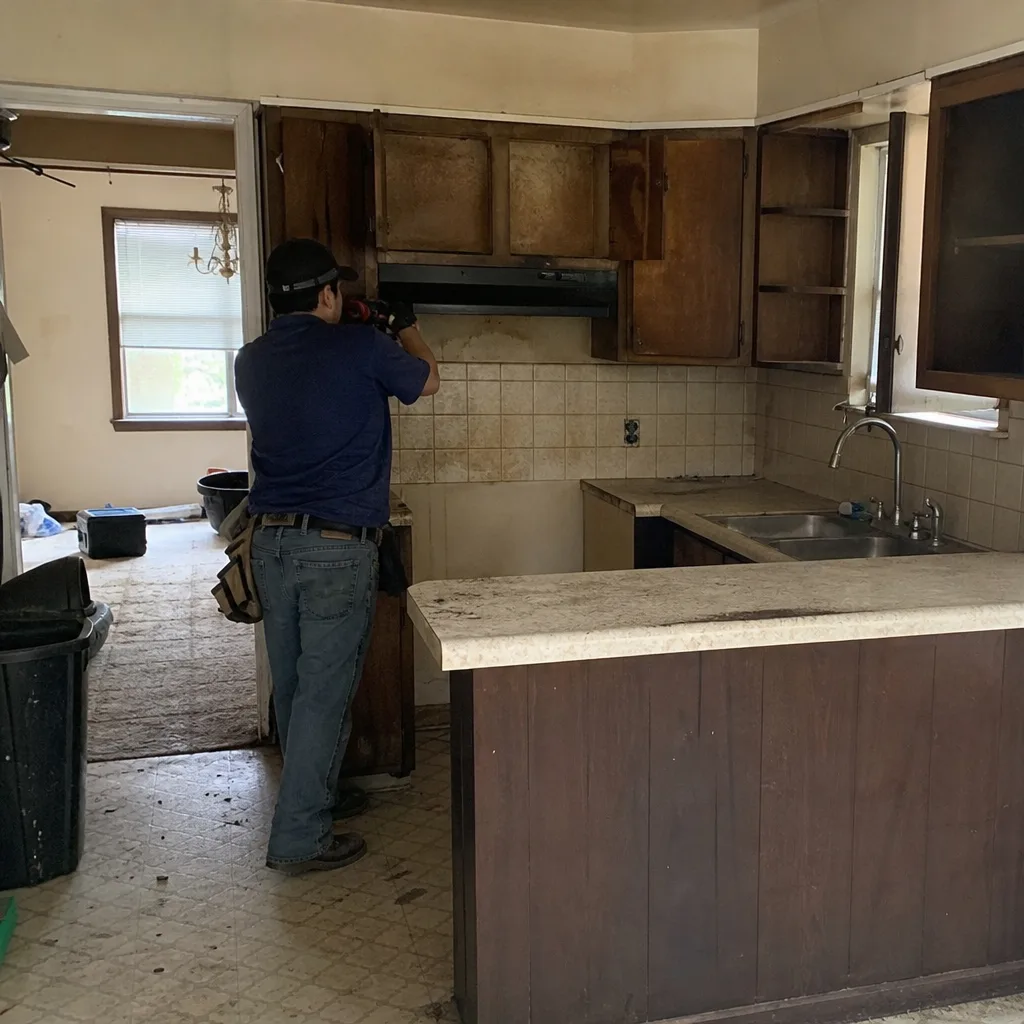
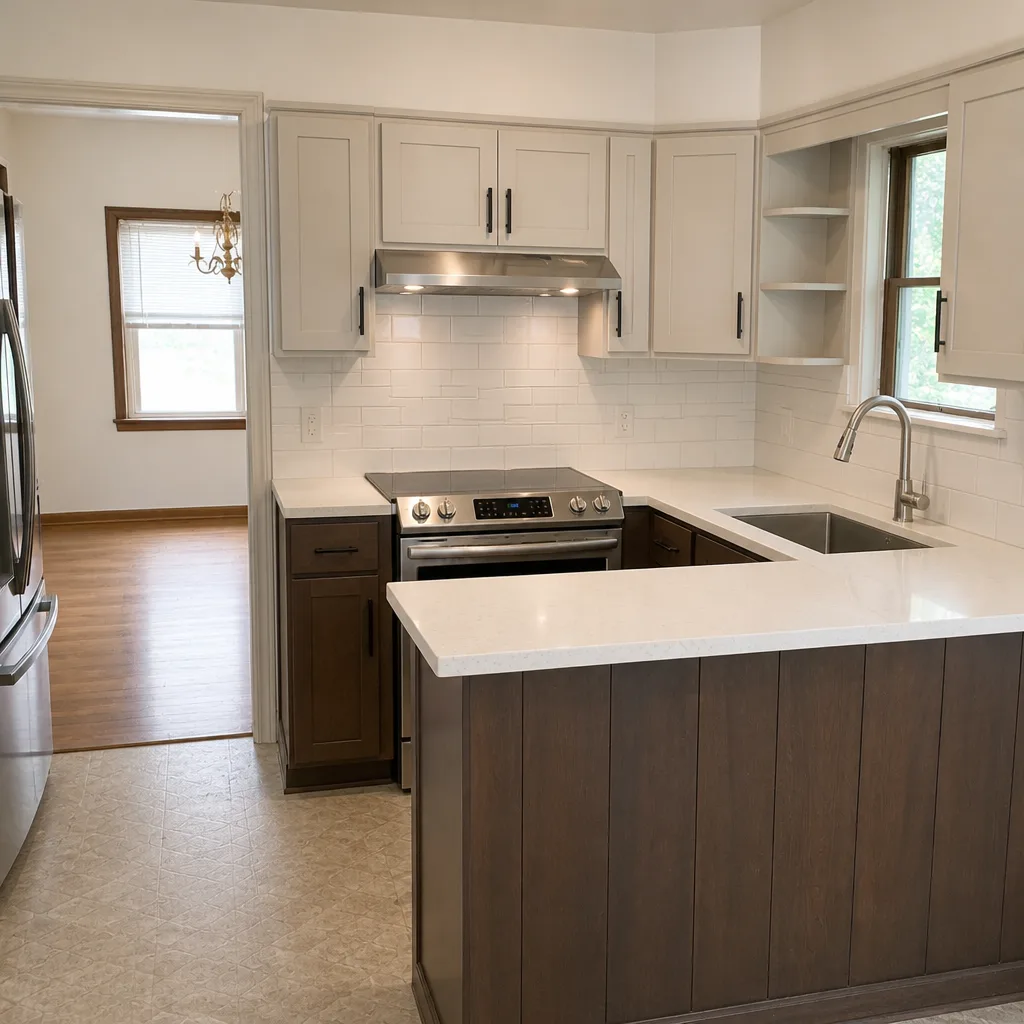
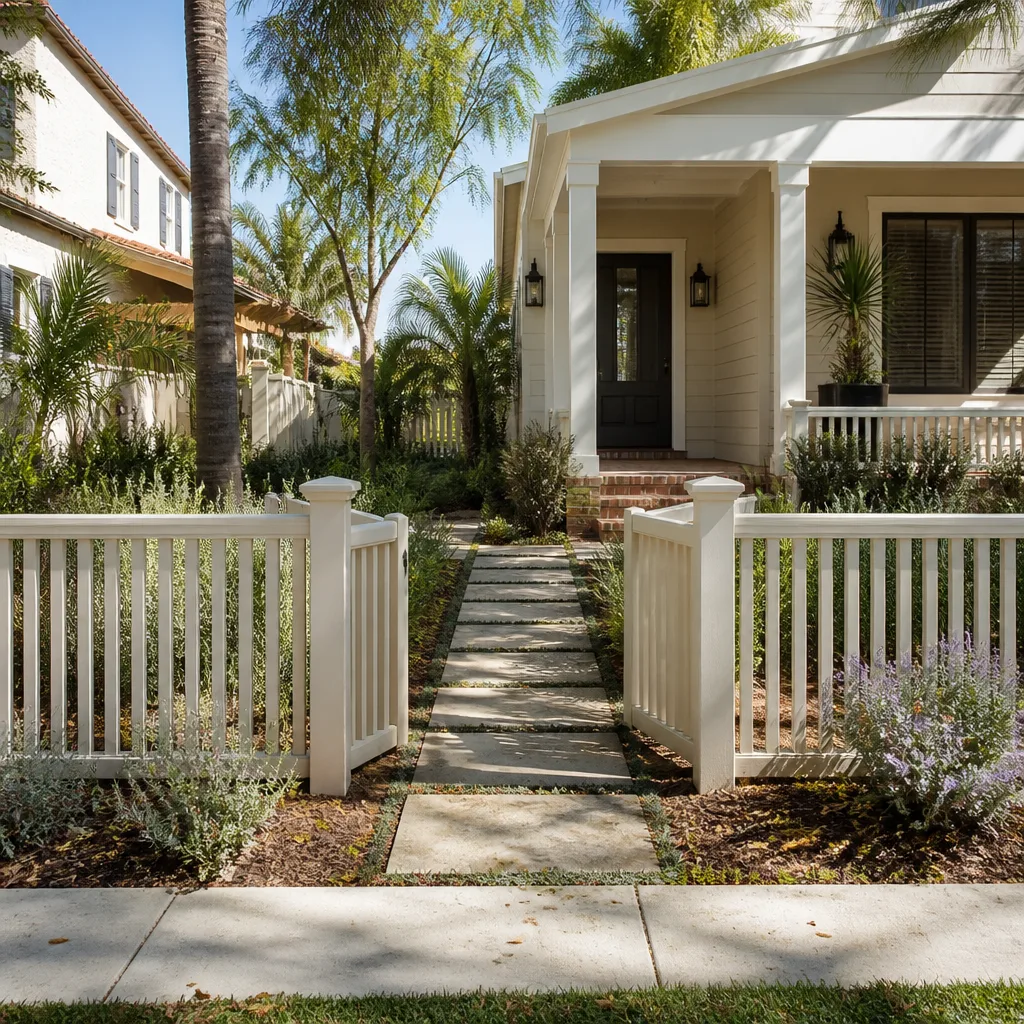
See the difference
 Before
 After
 Before
 After
 Before
 After
When to Call a Professional
Call a licensed contractor when the project involves a gate, a pool-area fence, any fence that triggers a variance, or posts set on a slope or near a retaining wall. Call us if you’ve dug holes and the auger keeps binding on rock, if the layout won’t close on the last bay, or if a post already set in cured concrete is fighting your plumb line. Those are the moments where a second set of hands saves the whole project.
Rowan Construction Group Arlington offers free estimates in Arlington – and if you’ve already started the project, we’ll come out, look at the layout, and give you a written assessment before you spend another dollar on materials. Call (844) 761-7521 to schedule your free estimate.
Frequently Asked Questions
A 100-linear-foot cedar privacy fence in Arlington runs $2,400 – $4,800 installed by a licensed contractor, or $900 – $1,600 in materials plus $140 – $220 in rentals for DIY. The gap is almost entirely labor, not equipment. Call (844) 761-7521 for a written, line-item estimate on your specific yard.
Yes for most residential fence installs – a standard fence permit is a routine filing for a homeowner or a licensed contractor. The application needs a plot plan or survey and shows fence height and setbacks. Anything over the standard six-foot rear and side height, or on a property line, requires a variance. We’ll tell you at the estimate whether your line needs one.
Post holes should reach 24 to 30 inches and widen to 8 to 10 inches in diameter – deep enough into the clay layer to hold through North Texas soil movement. Holes that stop at 18 inches in topsoil are the most common cause of a post that leans after a wet season. Filling each hole with three 50 lb bags of fast-setting concrete is the standard.
Yes, and it’s the split that saves homeowners the most money without the failure risk. We quote layout, post-set, concrete, permit, and gate hanging under contract, and you handle panels, pickets, and staining on your own timeline. The written price covers the contracted scope; anything outside it needs a signed change order before work moves forward.
Minimum 24 hours, and 48 hours if overnight temperatures dip below 50°F. Attaching panels to uncured posts is the leading cause of sagging fences we’re called to fix in Arlington. If your install is in late fall or winter, give it the full 48 hours and don’t load the stringers early.
No – not on the contracted scope. Under Clause 1 of the Haven Standard, the written price is delivered before any work starts, and nothing changes until you sign a change order. That’s the discipline that has kept our projects within a few percent of the agreed cost across every job we’ve taken on. Call (844) 761-7521 for an exact written quote – the estimate is free.
The Bottom Line

Fence panels are DIY-safe. String-line layout is DIY-safe. Digging post holes with a rented auger is DIY-capable if you work in pairs and respect the machine. The four tasks that compound errors – post layout, post-hole depth, concrete volume, and gate-post plumb – are where homeowner projects most often fail and where a licensed crew earns its cost. On a 100-foot cedar fence in Arlington, the labor gap of $1,200 – $2,400 is the entire savings, and one redo eats it. A hybrid split is usually the smarter play: contracted permit, posts, concrete, and gate, with the panels and finish work in your hands. The written price on the contracted scope is fixed before anyone picks up a tool.
At Rowan Construction Group, technicians have up to 19 years of experience, and every visit includes a documented photo record of what was found and what was done, as a standard deliverable. Crews are background-checked and uniformed, and a live person answers calls around the clock. Reach us at (844) 761-7521 for a free estimate on your Arlington fence project – or start at our Rowan Construction Group Arlington home to see all seven trades and how we handle pricing across each of them. Cabinets in a KraftMaid or Wellborn kitchen quote, a GAF or Owens Corning roof tear-off, or a fence install all get the same treatment: a written price before the first tool comes off the rack.
Written by the team at Rowan Construction Group Arlington.