Last updated November 18, 2026


Free written scope consultation - allowances, timeline, and change-order rules on paper before a single trade is scheduled
Fence Installation Troubleshooting: Common Problems and How to Fix Them
A fence post set in dry-poured concrete feels solid the day you build it. Then Arlington’s clay soil does what clay soil does when it swells and shrinks with the seasons, and within two to three years that post starts rocking. Dry pour never reaches the 2,500 psi cure strength needed to resist lateral load, and by the time you notice the lean, no repair short of pulling the post will hold. Most fence failures trace back to three decisions made on day one: post depth, concrete mix ratio, and how the panels attach to the posts. Not the material. In this guide we’ll walk through the troubleshooting cases we see most in Arlington, from leaning posts and sagging gates to rotted bases and cracked vinyl panels, and show you what each fix actually involves.
Quick Answer
Most leaning, sagging, and cracking fences fail because of installation choices, not bad materials. A leaning post is usually a base failure from shallow depth or dry-poured concrete, gate sag comes from one of four mechanical causes you can diagnose in minutes, and structural rot hides at the post base where only a screwdriver test finds it. Repair costs run $150 to $600 per post depending on the cause, and when several posts fail together, replacement is often the honest recommendation.
Styles & brands we work with
- Kitchen remodeling
- Bathroom remodeling
- Home additions & ADU
- Roofing
- Windows & doors
- Driveway & pavers
- Fence
Table of Contents
- Diagnosing a Leaning Fence Post
- Gate Sag: The Four Mechanical Causes
- Wood Fence Rot: Surface Weathering vs. Structural Failure
- Vinyl Panel Cracking in the Texas Heat
- What to Bring to a Troubleshooting Visit
- Repair or Replace? How to Decide
- Building It Right the First Time
Diagnosing a Leaning Fence Post
A leaning post is not one problem. It’s one symptom with three distinct causes, and each carries a different repair scope, cost, and likelihood of success. Before you call anyone, figure out which one you have. Push the top of the post with steady hand pressure. If it moves the concrete plug with it, the base failed. If the post rocks inside a stable concrete plug, the concrete-to-post bond failed. If the whole section leans but the base feels solid, you’re looking at soil heave or wind damage.
The Three Causes
- Wind damage. Sudden loading, usually after a spring storm with gusts above 50 mph, cracks or shears the wood at or just above grade. The base stays put; the post bends. Repair scope: replace the single post. Cost: $150 – $350.
- Base failure. The concrete plug itself has loosened in the soil because the post was set too shallow, typically less than 24 inches in Arlington, or the hole was bell-shaped and let water pool around the plug. Repair scope: pull and reset the post with a deeper, correctly shaped hole. Cost: $250 – $600 per post.
- Soil heave. Arlington’s expansive clay moves seasonally, and posts set too shallow ride the soil up while the concrete plug tilts. You’ll see cracked soil rings around the base and a lean that changes with the season. Repair scope: extract the old post entirely and reset at proper depth. Cost: $300 – $500 per post.
The frustrating part: even a correctly installed post can’t resist lateral load if the concrete was dry-poured instead of mixed to a wet, workable consistency. In our experience, this single shortcut accounts for more early failures in Arlington subdivisions than any other cause, and it’s invisible once the post is set. If your fence is leaning at three or more posts on the same run, the underlying installation was probably wrong across the whole line. That’s when we usually recommend a full fence installation in Arlington review rather than piecemeal repairs.
Gate Sag: The Four Mechanical Causes
A gate that drags, sticks, or won’t latch has one of four mechanical problems, and two of them are quick fixes while two require post work. Diagnose them in this order:
- Hinge failure. Open the gate a few inches and let it swing. If it wobbles side to side on the hinge pins while the post stays still, the hinges are worn, loosened, or sagging the wrong way. Fix: tighten or replace hinges. DIY-friendly. Cost: $15 – $60 in hardware.
- Post lean. Look at the hinge post while the gate is closed. If the post tilts away from the gate even a few degrees, the entire gate is pulling out of square. Anything beyond 2 degrees and the post needs resetting, not just the hinges. Cost: $250 – $600.
- Frame racking. A wooden gate frame that’s lost its diagonal brace will sag under its own weight, especially if it’s over 42 inches wide. Check for a diagonal member from the bottom-hinge corner to the top-latch corner. If it’s missing or cracked, the frame is racking. Fix: add a proper diagonal or replace the gate. Cost: $80 – $250.
- Latch misalignment. The gate closes flush but the latch won’t catch. Usually a symptom of a slight frame or post shift. Fix: adjust the latch strike plate first. If the latch aligns with the post but not the strike, the gate needs shimming or the hinge side needs attention. Cost: $0 – $40.
In Arlington, we see gate sag most often on gates over 48 inches wide that were built with a single hinge and no diagonal brace, which is a day-one installation error rather than wear. If your gate is that wide and sagging, expect the fix to involve frame reinforcement and likely the post as well.
Quick Answer on Gate Sag
Test the gate with the latch open, push gently on the top corner, and watch three things: whether the hinge keeps the gate square to the post, whether the post itself moves, and whether the frame racks when you press its diagonal. The answer to those three questions tells you which of the four causes you’re dealing with.
Wood Fence Rot: Surface Weathering vs. Structural Failure
Most wood rot we’re called out to look at is not rot at all. Gray surface weathering is what cedar and treated pine do in North Texas sun, and it doesn’t compromise the fence. The rot that matters happens at the post base, at grade, where moisture collects and stays. The standard test isn’t visual, it’s a screwdriver.
The Screwdriver Test
- Push a flathead screwdriver into the wood at the post base, one inch above grade.
- If the blade stops at the surface with firm resistance, the wood is sound.
- If the blade sinks in an inch or more with light hand pressure, the wood at the core is compromised.
- If the blade pushes in easily at multiple points around the post, the post is structurally failed and needs replacement.
Repeat the test on two other posts along the same run. Rot almost never appears on a single post; it clusters where grading, drainage, or sprinkler heads keep one section wetter than the rest. If two of three posts fail the test, the honest answer is that the fence is at end of life on that run, and patching one post buys you a season at most. Wood fence rot also accelerates fast in Arlington because our summer heat pulls moisture out of the wood during the day and rehydrates it overnight, which is a harsher cycle than the Northeast’s continuous-wet conditions.
The two treatment grades that hold up best here are ground-contact rated pressure-treated pine and naturally rot-resistant cedar, and in our experience the rated pine outperforms the cedar on post bases specifically because of the chemical treatment. CWS pressure-treated posts and similar rated brands are worth asking for by name when you price out a repair.
Vinyl Panel Cracking in the Texas Heat
Vinyl fences crack in Arlington heat, usually between July and September, and whether a crack is cosmetic or structural matters enormously to the repair decision. A through-wall crack will propagate rapidly under thermal expansion and needs a panel replacement. A surface-only crack (usually a faded hairline crack along the top rail or mid-panel) can be left alone with monitoring.
How to Tell Them Apart
- Flex test. Press gently on either side of the crack. If the panel flexes as a single unit, the crack is surface-only. If the two sides move independently, the crack is through-wall.
- Light test. On a sunny day, look at the back of the crack from the shaded side. Visible light through the crack means through-wall.
- Length test. Cracks over 3 inches almost always extend through-wall; hairline cracks under 1 inch are usually surface.
The bigger issue is the vinyl grade itself. Cheap vinyl without UV stabilizers degrades in Arlington’s intense sun, becoming brittle after 4 – 5 years and cracking under simple thermal expansion. A UV-stabilized grade costs 15 – 25% more at installation and lasts decades longer. If you’re pricing a panel replacement, ask the installer to spec UV-stabilized vinyl, not just “vinyl,” and to match the profile of your existing panels. Racking a single non-matching panel into an existing run looks worse than the crack did.
For broader context on how we scope fence replacements along with driveway and pavers work when a project touches both the fence line and the front approach, the ordering matters: fence first, pavers second, so the paver crew doesn’t have a fence crew walking on fresh bedding.
What to Bring to a Troubleshooting Visit
The single fastest way to get a repair recommendation that’s actually useful is to arrive with documentation. A contractor who knows what they’re looking at can diagnose in fifteen minutes; a contractor without context has to start at the beginning, and that starting point is where quotes go wrong in both directions.
Bring These Four Things
- Age of the fence. If you know the install year, bring it. Even an estimate (“about six years, came with the house”) narrows the diagnosis considerably.
- Original installer if known. Not to blame them, but because the install method tells a trained eye what to look for. Some installers reliably used a particular concrete approach or post spacing.
- Previous repairs. Show receipts, photos, or the physical evidence of prior work. A post that’s already been replumbed and re-braced has different options than an original post.
- Photos of the failure over time. A single photo of a leaning post is ambiguous. Photos from two or three dates tell the diagnosis: sudden lean = wind or impact; gradual lean = base or soil; seasonal variation = heave.
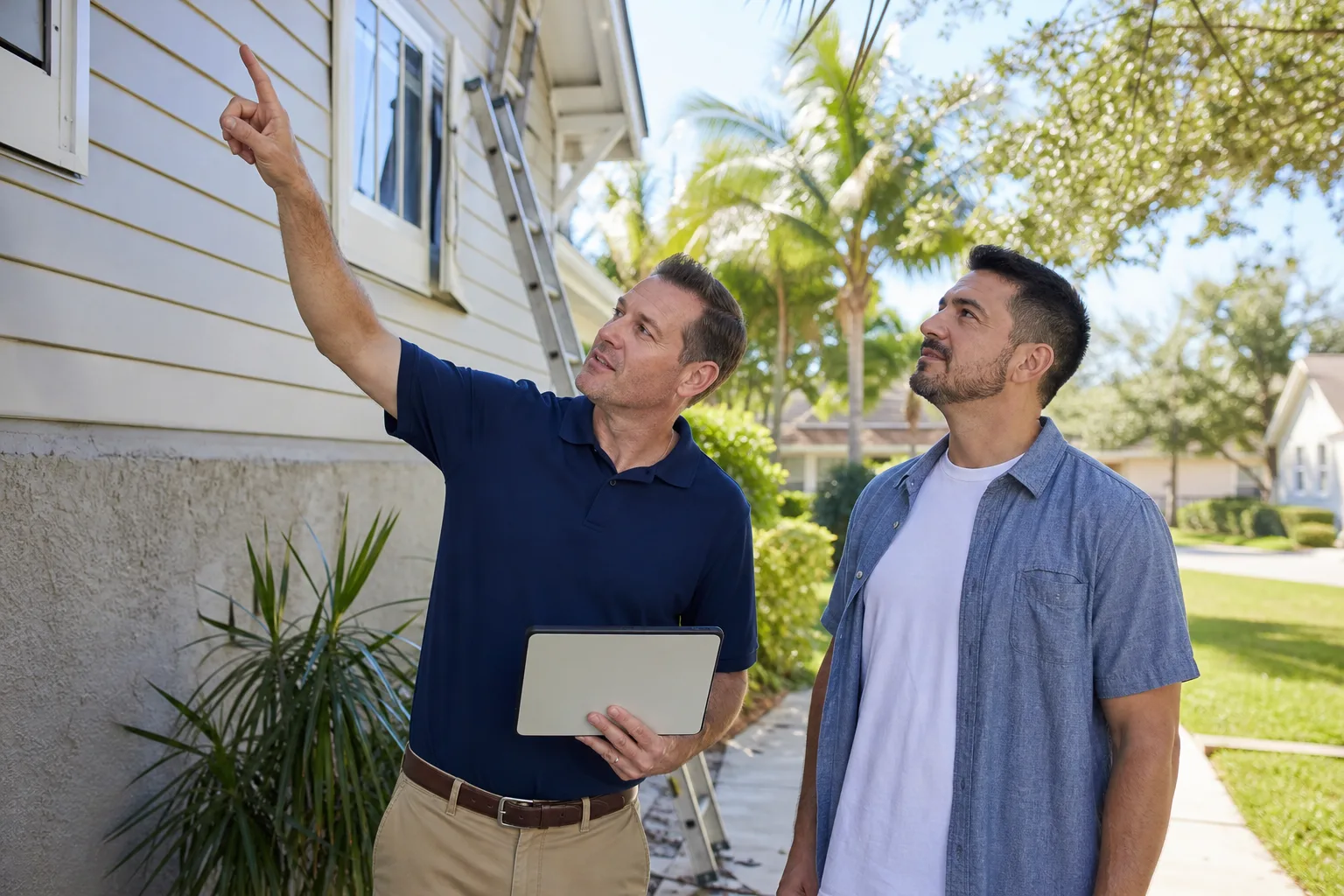
This documentation goes both ways. Under our Rowan Construction Group Arlington home practice, every troubleshooting visit includes a documented photo record as a standard deliverable, not an add-on. You leave with photos of what we found, the cause we diagnosed, and the scope we’re recommending. That record is what makes the second-opinion conversation honest, and we offer that second opinion on any written estimate at no charge.
Repair or Replace? How to Decide
The math is less about cost than about whether the underlying failure is isolated or systemic. A single post that failed after wind damage is a repair. Three posts that failed in a line are an installation problem, and repairing them one at a time costs more than replacing the run because you’re paying crew mobilization four times instead of once.
The Repair Decision Tree
- One post, one cause, all others solid. Repair. Budget $150 – $600.
- One post, but two others failing the screwdriver test. Replace the affected run.
- Gate sag with a solid hinge post and frame. Repair hardware and brace. Budget $80 – $250.
- Gate sag with a leaning post. Replace the post; gate follows.
- Vinyl with one cracked panel and UV-stable panels elsewhere. Replace panel.
- Vinyl with multiple cracked panels and brittle feel throughout. Replace the run; the vinyl grade is the problem.
- Wood fence over 15 years with any rot at base. Replace; repairs extend life by months, not years.
In Arlington homes built between 2015 and 2020, we frequently see fences that look fine overall but have a single run facing the most sun or the lowest drainage grade. Those are the candidates for partial replacement rather than full. The best way to scope it is with a licensed contractor who walks the whole line, runs the tests, and writes a flat price before any work starts. If your original quote was a phone number and a ballpark, bring it in for a free second-opinion review line by line.
Building It Right the First Time
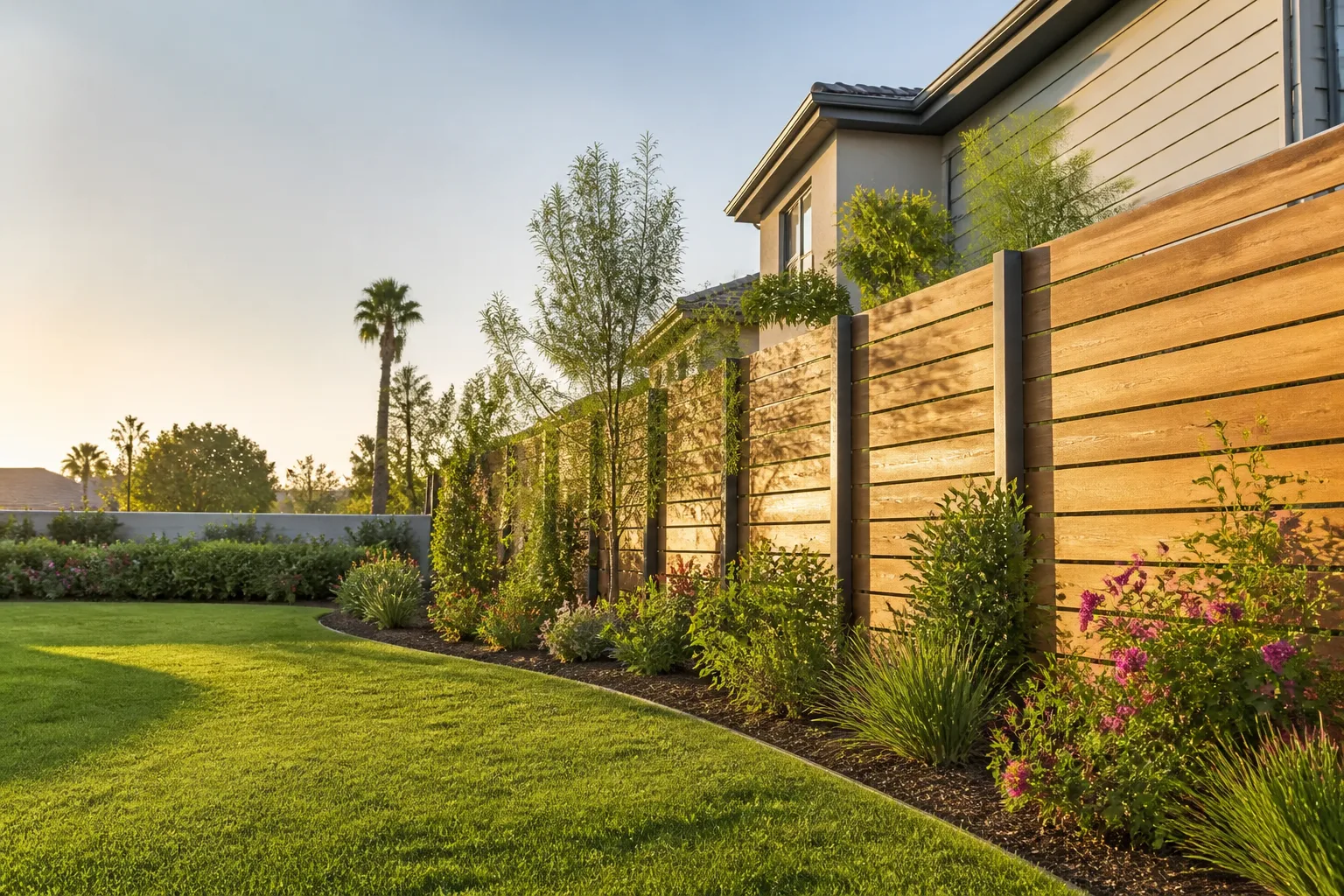
Every failure mode above traces back to a day-one decision. Post depth, concrete consistency, and panel attachment are the three variables that separate a fence that lasts 20 years from one that leans in three. Here is what a properly installed fence looks like in Arlington.
The Installation Standard
- Post depth. Minimum 24 inches below grade, 30 – 36 inches in sections along Arlington’s most expansive clay. In some areas, this means a hole 42 inches deep before the concrete goes in.
- Concrete mix. Wet-mixed to a 2,500 psi cure strength minimum, not dry-poured, and crowned at the top so water sheds away from the post base.
- Attachment. Panels fastened with corrosion-rated fasteners at consistent heights, with rails sized to load. Never rely on a single rail for a gate.
- Bracing. Wide gates need a diagonal brace on the gate frame itself and a hardware set that handles the load. Fence line posts every 8 feet with a top rail on both the hinge and latch sides.
- Grade and drainage. Posts set at the bottom of the local grade, with soil graded so water runs away rather than pooling around bases.
These are not premium upgrades. They are the baseline for a fence that holds up to Arlington weather, and the difference between a contractor who meets this standard and one who doesn’t shows up three years later. If you’re planning a home addition or ADU project and the fence line is part of the plan, the sequencing with home additions and ADU work matters; fence construction typically goes last so crews aren’t stepping through fresh panels with material.
Common Mistakes to Avoid
- Dry-pouring the concrete. It’s a common shortcut because it’s faster and looks neat. It also produces a plug that never reaches the strength needed to resist lateral load, and you’ll be pulling the post in three years.
- Setting posts less than 24 inches deep. Every inch deeper adds meaningful resistance. The single biggest cause of Arlington soil heave damage is shallow posts.
- Using a single rail for a wide gate. Any gate over 42 inches needs the frame to carry the load, not the panels. Single-rail gates are why gates sag.
- Skipping the screwdriver test before quoting a repair. A visual inspection can’t tell you if rot has reached the core. Assume structural until tested.
- Specifying “vinyl” without UV-stabilized grade. Cheap vinyl in Arlington sun is brittle in four summers. Specify the grade, not the material category.
- Patching one post without checking the rest of the run. A failed post is a symptom. Check two others along the same line; the cause will be there.
- Accepting a phone-ballpark quote. A repair price that isn’t written down with a scope isn’t a price. It’s a starting point for a change order later.
See the difference
 Before
 After
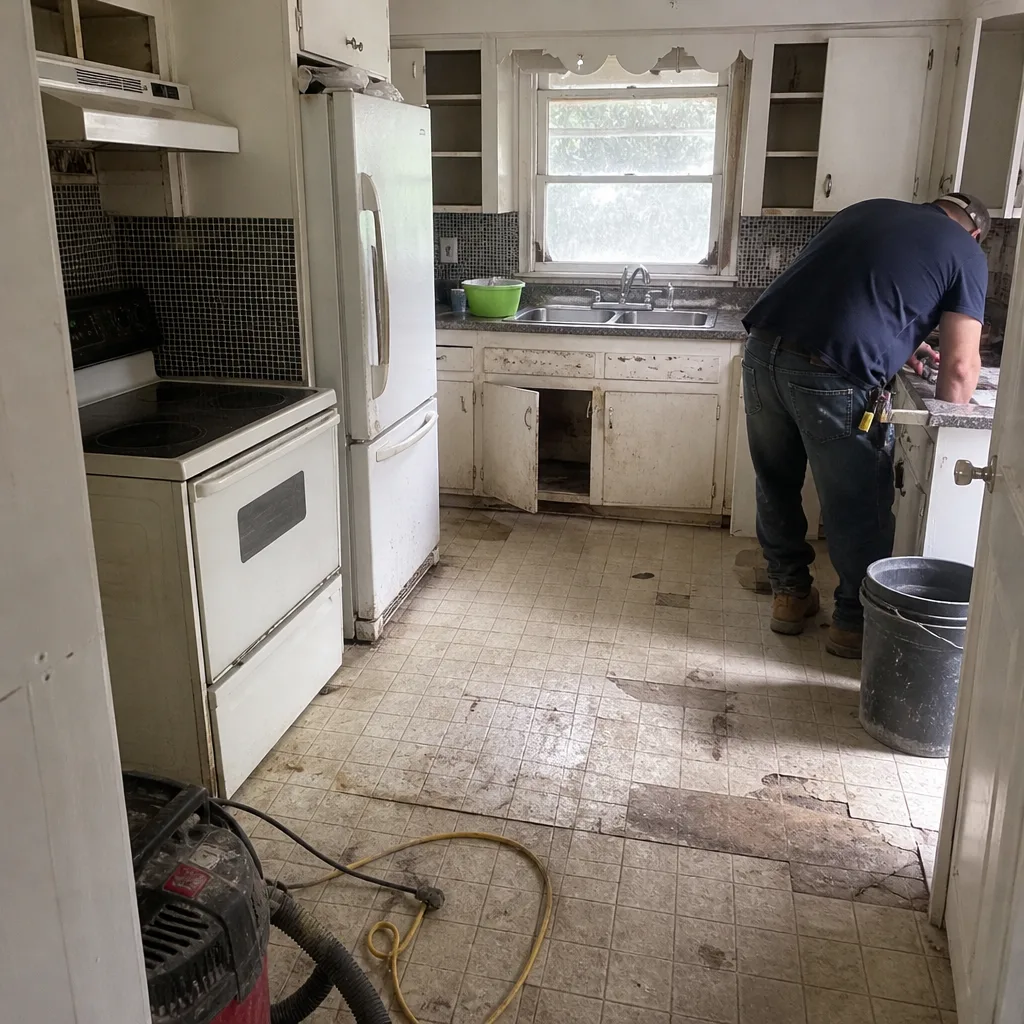 Before
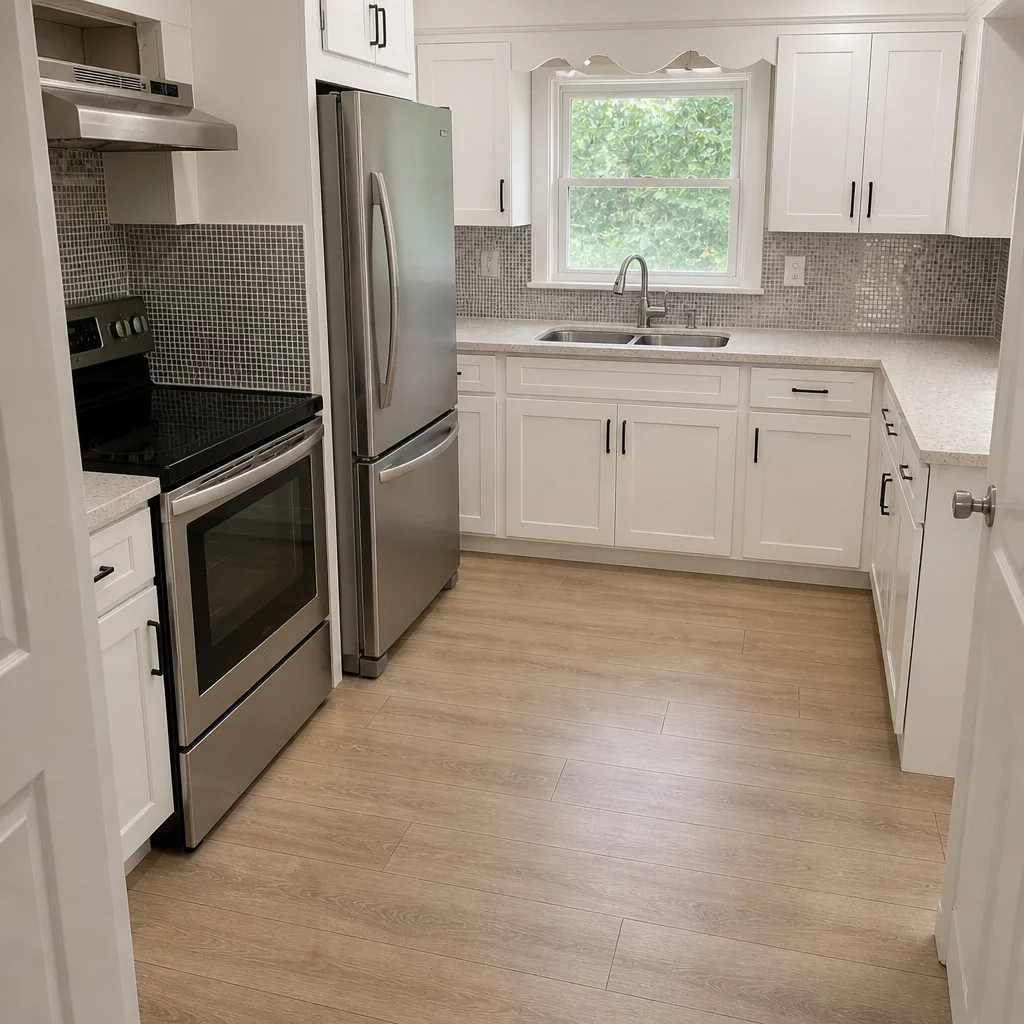 After
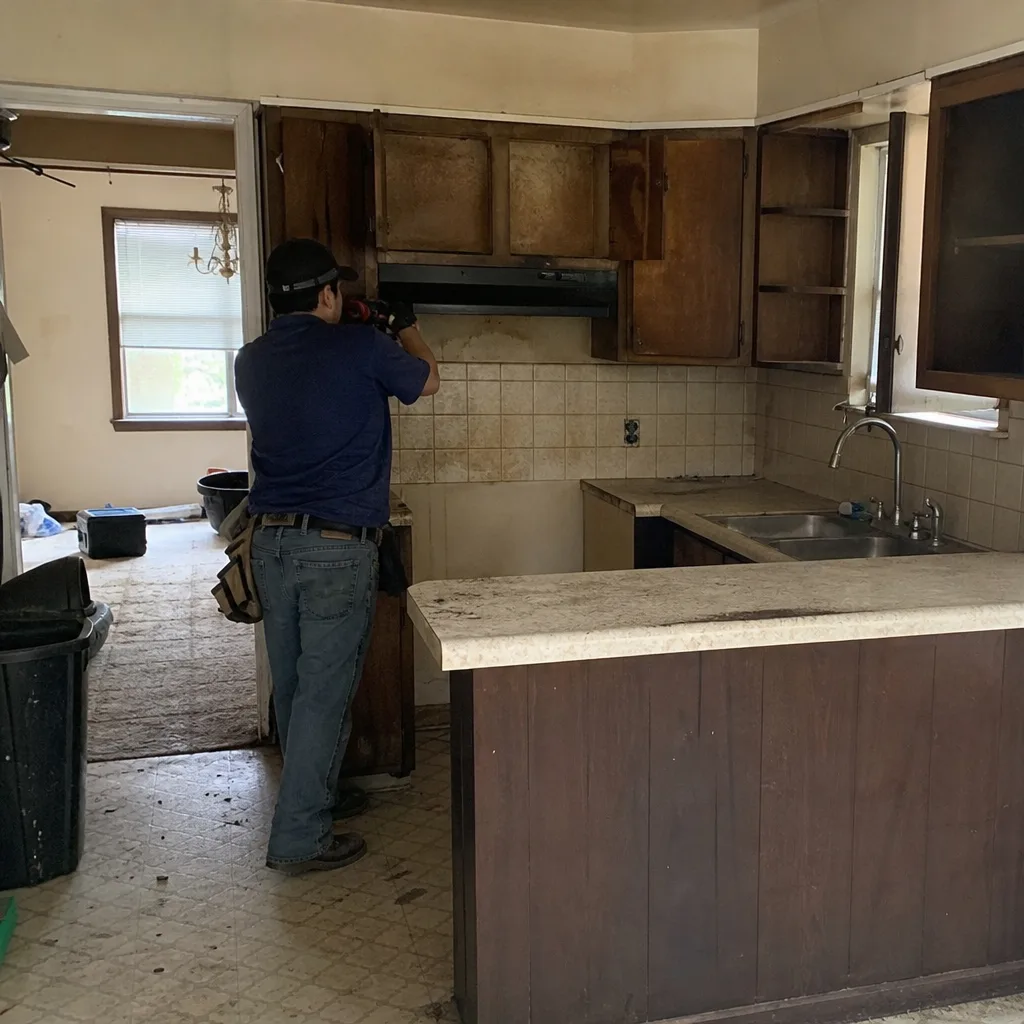 Before
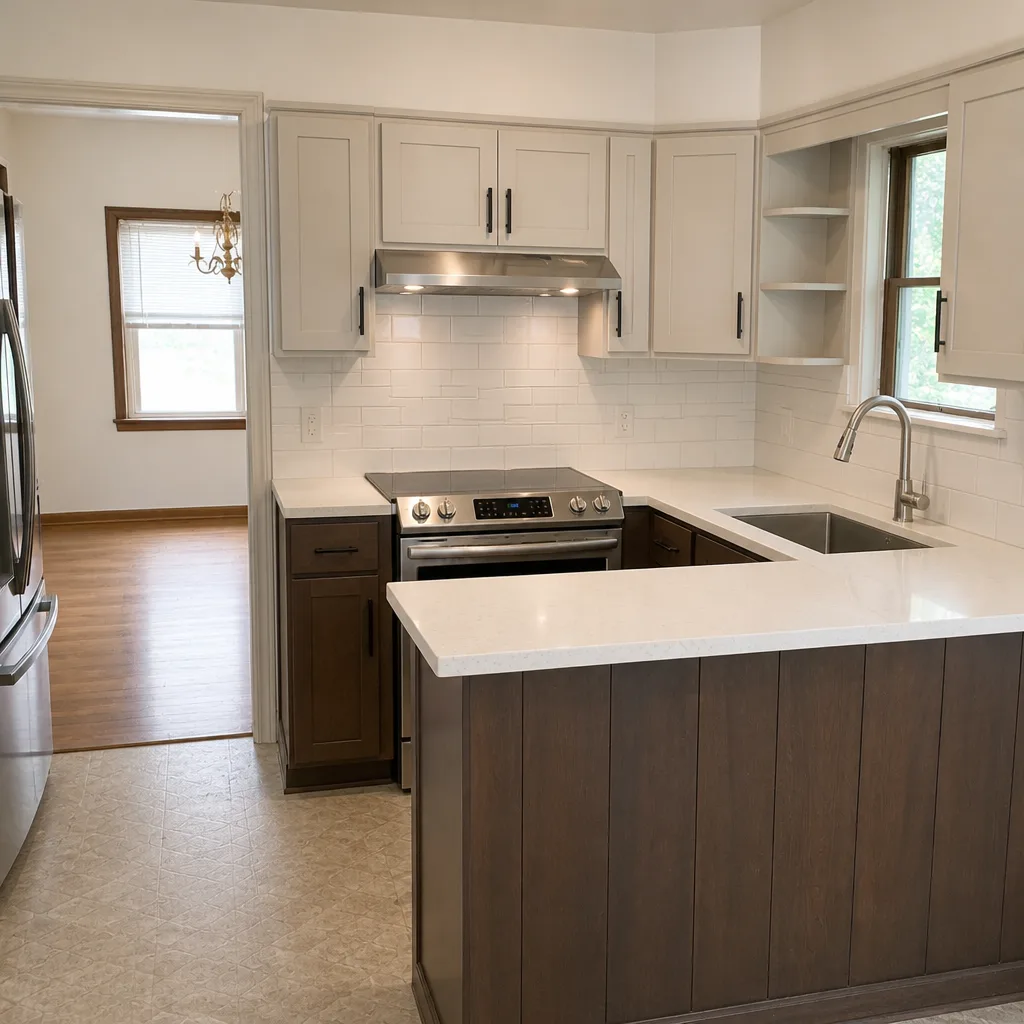 After
When to Call a Professional
Call a contractor if the post has rocked, if the concrete plug is loose, if a gate has started dragging and hinges don’t fix it, if the screwdriver test fails on any post, or if a through-wall vinyl crack appears. Call immediately if a full section of fence has blown over or is leaning more than 10 degrees, because a leaning fence line can be dangerous to disassemble and the load path needs to be assessed before anyone climbs the panels. Also call if your fence is on a property line and the neighbor has any question about who owns the section, because that’s a conversation best handled with documentation from day one. Rowan Construction Group Arlington offers free estimates in Arlington. We’ll walk the line with you, run the tests, and put the price in writing before any work starts. Call (844) 761-7521 to schedule.
Frequently Asked Questions
Leaning post repair in Arlington runs $150 – $600 per post depending on cause. Wind damage is the cheapest at $150 – $350 because the concrete plug stays intact and only the post is replaced. Base failure runs $250 – $600 because the post has to be pulled and reset with a properly mixed, deeper concrete plug. Soil heave is at the top of the range because extraction is more involved. Call (844) 761-7521 for an exact quote; estimates are free.
If the concrete plug is still solid and the post has only shifted slightly, you may be able to brace it with an adjacent T-post and re-anchor. If the base has failed or soil heave is the cause, no DIY fix is durable; the post has to be pulled. If you’re unsure which cause you have, the hand-pressure test tells you in under a minute and decides the whole scope of work.
Not on our projects. The written price and written scope are delivered before any work begins, and no work proceeds on a change until the change order is signed. That’s the discipline that’s kept projects within a few percent of the agreed number across 4,000-plus jobs. If a repair visit uncovers hidden rot that changes the scope, you get a written change order with a new number, and you decide before anyone touches the fence.
Fence repairs generally don’t require a permit in Arlington, but new installations over 6 feet, and fences on property lines, can bring zoning and height-limit considerations that vary by lot. The honest answer is to check the current Arlington code with your contractor before quoting. If permits are required for your project, they’re pulled and inspections passed under the written scope.
A single-post reset is typically a half-day to full-day job because the concrete needs time to set, and the post must be braced during the initial cure. Multiple posts on the same run often take two days. A full fence replacement runs 2 – 4 days depending on length, material, and access to the property. Your written scope will state the timeline before work starts.
Yes, if the panel crack is surface-only and the surrounding panel profiles are still available. A single through-wall crack can usually be swapped panel-by-panel without replacing the rails or posts. If more than 20% of the panels show cracking or brittleness, the honest recommendation is to replace the run; patching a brittle line just moves the failure to the next panel each season.
The Bottom Line
Fence failures almost always trace to three installation decisions: post depth, concrete mix ratio, and panel attachment. Wind damage repairs; base failures don’t. Gates sag because of one of four mechanical causes, two of which you can fix in under an hour. Wood rot hides at the post base and only the screwdriver test finds it. Vinyl cracks are surface-only until the flex test says otherwise. If three or more posts on the same run are failing, replace the run; if one post failed from a discrete cause, repair it. Document what you’re looking at, and always insist on a written price and scope before any contractor starts. That single step is the difference between a $300 repair and a rolling change-order situation.
Written by the team at Rowan Construction Group Arlington.