Last updated November 18, 2026


Free written scope consultation - allowances, timeline, and change-order rules on paper before a single trade is scheduled
Construction Warning Signs: An Arlington Homeowner’s Reference Guide
A diagonal crack running from the corner of a door frame at roughly 45 degrees is not settling. It’s the signature of differential foundation movement, and in Arlington’s expansive clay soil it’s the difference between a $400 epoxy fill and a $15,000 pier installation, decided by how long it’s been ignored. Most structural defects in Arlington homes announce themselves months before they become emergencies. The problem is that homeowners read the early signals as cosmetic issues, patch them over, and lose the window when the repair was still small. This guide translates twelve specific visual cues into the underlying cause and a repair urgency tier, from “watch it” to “call someone this week.”
Quick Answer
Construction warning signs in an Arlington home are visible long before failure: hairline shrinkage cracks are cosmetic, but stair-step cracks in brick, diagonal cracks at door and window corners, gutters full of shingle granules, and wood rot at sill corners point to foundation, roofing, or water intrusion problems that worsen on a predictable curve. The fix costs four to ten times more after two wet seasons than it does when you first notice it. Sort what you see into three tiers: monitor with a $4 crack monitor, schedule a repair within 90 days, or call a professional now.
Styles & brands we work with
- Kitchen remodeling
- Bathroom remodeling
- Home additions & ADU
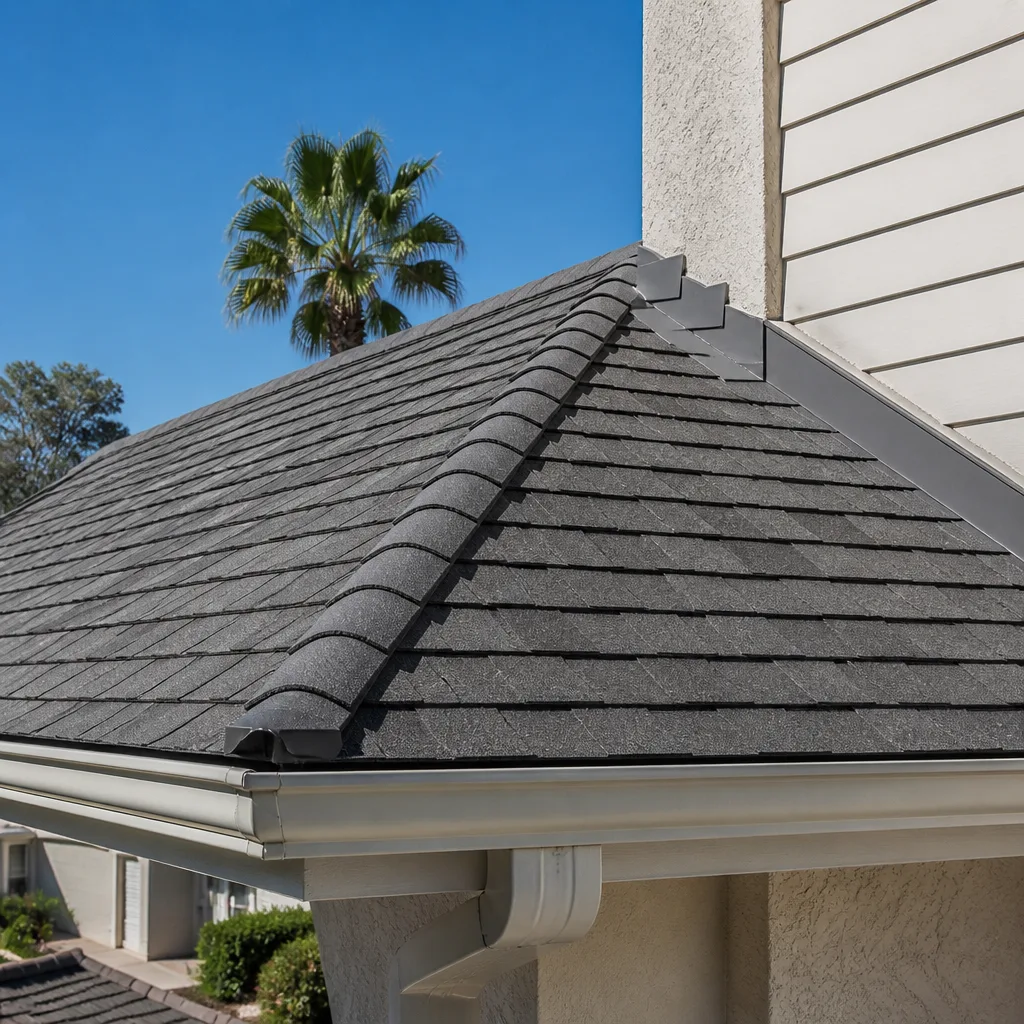
- Roofing
- Windows & doors
- Driveway & pavers
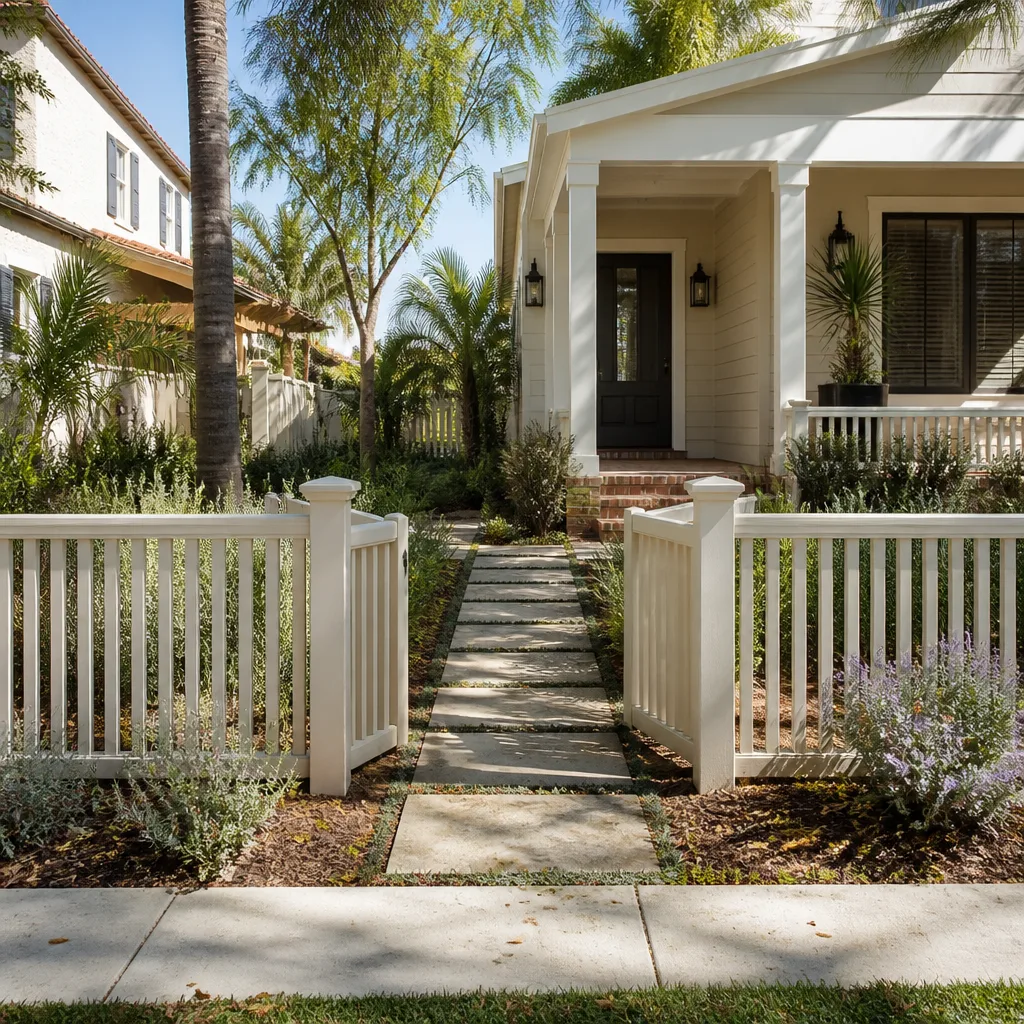
- Fence
Table of Contents
- Foundation Cracks: Cosmetic vs. Structural
- Roof Warning Signs You Can See from the Ground
- Water Intrusion Indicators Homeowners Misread
- Framing Distress: Seasonal vs. Structural
- Contractor Red Flags During Active Construction
- How to Monitor a Crack: Step by Step
- Warning Sign Repair Cost Reference
Foundation Cracks: Cosmetic vs. Structural
Arlington sits on some of the most reactive clay in North Texas, a soil that swells when it’s wet and shrinks hard when it’s dry. That cycle moves foundations year after year, and the cracks it leaves behind sort cleanly into two categories. Learning to tell them apart is the single most valuable inspection skill an Arlington homeowner can develop.
Cosmetic shrinkage cracks are hairline, under 1/16 inch, usually horizontal or random, and they don’t move. You’ll find them in the mortar joints of older brick, on interior drywall near corners, and along the seam where two pours of concrete meet. They’re stable. Keep an eye on them and nothing else.
Structural cracks have a shape:
- Stair-step cracks in brick or block. The crack walks up the mortar joints like a staircase. This is the classic sign of a foundation corner dropping.
- Diagonal cracks at 45 degrees from the corner of a door or window. The opening is a weak point in the wall, and the crack radiates from the stress concentration.
- Any crack wider than 1/8 inch, or one that’s widening. Measure once, note the date, measure again in 90 days. If the gap grew, it’s active.
The $4 tool that settles the question is a crack monitor, a small plastic gauge with two overlapping plates you epoxy across the crack. It gives you a fixed reference. A crack that reads the same in November and February is settled. A crack that’s moved is a foundation question, and in Arlington the answer ranges from a $400 epoxy injection to a pier system that starts around $1,200 per pier. Get an engineer’s opinion before you spend either amount.
Roof Warning Signs You Can See from the Ground
You don’t need to climb a ladder to diagnose a roof. Arlington’s spring hail season and summer UV load punish asphalt shingles harder than most of the country, and the warning signs show up at ground level months before a leak reaches your ceiling. Three signals are worth knowing.
- Sagging ridge line. Stand across the street and sight down the peak. A ridge that dips, waves, or sags between supports points to compromised decking or rafter spread. That’s a structural repair, not a shingle replacement, and it typically runs $2,500 to $8,000 depending on how many rafters are involved.
- Granule accumulation in the gutters. Those gritty black grains are the UV-protective surface of your shingles washing off. A light dusting is normal on a roof past 12 years. A half-inch layer in every gutter means the shingles are at end of life and a replacement is due within one to two years, at $9,000 to $18,000 for a typical Arlington home depending on pitch and square count.
- Daylight visible through the soffits. Look up into the eave overhangs from underneath. Light leaking through means the soffit or fascia has pulled loose or rotted, and that’s the entry point for attic moisture, wasps, and squirrels. Fascia and soffit repair on a single run usually lands between $600 and $1,800.
One more: curled or lifted shingle tabs visible from the driveway. Lift is the earliest hail and wind damage signal, and if you catch it before a leak, the repair is a few hundred dollars of shingle work instead of a ceiling, insulation, and drywall job.
Water Intrusion Indicators Homeowners Misread
Most water problems in Arlington homes get misdiagnosed as plumbing. Homeowners see a stain on the interior wall and call a plumber, when the source is a failed window flashing or a clogged weep screed on the exterior. Three interior signals tell you the water is coming through the building envelope, not the pipes.
- Efflorescence on basement or crawl space masonry. That white, chalky powder on brick or concrete block is salt pushed to the surface as moisture evaporates. It looks like mold but isn’t. It means water is moving through the masonry, and if you see it recurring, the grading or the foundation drainage is wrong.
- Wood rot at window sill corners. Rotted sill corners almost always trace back to missing or failed flashing above the window, not condensation. Probe the wood with a screwdriver. If it sinks easily, the sill is gone and the repair is a carpentry job, typically $300 to $900 per window depending on how far the rot has traveled into the jamb.
- Staining that follows exterior wall lines. A stain that runs vertically down an interior wall in a line that matches where an exterior wall meets the ceiling is a flashing or roof-detail leak. A stain in a random blob near a bathroom fixture is likely plumbing. Location is the diagnostic.
Roofing and envelope work is the one repair category where a quick visual match to materials matters. GAF and Owens Corning shingles are both common across Arlington neighborhoods, and matching the exact product line is how replacement patches blend in. That’s why the written scope should name the shingle line, not just “architectural shingles.”
Framing Distress: Seasonal vs. Structural
Doors that stick in August and free up in October are normal. North Texas humidity swings at 30 percentage points or more between summer and winter, and wood moves. Seasonal sticking is a comfort issue you can solve with a plane and a screwdriver. Year-round sticking is different, and it’s worth learning to read.
Seasonal sticking shows up in one or two doors, always in the wet months, and releases when the air dries out. Hinges are tight, no visible frame distortion, and the door itself is fine. That’s normal.
Structural sticking has a pattern:
- Multiple doors and windows stick year-round, and the problem is moving from one opening to the next over time.
- You can see frame racking: the door frame is visibly out of square, or the gap between the door edge and the jamb is wider at the top than the bottom, or vice versa.
- A door that used to swing freely now swings on its own and latches itself. That’s a sign the frame is out of plumb.
In our experience, when you see these three signs together in an Arlington home built before 2000, the diagnosis is usually foundation movement rather than a carpentry issue. The fix is foundation repair and then a re-square of the affected openings, not a new door. Asking a contractor to plane the door down first is like putting a bandage on a broken ankle.
Contractor Red Flags During Active Construction
The most expensive construction problems happen during a project, not after it. By the time the job is finished, the chance to catch a problem cheaply has passed. Three red flags are worth acting on the moment you see them, and they don’t require any construction knowledge to spot.
- Work proceeding without scheduled inspections. Every permitted job in Arlington has an inspection schedule: foundation pour, framing, rough-in, final. If a crew is drywalling before your framing inspection has passed, stop the job. You cannot get that wall back open cheaply if the inspector fails the framing, and the inspector will fail it. Ask for the inspection card and confirm it has a passed sign-off before the next phase starts.
- Substituted materials without written documentation. The written scope should name the brand and model. If the cabinet arrives and it’s not the KraftMaid line in the contract, or the fixtures are Delta when the scope said American Standard, and there’s no signed change order in your file, that’s the moment to say no. Under the discipline we work by, no change proceeds without a signed change order, which is why the material in the house matches the material on paper. A contractor who waved through a substitution once will do it again.
- Subs on site without the GC present during critical pours or structural connections. The pour of a foundation and the moment a beam connection is fastened are the two points where nobody but the general contractor can verify the work. If your contractor is at another job when the concrete truck shows up, the pour gets done wrong and can’t be re-done without demolishing the slab. Ask when the critical phases are scheduled and be told you’ll be there.
Notice the common thread: all three red flags are documentation failures, not workmanship failures. A contractor who produces a written scope, a signed change order, and an inspection record on every project is going to build a sound house by default, because you can see the paper trail. When a warning sign appears on an active job, the paper trail is your first line of defense.
How to Monitor a Crack: Step by Step
You don’t need a contractor to tell you whether a crack is moving. You need a crack monitor, a marker, and 90 days of patience. Here’s the process:
- Clean the surface around the crack with a damp cloth. It needs to be dry and free of dust for the adhesive to grip.
- Epoxy or screw the crack monitor across the crack with the two reference plates on either side. Follow the manufacturer’s installation line.
- Write today’s date and the reading on the plastic gauge with a permanent marker. Photograph the gauge with your phone’s date stamp visible.
- Check the reading at 30 days, 60 days, and 90 days. Photograph each reading.
- Compare readings. Any movement over 1/16 inch in 90 days is active movement and calls for an engineer’s inspection. Stable readings over 90 days mean you’re watching a cosmetic crack.
- Keep the photos and readings in a folder. If you ever sell the house in Arlington, that record answers the buyer’s question about the foundation without a discount on the price.
A 90-day record with photos and dates is the single most useful document you can hand a structural engineer or a contractor. It costs under $10 and replaces a $1,500 engineer’s diagnostic visit if the crack turns out to be cosmetic. If it turns out to be structural, you’ve bought yourself 90 days of head start on the repair.
For larger exterior projects, the same documentation principle applies. When a Rowan Construction Group Arlington home painting or renovation project begins, the written scope and the dated photo record on both ends are what let you tell the difference between a defect and a change. The best contractors hand you that record before you ask for it.
Warning Sign Repair Cost Reference
Here’s what each warning-sign repair runs in the Arlington market, as a line-item range. Prices are for typical single-family work and vary with scope, access, and material choices. These are ranges from printed estimates and work orders, not ballpark guesses.
- Cosmetic crack epoxy fill: $150 to $400
- Foundation pier installation: $1,200 to $2,200 per pier
- Partial roof replacement (one slope): $1,800 to $4,500
- Full roof replacement, architectural shingle: $9,000 to $18,000
- Fascia and soffit repair, single run: $600 to $1,800
- Window sill rot repair: $300 to $900 per window
- Drainage and grading correction: $1,500 to $6,000
- Engineer’s structural inspection: $400 to $1,500
- Door frame re-square after foundation work: $200 to $500 per opening
Roof, window, and drainage work often overlap. If you’re replacing shingles or repairing sill rot, the same job may be the moment to correct weep screed or replace flashing. That’s why the written scope matters: it names the brands (say, Owens Corning shingles and Toto fixtures if the replacement extends into a bath), commits the price, and prevents the discovery mid-project that the scope missed something. For exterior drainage and grade corrections, Driveway & Pavers in Arlington and Fence Installation in Arlington projects are often the moment homeowners fix the drainage at the same time, since the crew is already on site and the grade has to be corrected anyway.
If you’re planning to extend the house or add a structure, Home Additions & ADU in Arlington work is the ideal time to bring the aging foundation into compliance, because a failing corner behind a new addition is a five-figure problem.
Common Mistakes to Avoid
- Painting over a crack before it’s monitored. A coat of paint erases the date stamp you’d otherwise get from the crack. Monitor first, paint later. In Arlington’s clay soil, a crack that’s covered and “gone” is often still moving behind the paint.
- Calling a plumber for an envelope leak. The stain pattern is the answer. If it follows a wall line down, the water came through the roof or a flashing, and a plumber will charge $150 to tell you so.
- Ignoring granule loss because “the roof looks fine.” A roof appears intact long after the UV protection has worn off. Granules in the gutter are the actual diagnosis, not the shingles you can see from the ground.
- Planing a door before checking the frame. Planing a stuck door fixes the symptom. If the frame is racked, the door sticks again in 90 days and now it’s thin and rattles.
- Letting a project proceed past an inspection phase. Drywall over un-inspected framing is the most expensive mistake in remodel construction, and it’s avoidable with one phone call to the inspection office.
- Accepting a verbal scope change. Any change without a signed change order is a change the contractor can bill however they want later. One signature avoids the argument.
- Trusting a “quote over the phone.” A real number requires a site visit and a written scope. An Arlington contractor who can quote a foundation or roof problem without seeing it is quoting a guess.
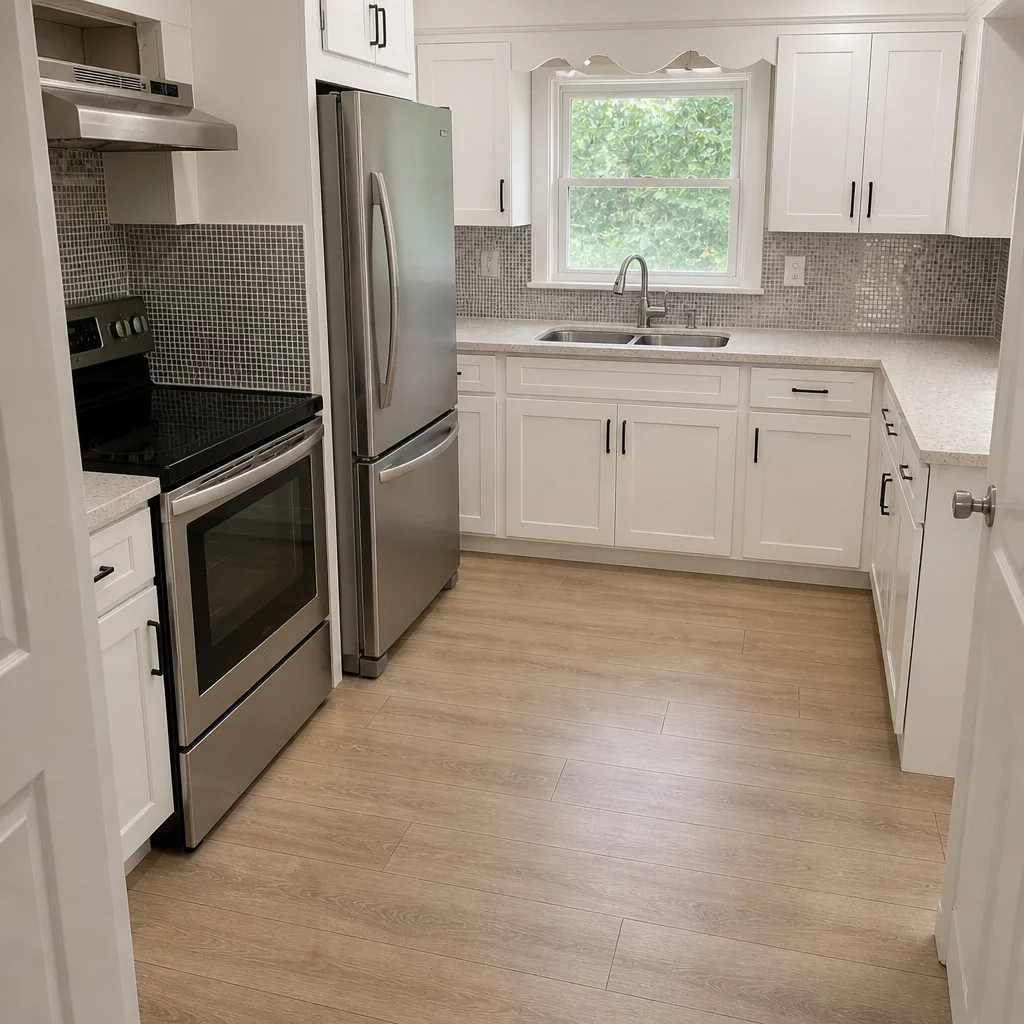
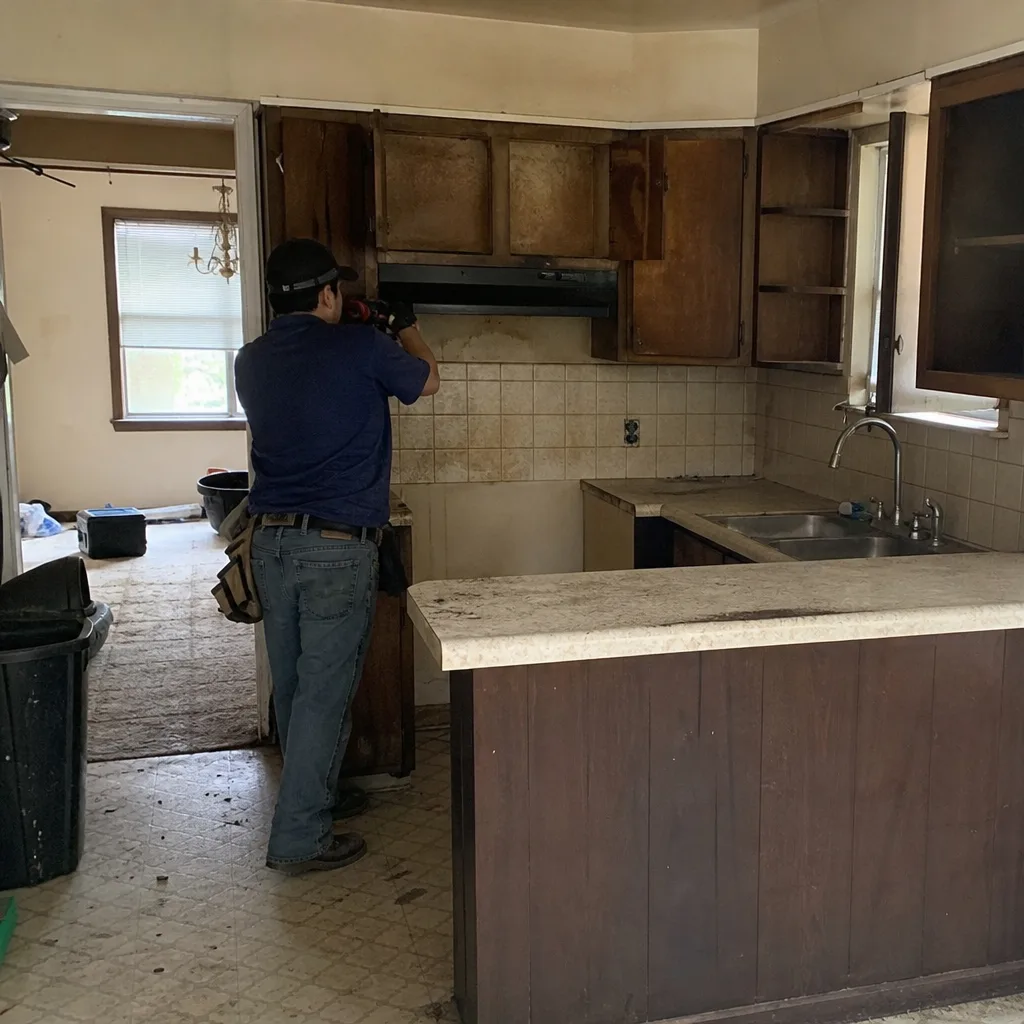
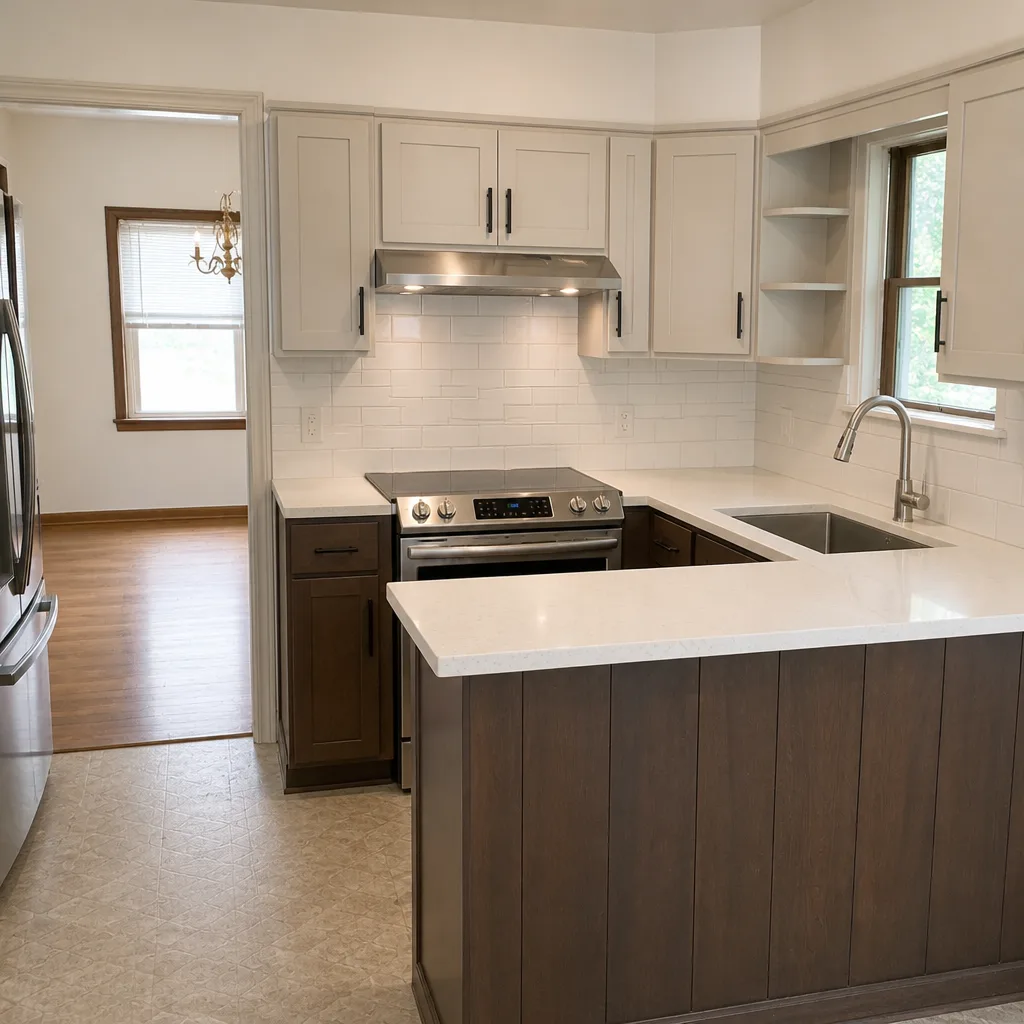
See the difference
 Before
 After
 Before
 After
 Before
 After
When to Call a Professional
Call a professional when you see any of these in an Arlington home: a crack wider than 1/8 inch that widened over 90 days, a stair-step crack in brick, a sagging ridge line, an active leak, a sill that won’t hold a screwdriver, or a frame that’s visibly out of square. For structural work, a foundation pour, a roof connection, or a major framing repair, calling a professional isn’t a suggestion. These are safety-critical components where a mistake can mean a five-figure redo or a dangerous house. Don’t try to diagnose a foundation from the internet; get a trained set of eyes on it.
Rowan Construction Group Arlington offers free estimates in Arlington. A written price with a written scope comes before any work starts, and the second opinion on a competitor’s written estimate is free as well. Call (844) 761-7521 to schedule your free estimate.
Frequently Asked Questions
Foundation crack repair in Arlington runs from about $400 for an epoxy injection on a stable crack to $15,000 or more for a pier installation on a failing corner. The wide range reflects what’s actually wrong: shrinkage, active movement, or a dropped corner. Get an engineer’s inspection (about $400 to $1,500) before you spend on piers. Call (844) 761-7521 for a written estimate, free.
Look for stair-step shape, a 45-degree diagonal at a door or window corner, or a width over 1/8 inch. Any of the three puts it in the structural category in Arlington’s clay soil. Hairline horizontal cracks are cosmetic. A $4 crack monitor settled the question in 90 days when the shape is ambiguous. If you’re still unsure after monitoring, call (844) 761-7521.
Roof replacement on a typical Arlington single-family home runs $9,000 to $18,000 for architectural shingles, depending on square count, pitch, and how much decking needs to be replaced. A single-slope partial repair is $1,800 to $4,500. The printed scope should name the shingle brand so the patch matches. Call (844) 761-7521 for a written quote.
Yes. Foundation repair is a permitted activity in Arlington, and the inspection is part of the record that protects your home’s resale value. Any contractor who tells you permits aren’t needed for a pier installation is telling you they won’t get one, which also means they won’t back the work with an inspection record. Call (844) 761-7521 if you want to confirm the permit path.
For a small area of surface rot, a two-part epoxy wood filler handles it in an afternoon. But if the rot has reached the structural framing behind the sill, the repair requires removing trim, cutting out the damaged wood, replacing it with treated stock, and re-flashing the opening. If a screwdriver sinks into the wood, call a professional. Call (844) 761-7521 for a written estimate.
Not on a written scope, unless you change the plan. Under the discipline we work by, no work proceeds on a change until the change order is signed. That’s the difference between a written quote and a verbal one. Any contractor who won’t put the scope in writing is telling you the price will move. Call (844) 761-7521 to schedule a free written estimate.
The Bottom Line
Most construction defects in an Arlington home show up as small, readable signals months before they turn into structural failures. Sort the cracks, granules, stains, and sticking doors into three tiers: monitor (cosmetic, track it), repair within 90 days (roof, flashing, sill), or call now (structural, active leak, racked frame). A $4 crack monitor and a phone camera are the two tools that replace most guesswork. The written scope, the signed change order, the documented photo record, and the inspection sign-off are what protect you during the project. If a signal worries you in Arlington, a free written estimate gives you the number before anything gets picked up.
Call (844) 761-7521 to schedule a free estimate. A written price comes before any work starts, every time.
Written by the team at Rowan Construction Group Arlington.