Last updated November 18, 2026






Free written scope consultation - allowances, timeline, and change-order rules on paper before a single trade is scheduled
Windows & Doors Troubleshooting: Common Problems and How to Fix Them
Most window and door problems get diagnosed backwards. A homeowner feels a draft, assumes the glass has failed, and starts pricing a replacement before anyone has looked at the weatherstrip. In our experience across Arlington service calls, that draft is a worn weatherstrip or a compressed glazing bead far more often than a failed insulated glass unit – and the difference between those two diagnoses is roughly $40 versus $600. This guide is a diagnostic tree, not a sales pitch: how to read each symptom, what it actually means, when a repair is reasonable for a homeowner and when it isn’t. We’ll cover the North Texas foundation movement that makes doors stick in summer, fogged glass that isn’t really fogged, and the hardware brands you can order from to fix a window without replacing it.
Quick Answer
Diagnose a window or door problem by symptom before calling anyone: a draft usually means failed weatherstrip, a corner seal, or a threshold gap (a repair, not a replacement); condensation between panes means the sealed glass unit’s seal has failed; condensation on the interior surface is a humidity or HVAC issue, not a window failure. Difficulty operating points to hardware, alignment, or frame warp – and on North Texas slab foundations, seasonal sticking is often self-correcting. Most problems have a mechanical cause that’s cheaper to fix than to replace.
Styles & brands we work with
- Kitchen remodeling
- Bathroom remodeling
- Home additions & ADU
- Roofing
- Windows & doors
- Driveway & pavers
- Fence
Table of Contents
- Why Is My Window Drafty? (It’s Rarely the Glass)
- Fogged Glass vs. Interior Condensation: The Temperature Test
- Why Windows and Doors Stick: Hardware, Alignment, Frame Warp
- North Texas Foundation Movement and Sticking Doors
- Ordering Replacement Hardware Without Replacing the Unit
- Repair or Call a Pro? A Clear Line
- Common Mistakes to Avoid
- When to Call a Professional
Why Is My Window Drafty? (It’s Rarely the Glass)
A draft coming off a closed window is an air-seal problem, and air seals fail at the edges long before glass fails in the middle. When we run a diagnostic, we work from the outside in and from the frame toward the center. The glass itself is the last suspect, not the first.
Work through these air-leak points in order. Each one is cheap to check and most are cheap to fix:
- Weatherstrip along the sash and frame. On double-hung and casement windows, the weatherstrip (the flexible seal that closes the gap between moving parts) compresses over time and stops springing back. If it’s flattened, cracked, or missing along a section, air moves through. Replacement weatherstrip runs a few dollars per linear foot.
- Corner seals on the sash. The four corners of a window sash are where the frame joints meet. A gap here – sometimes a hairline you can only see in raking light – is a common leak point on older vinyl and aluminum units.
- Glazing bead and glazing putty. The glazing bead is the trim strip holding the glass in the sash. If it’s compressed or the sealant behind it has dried, air slips past the glass edge even though the glass is fine. That’s the “$40 fix, not $600” scenario.
- The threshold gap on doors. On exterior doors, the sweep and threshold seal take the most wear. A door that drafts at the bottom usually needs a new door sweep or a threshold adjustment, not a new door.
- Lock and handle cutouts. Less common, but on poorly fitted units air leaks around the hardware penetrations.
In Arlington, our summers push the outdoor-to-indoor temperature difference to 25 degrees or more on a July afternoon, which makes even a minor seal failure obvious. The good news is that a draft is the most repairable symptom on this list. Before you price a replacement, run a hand along the sash edges on a windy day and feel where the air is actually coming from.
Fogged Glass vs. Interior Condensation: The Temperature Test
Two different problems present almost identically, and telling them apart matters because one is a glass failure and the other isn’t a window problem at all.
Condensation between the panes means the sealed unit’s perimeter seal has failed and moisture has entered the gap. Condensation on the interior room-facing surface means the glass is doing its job – the cold surface is meeting humid indoor air, which is a humidity or HVAC issue. Getting this wrong sends you toward a $400-$700 sealed-unit replacement you didn’t need, or leaves a real humidity problem unaddressed.
Here’s the temperature-differential test, which takes about five minutes:
- Press an instant-read thermometer (or an infrared thermometer) against the center of the glass from inside and note the reading.
- Check the interior surface with the back of your hand, or watch where moisture forms. On interior-surface condensation, the moisture appears on the room side of the glass and you can wipe it off.
- If moisture sits in the sealed gap between panes – you cannot wipe it, and it doesn’t change with indoor humidity – the sealed unit’s seal has failed.
- Note the pattern. Condensation that appears only on the coldest mornings and clears as the day warms points to interior humidity, not a failed seal. Fogging that stays put, or shows a haze or water line permanently between the panes, is a failed seal.
If you confirm interior-surface condensation, look at bathroom and kitchen exhaust, indoor humidity levels, and HVAC operation before touching the window. If the seal has failed, the insulated glass unit (IGU) needs replacement – and that’s a factory-ordered part you won’t install yourself.
Why Windows and Doors Stick: Hardware, Alignment, Frame Warp
A window that won’t crank open, or a door that drags on the strike plate, usually has one of three causes: worn hardware, alignment drift, or a frame that’s no longer square. The diagnostic order is hardware first, alignment second, frame last – because frame warp is the expensive conclusion and you want to be sure before you land there.
- Worn operator hardware (casement and awning windows). The crank mechanism wears at the gear and the hinge arm. If the handle turns freely but the sash doesn’t move, the operator has stripped. If it moves halfway and binds, the hinge arm or track is worn. These are replaceable parts.
- Failed balances (double-hung windows). The balance is the spring or spiral mechanism that holds the sash up. A sash that won’t stay open, or slams down, has a failed balance. Replaceable in pairs.
- Alignment drift. Over time, hinges and strike plates shift. A door that latches hard is often an alignment issue fixable by adjusting the hinges or strike plate, not a replacement.
- Frame warp. When the frame itself is out of square or bowed – usually from moisture damage or settlement – adjustments only buy time. This is where replacement enters the conversation, but only after the other causes are ruled out.
On doors specifically, check the gap at the top and along the latch side with a straightedge or a dollar bill. An even gap that’s simply tight means alignment; an uneven gap that changes seasonally points to foundation movement, which we cover next.
North Texas Foundation Movement and Sticking Doors
Arlington sits on expansive clay soils – the black gumbo clay that swells when wet and shrinks when dry – and most homes here are on slab foundations. That combination means the slab moves seasonally, and the door frames sitting on it move with it. A door that sticks in August often frees up by February on its own. Knowing that saves a lot of unnecessary adjustment, and it saves you from adjusting a door against movement that will reverse.
Here’s how to tell a seasonal stick from a real problem:
- Seasonal sticking. The door sticks during the dry, hot stretch (late summer into fall) and loosens after the winter rains, or vice versa. The gap at the top of the door changes noticeably with the season. This is foundation movement, and it often self-corrects.
- Progressive sticking. The door gets progressively harder to close over months, or sticks in one season and stays stuck. The gap at the top is consistently uneven and doesn’t recover. This is worth a closer look – either a foundation issue to have evaluated or a door that’s out of square.
- Sticking only at one corner. A single corner catching on the strike plate usually means the hinge has loosened or the frame has racked slightly. Adjust the hinges before assuming the worst.
Our rule on North Texas doors: don’t adjust a seasonally sticking door in the middle of the season it’s sticking in. Wait for the opposite season and check again. If it frees up, you saved the adjustment. If it doesn’t, you’ve confirmed the problem is real before spending money on it. This is also why we ask Arlington homeowners what month the door started sticking – the answer tells us most of what we need to know.
Ordering Replacement Hardware Without Replacing the Unit
One of the most useful things a homeowner can know: window and door hardware is standardized by brand far more than most people realize. You can order a replacement operator, balance, or lock mechanism and swap it yourself on many units, avoiding the cost of a full replacement. The trick is identifying the brand and part.
The hardware brands you’ll most often find on common window lines are Truth (casement and awning operators, frequently stamped with a number on the mechanism), Roto (operators and hardware on many European-style and tilt-turn units), and Caldwell (balances, particularly spiral and block-and-tackle types on double-hung windows). If you pull the sash or the operator cover, you’ll usually find a stamped part number or brand mark that lets you order an exact replacement.
- Identify the window or door brand and model – often on a label in the jamb channel or on the sash edge.
- Photograph the failed part with the numbers visible, and measure the balance or operator length.
- Order the part by the stamped number, not by “looks like” – the numbers are the whole point.
- Replace in pairs on double-hung balances so the sash stays even.
For products like the ones we install, we can point you to the right part number directly. Beyond windows and doors, our sourcing depth across brands – Owens Corning and IKO on the roofing side, for example – means the same documentation-first discipline applies across trades. If you’re planning a larger project, see our Rowan Construction Group Arlington home for how each quote is written before work starts.
Repair or Call a Pro? A Clear Line
Some window and door repairs are genuinely reasonable DIY work. Others involve parts you can’t buy at a store and tasks where a mistake costs more than the repair. Here’s the line we use.
Reasonable DIY repairs:
- Replacing weatherstrip along a sash or frame.
- Replacing an operator or crank on a casement window (Truth and Roto parts are orderable by number and swap with basic tools).
- Replacing a failed balance on a double-hung window, in pairs.
- Adjusting hinges or a strike plate on an exterior door.
- Replacing a door sweep or threshold seal.
- Re-caulking around a glazing bead, if the bead itself is intact.
Call a professional:
- Broken insulated glass unit (IGU) replacement. Sealed units are factory-ordered to exact measurements and glazed in with proper sealant – this is not a homeowner task.
- Frame warp or out-of-square frames, especially anything involving foundation movement evaluation.
- Any window or door on an upper floor where reaching the exterior means working at height on a ladder.
- Replacing a door slab or window unit where the rough opening is involved.
The distinction matters because it’s where homeowners overspend. An IGU replacement runs $400-$700 per unit installed; an operator replacement runs $30-$80 for the part. We’d rather tell you which one you’re facing than sell you a window you don’t need.
Common Mistakes to Avoid
- Replacing glass when the problem is weatherstrip. A draft gets diagnosed as a failed window and priced at $600 when the weatherstrip along the sash is $40. Feel where the air enters before you price glass.
- Treating interior-surface condensation as a window failure. On an Arlington summer morning, a window streaming with moisture on the room side is doing its job. Check indoor humidity and exhaust before ordering a sealed unit.
- Adjusting a seasonally sticking door in the wrong season. A door that sticks in the August dry spell may free up by February. Adjusting against seasonal slab movement locks in a problem that would have resolved.
- Replacing a window when a $30 operator would fix it. If the crank turns but the sash doesn’t move, the operator has stripped. That’s a part swap, not a replacement.
- Assuming a stuck door means foundation failure. Most seasonal sticks are normal clay-soil movement. Progressive, year-round sticking is the pattern worth investigating – not every August stick.
- Ignoring the photo evidence. When a pro diagnoses a window or door, the photo record of what was found is the thing you can compare against a second opinion. Insist on it.
- Letting a real humidity problem masquerade as a window problem. Interior condensation persisting year-round usually signals HVAC or ventilation issues. Replacing windows won’t fix it.
See the difference
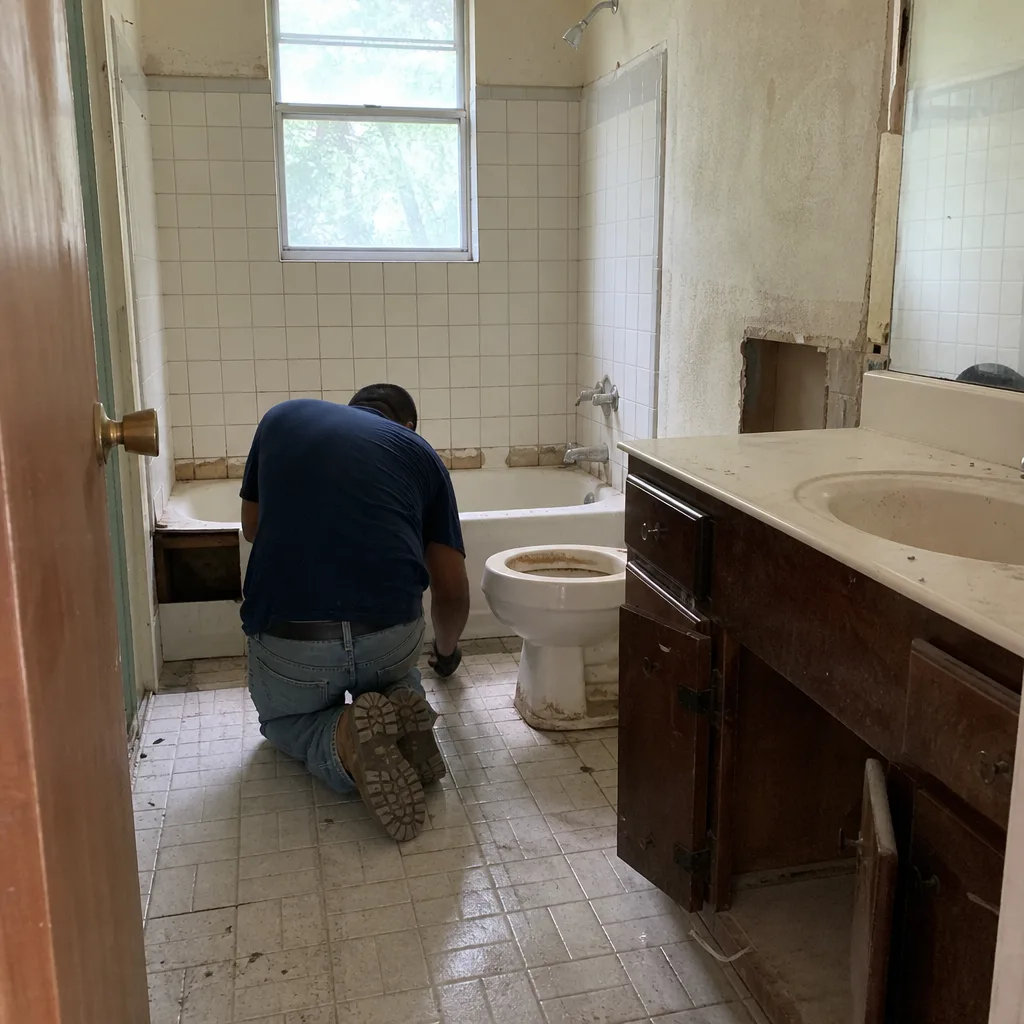 Before
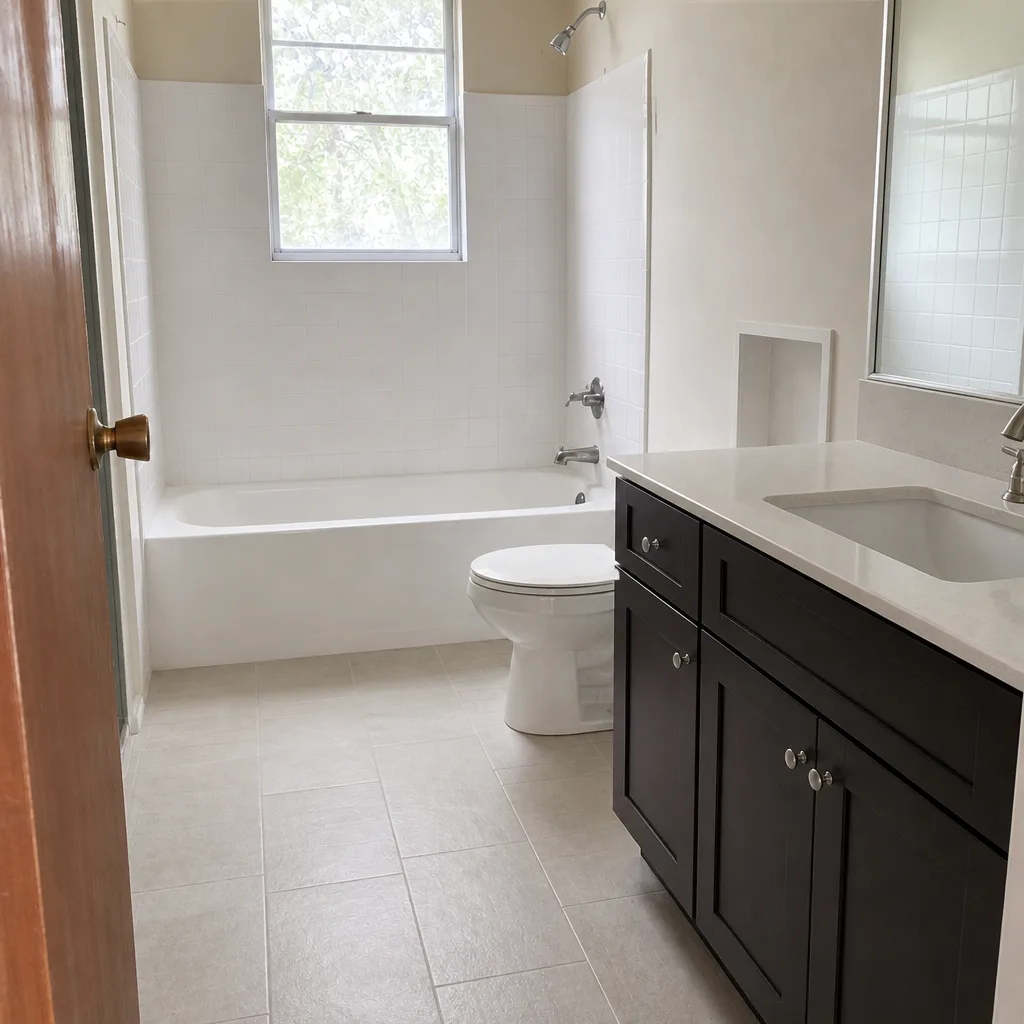 After
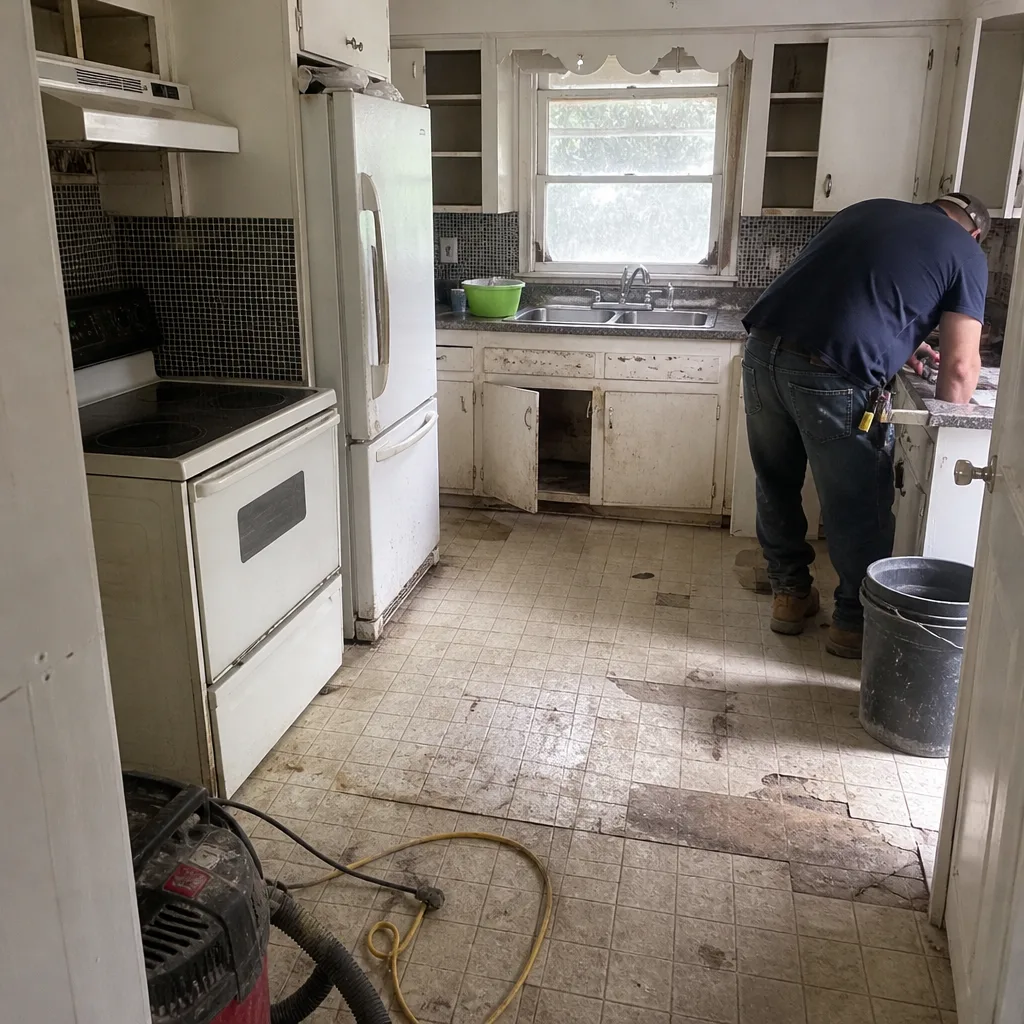 Before
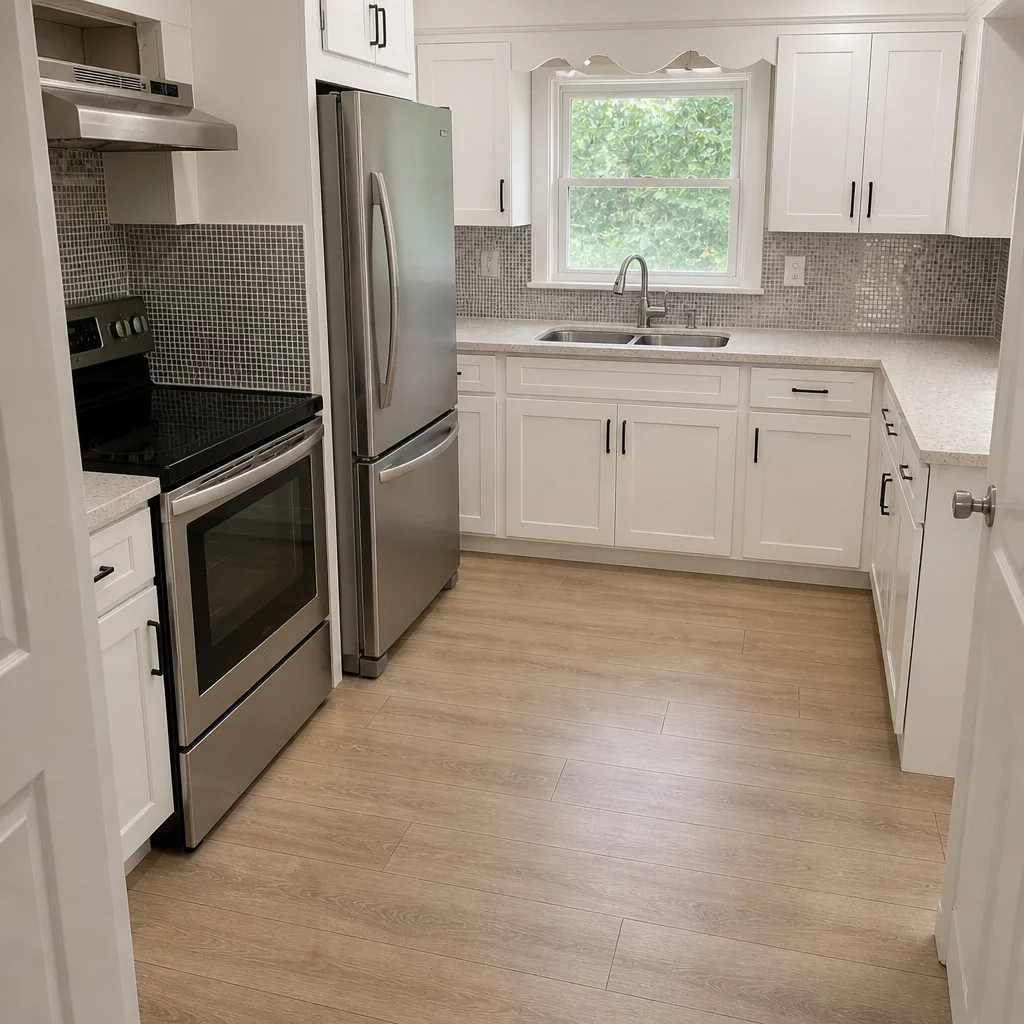 After
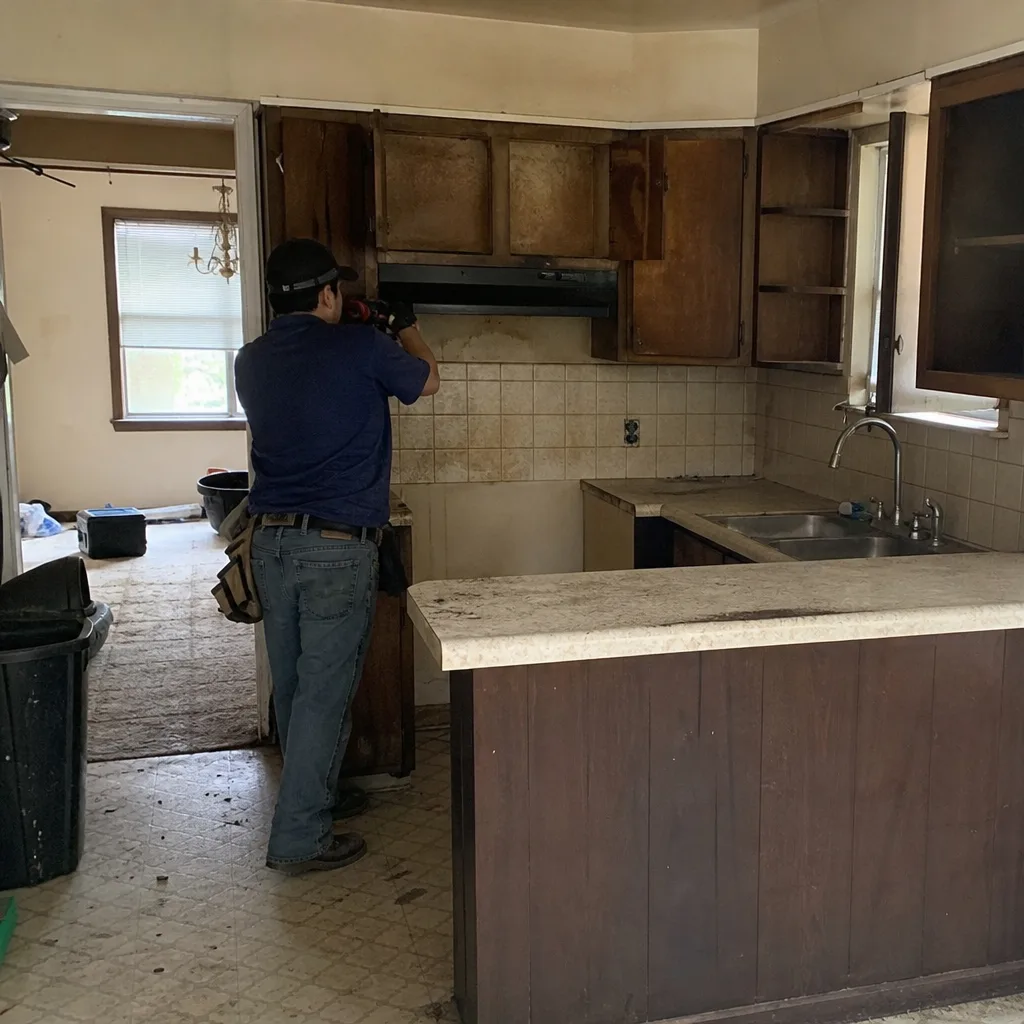 Before
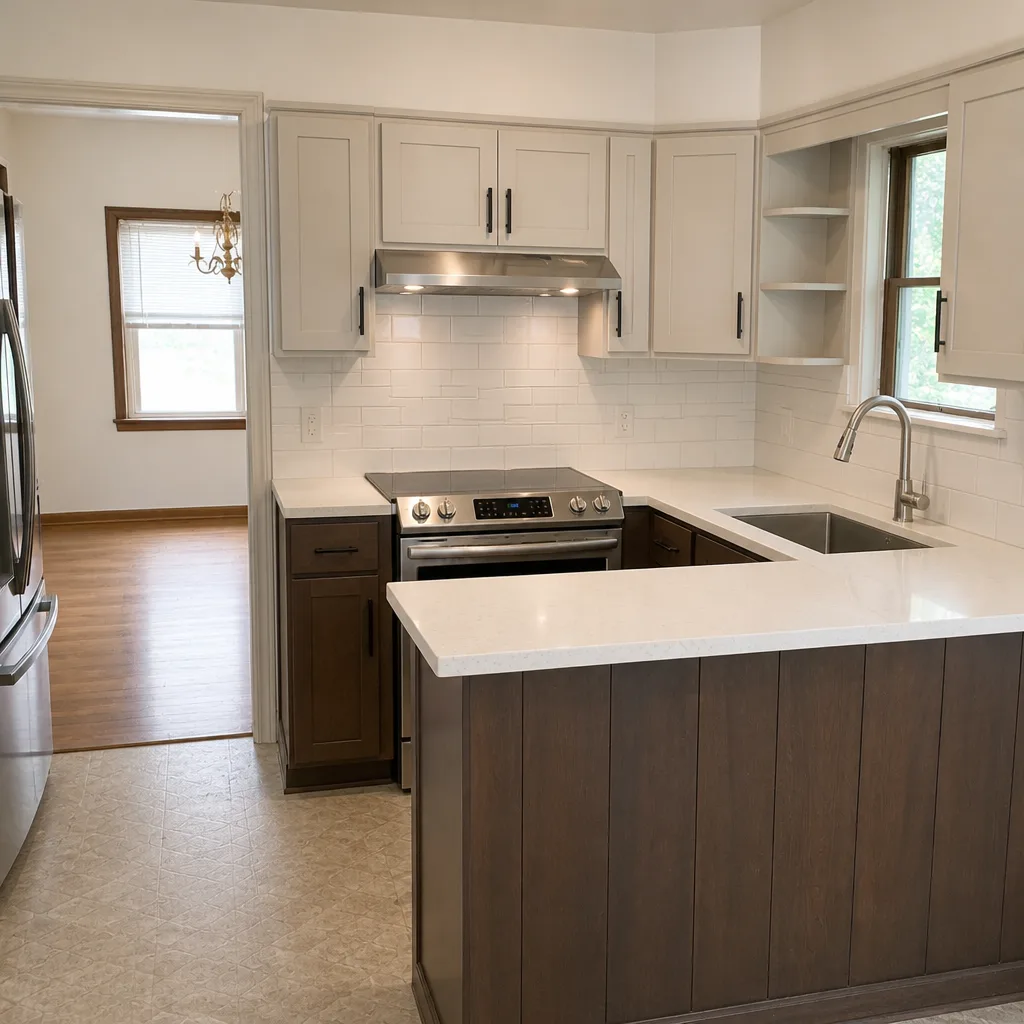 After
When to Call a Professional
Call a professional when the diagnosis lands on a sealed glass unit, a frame that’s out of square, or foundation movement that isn’t resolving. Also call for any exterior work at height, and for anything where the fix requires opening a wall or rough opening. On a home in Arlington, the diagnostic visit itself is usually free, and it’s where a written scope should come from – what was found, what the fix is, and what it costs, all in writing before anyone picks up a tool.
For a larger window and door project, our written-price approach means you see the number before work starts, and any change requires a signed change order. If you’re also considering exterior work, our Fence Installation in Arlington and Driveway & Pavers in Arlington pages describe the same documented process. Rowan Construction Group Arlington offers free estimates in Arlington – call (844) 761-7521.
Frequently Asked Questions

A drafty window with intact glass almost always has a failed air seal, not failed glass. Check the weatherstrip along the sash, the corner seals, and the glazing bead holding the glass in place. In our experience, a draft is a $40 weatherstrip or bead repair far more often than a $600 replacement. Call (844) 761-7521 for a free estimate if you want the diagnosis confirmed in writing.
If the moisture is between the panes and you can’t wipe it off, the sealed unit’s seal has failed. If the moisture is on the room-facing surface and wipes off, it’s interior humidity and a thermostat or HVAC issue, not a window failure. A quick temperature check and a look at whether the fog clears with the weather tells you which one you’re facing.
Arlington’s expansive clay soils cause slab foundations to move seasonally, and door frames move with them. A door that sticks in the dry summer often frees up by winter. If the sticking is progressive and doesn’t recover, that’s worth evaluating. Don’t adjust a seasonally sticking door mid-season – wait and recheck.
Yes, in most cases. Casement operators (Truth, Roto) and double-hung balances (Caldwell) are replaceable by part number with basic tools. Replacing a broken insulated glass unit is not a DIY task – sealed units are factory-ordered to exact measurements and require professional glazing. Call us if you want the part identified.
Weatherstrip replacement typically runs $40-$150, an operator or balance replacement about $30-$80 for the part, a door sweep or threshold seal $25-$80, and a broken sealed glass unit $400-$700 installed per unit. A written estimate before work is our standard. Call (844) 761-7521 for an exact quote – estimates are free.
Repair, until hardware, alignment, and frame squareness are all ruled out. Difficulty operating is almost always hardware or alignment, and both are cheaper than a full unit replacement. Replacement enters the conversation when the frame itself is warped or out of square, most often from settlement or moisture damage. Our Home Additions & ADU in Arlington page covers the structural side if a larger project is on the horizon.
The Bottom Line
Window and door problems have a mechanical diagnosis before they have a replacement recommendation, and working through that order is where the savings live. Start with air seals before glass. Test the temperature differential to separate a fogged IGU from interior condensation. Check hardware and alignment before you call a frame warped. And on a North Texas door, give seasonal slab movement and the calendar a chance before you spend a dollar on adjustments. Most repairs on this list are small, orderable, and cheaper than a replacement. When the diagnosis does land on a sealed unit, a warped frame, or foundation movement, that’s when a written estimate from a professional makes sense – with the number on the page, in dollars, before work starts.
Call (844) 761-7521 for a free estimate and a written diagnosis of what’s actually wrong with your window or door. A live person answers, the estimate is free, and a second opinion on any written quote is free too.
Written by the team at Rowan Construction Group Arlington.