Last updated November 18, 2026




Free written scope consultation - allowances, timeline, and change-order rules on paper before a single trade is scheduled
Bathroom Remodeling Warning Signs Every Homeowner Should Know
A soft spot near the toilet base isn’t a cosmetic issue. It’s evidence the wax ring has been leaking long enough to delaminate the subfloor, and finding it after tile is ordered changes your budget by $1,500 to $4,000. In our experience across Arlington, the costly surprises almost never announce themselves. They hide behind fresh caulk, a coat of white paint, and a staging towel nobody moved. This guide names the specific signs that change a bathroom remodel’s scope and price before work begins: what to test yourself, what staining patterns mean, which warnings are legitimate, and which ones contractors use to pad a bid.
Quick Answer
The most reliable bathroom remodeling warning signs are a springy floor near the toilet or tub, hollow-sounding wall tile, moisture or a musty smell at the cabinet base, an exhaust fan that can’t hold a tissue to its grille, and corroded supply valves. Any one of these can add $1,500 to $8,000 in hidden subfloor, plumbing, or wall work that most initial bids miss. A five-point inspection before you request estimates tells you which signs are present and keeps the number on the page honest.
Styles & brands we work with
- Kitchen remodeling
- Bathroom remodeling
- Home additions & ADU
- Roofing
- Windows & doors
- Driveway & pavers
- Fence
Table of Contents
- The Five-Point Physical Inspection You Can Do Before Getting a Bid
- What Staining Patterns Tell You (Floor vs. Ceiling Below)
- Warning Signs Specific to Older Arlington Homes
- Signs That Legitimately Inflate Bids vs. Signs Contractors Use to Upsell
- How to Read a Contractor’s Bid for Warning-Sign Acknowledgment
- The Two Most Overlooked Systems: Exhaust and Supply Valves
- What Each Warning Sign Adds to Your Budget
The Five-Point Physical Inspection You Can Do Before Getting a Bid
You don’t need a moisture meter to run this. You need ten minutes and a flashlight. Do all five before you call anyone for an estimate. What you find here is the difference between a bid built on a real scope and a bid built on a hope.
- Floor deflection test. Stand with your weight over one foot near the toilet flange and near the tub apron. Bounce gently. A floor that moves or feels sponge-soft underfoot means the subfloor or joist has been compromised. Tile set over a deflecting floor cracks within a year regardless of how well it’s installed.
- Wall tile tap test. Tap a tile with your knuckle. A hollow sound means the thinset has lost bond, usually from moisture behind the wall. This is common near tub surrounds and shower curbs, where the waterproofing membrane is the first thing to fail.
- Cabinet base moisture check. Pull everything out from under the sink and feel the cabinet floor and the wall behind it. Softness, dark staining, or a persistent musty smell under the cabinet means a slow leak has been running behind the vanity.
- Exhaust fan performance test. Hold a single square of toilet tissue to the fan grille while it runs. If the tissue falls, the fan is either failing or undersized. Bath fans in Arlington need to move enough air to clear the humidity from a hot shower; a weak fan pumps moisture into the wall assembly instead of outside.
- Supply valve condition. Turn the shutoff valves under the sink gently, then back. If they won’t turn at all, or turn but don’t stop the water, the valve is seized or corroded. This matters because you’ll need to shut water off during any remodel, and a seized valve can fail under pressure.
Write down what you found. When a contractor asks about the bathroom, hand them that list. Their reaction to it tells you whether they’ll itemize properly. We’ve seen bids in Arlington run $2,000 short because the contractor never tested the floor; the discovery happens after demolition, when it’s the customer’s checkbook, not the contractor’s.
What Staining Patterns Tell You (Floor vs. Ceiling Below)
Staining on the bathroom floor and staining on the ceiling below the bathroom point to different failure sources, and knowing which one you have changes the estimate before anyone picks up a tool.
Staining on the ceiling below. A brown ring or water spot on the ceiling of the room below usually means water is escaping the bathroom’s waterproofing. The source is almost always on the wet side of the assembly: a failed shower pan, a cracked tile and grout joint, a loose toilet wax ring, or deteriorated caulk at the tub/shower junction. A ceiling stain that only appears after showers confirms a slow repeat leak, not a single event. Under the stain, expect to find water-damaged drywall, possibly a soft joist, and a shower pan that needs to come out. That scope alone commonly runs $2,000 to $5,000.
Staining on the bathroom floor itself. Staining around the toilet base or along the tub edge is often a plumbing escape at the fixture, not a wall or membrane failure. It points to a wax ring, a supply line, or a drain fitting. If you see dark staining in the grout joints radiating from the toilet, the subfloor near the flange is the likely victim. Lift the toilet and check the flange before ordering tile.
The distinction matters because a bid that treats all water staining the same way hasn’t looked carefully. One is a waterproofing problem in the wet wall. The other is a plumbing problem at the fixture. They carry different line items and different contingencies. Under the Haven Standard, our crews document what they find with photos on every visit, so the record shows which failure you had and what was done about it, not a verbal summary.
Warning Signs Specific to Older Arlington Homes
Homes built before 1985 in Arlington carry materials that are invisible during a walkthrough but change the scope the moment a wall opens. If your home is in that era, budget for a pre-demolition inspection, period.
Vermiculite tile backer. Vermiculite was used from the 1960s into the early 1980s as a lightweight backer behind wall tile, and some batches were contaminated with asbestos. If your bathroom tile is set over a gray-brown, pebbly backer board rather than cement board, stop. Disturbing that material requires handling under specific safe-practice rules only a qualified abatement team can run. This is not a place for a homeowner with a pry bar, and it is not a place for a general contractor to wing it. Costs for it can add $1,500 to $6,000 depending on the square footage.
Galvanized supply lines. Many older Arlington homes still have galvanized steel water pipe. It rusts from the inside out, drops water pressure, and can fail when the system is repressurized during a remodel. If you see gray metal pipe with threaded fittings under the sink, the project scope needs a plumbing upgrade line item, and that line item belongs on the bid before demolition.
Cast-iron drain stacks. Below the floor, older Arlington bathrooms may connect to a cast-iron drain stack that has corroded to the point of channeling. A camera inspection of the drain is a $250 to $500 diagnostic that saves a $4,000 floor excavation later. If the stubbing cast iron is pitting but still structurally sound, a mechanical coupling can tie new PVC into the old stack. If it’s channeled, it needs replacement.
If the remodeling scope grows toward adding a second bathroom or extending the roofline, that work starts to cross into Home Additions & ADU in Arlington territory and deserves a separate written scope and inspection. We cover the seven trades and coordinate them, so a scope change doesn’t become a scramble across three contractors who never speak.
Signs That Legitimately Inflate Bids vs. Signs Contractors Use to Upsell
You need to distinguish a bid that includes real findings from one that inflates with warnings that never become work. Here’s how we separate them.
Legitimate inflators (signs you can verify):
- Soft subfloor at the toilet flange. Verifiable with your hand and your weight. Subfloor replacement plus new tile often adds $1,500 to $4,000.
- Hollow wall tile from failed waterproofing. Verifiable with a tap. Removing and replacing a shower wall runs $2,500 to $6,000 when the membrane is gone.
- Seized supply valves under the sink. You can test them yourself. Valve replacement and a possible plumbing upgrade line item add $200 to $800.
- Cast-iron drain pitting. Real, but only confirmed by a camera inspection. Ask to see the footage before you accept the line item.
- Failed exhaust ductwork. Verifiable by the tissue test and by looking at the duct run. Terminating a fan inside an attic rather than through the roof means moisture is being dumped into your framing, and fixing it is a real scope item.
Upsell red flags (signs someone may be padding):
- A bid that lumps $3,000+ into “contingency” without itemizing what it’s for. That’s not a contingency; that’s a blank check.
- Asbestos-removal charges quoted without a sample test or a qualified abatement company named.
- Full waterproofing membrane replacement quoted when the tap test shows no hollow spots.
- Added scope for “code-required” electrical work when no permit application exists yet. Ask to see the permit, not the language.
- “We may find X” clauses with no dollar range attached to them, which leave you negotiating later. Written prices are the point.
If you want a second set of eyes, bring a competitor’s quote to us. Our Free Second Opinion reviews any written estimate line by line at no charge. We’ll tell you the same thing we’d tell a family member: which line items hold up and which ones are inflated.
How to Read a Contractor’s Bid for Warning-Sign Acknowledgment
A bid that doesn’t itemize contingency for subfloor or moisture remediation is a bid that hasn’t looked carefully. Reading a bid the way you’d read a lease is the single most useful habit a homeowner can develop before signing.
What a careful bid includes:
- A line for the pre-demolition inspection. Evidence a contractor has looked at your specific bathroom, not just at the make and model of the house.
- A subfloor line. Either a stated allowance or a flat line for the subfloor area. If it’s an allowance, the bid should say what triggers the number moving and by how much.
- A moisture remediation line. Drywall dry-out, mold remediation, or wall assembly replacement. Real bathrooms have water. Real bids acknowledge it.
- A waterproofing membrane specification. A named product (a sheet membrane or a liquid-applied membrane, with the brand and the system) rather than the word “waterproofing.”
- A fixture spec that names brands. Kohler and Toto are common in Arlington baths and are honest numbers to quote. If the bid is silent on fixtures, the “allowance” can become a later change order.
- A written warranty page and a signed change-order policy. Under Clause 1 of the Haven Standard, no work proceeds on a change until the change order is signed. That policy has kept projects within a few percent of the agreed price across more than 4,000 jobs.
The bid itself should be a flat written price with a written scope and a written warranty. “Call for a quote” is not an option here. If a contractor won’t put the number on paper before the work starts, the warning sign just appeared.
The Two Most Overlooked Systems: Exhaust and Supply Valves
Bath fans and supply valves are the most commonly deferred items in any bathroom remodel. Both fail quietly. Both are cheap to fix before the walls are open and expensive to fix after.
Exhaust fans. The tissue test is the honest one. A bath fan in an Arlington home needs to move enough air to clear the mirror and the humidity from a hot shower in under ten minutes. Under-sized fans, or fans ducted to the wrong place (a short run to an attic vent instead of through the roof), are the two failures we see most. Moisture that fails to leave the bathroom lands in your wall cavity, then inside the ceiling paint of the room below. Correcting the ducting and the fan is usually $400 to $900 and deserves to be in the bid.
Supply valves. Seized angle stops under the vanity are common in Arlington homes that have been in place for a decade or more. They look fine. They turn with a little extra force. Then during a remodel they either won’t close at all or they crack at the packing nut. Replacing both angle stops and the supply lines adds $150 to $400. Not replacing them is how you end up with water on a new floor the same week it’s installed.
Both of these are called out in our pre-project walkthrough and specified in the quote. The point of the visit is to write down what we found, not just how the room will look when we’re done.
What Each Warning Sign Adds to Your Budget
Here are the ranges we see in Arlington on the specific hidden problems this guide covers:
- Subfloor replacement (toilet area): $1,500 to $4,000
- Full subfloor replacement (whole bath): $3,000 to $8,000
- Shower wall rebuild with new membrane: $2,500 to $6,000
- Cast-iron drain stack replacement: $2,500 to $7,000
- Galvanized supply line partial upgrade: $1,200 to $3,500
- Vermiculite backer handling if present: $1,500 to $6,000
- Exhaust fan and duct correction: $400 to $900
- Supply valve and line replacement: $150 to $400
- Pre-demolition drain camera inspection: $250 to $500
Every dollar above is named on the page, in writing, before anyone picks up a tool. When a hidden condition is found on the day, it goes into a change order with the price next to it and the change order is signed before we proceed. That’s the whole point of the discipline.
Common Mistakes to Avoid
- Ordering tile before the floor deflection test. A floor that deflects under weight will crack new tile within a year, no matter how carefully it’s set. Test before you buy.
- Accepting a bid that doesn’t name the waterproofing membrane. The membrane is the single item that decides whether the shower survives the next decade in an Arlington summer. If the bid says “waterproofing,” ask for the brand and the system.
- Skipping the drain camera inspection on pre-1985 homes. The $250 to $500 diagnostic is the cheapest money you’ll spend on the project, and it prevents a $7,000 discovery after demolition.
- Treating a soft spot near the toilet as cosmetic. It’s evidence water has been leaving the wax ring for a while, and it means the subfloor near the flange is compromised.
- Ignoring the tissue test on the bath fan. A weak fan moves moisture into the walls, not outside. If the tissue falls, the fan isn’t doing its job.
- Choosing a bid by round number alone. A $12,000 bid that omits subfloor, valves, and moisture is not a cheaper bid. It’s just waiting to grow by $4,000.
- Letting work proceed on a change without a signed change order. The signed order is the thing that keeps the finished price where you agreed to it. Insist on it every time, regardless of who swings the hammer.
See the difference
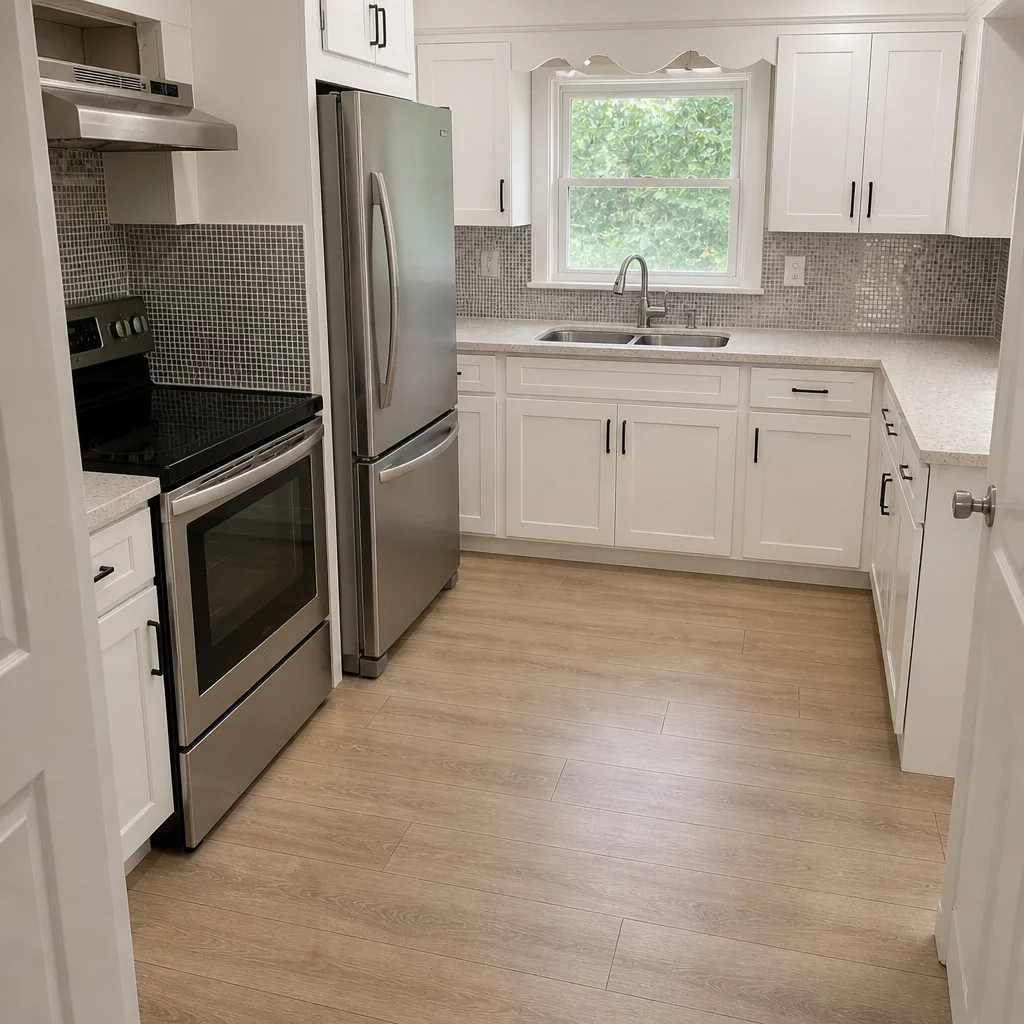
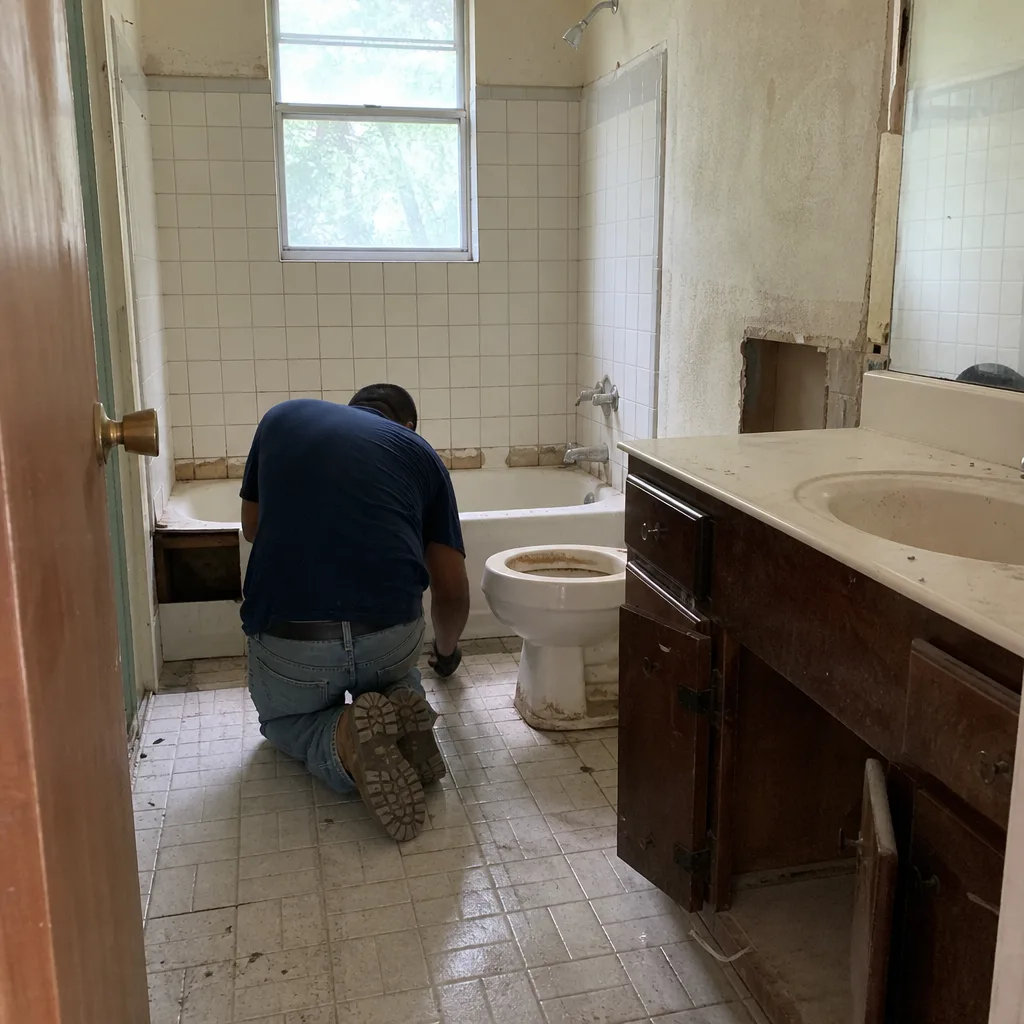 Before
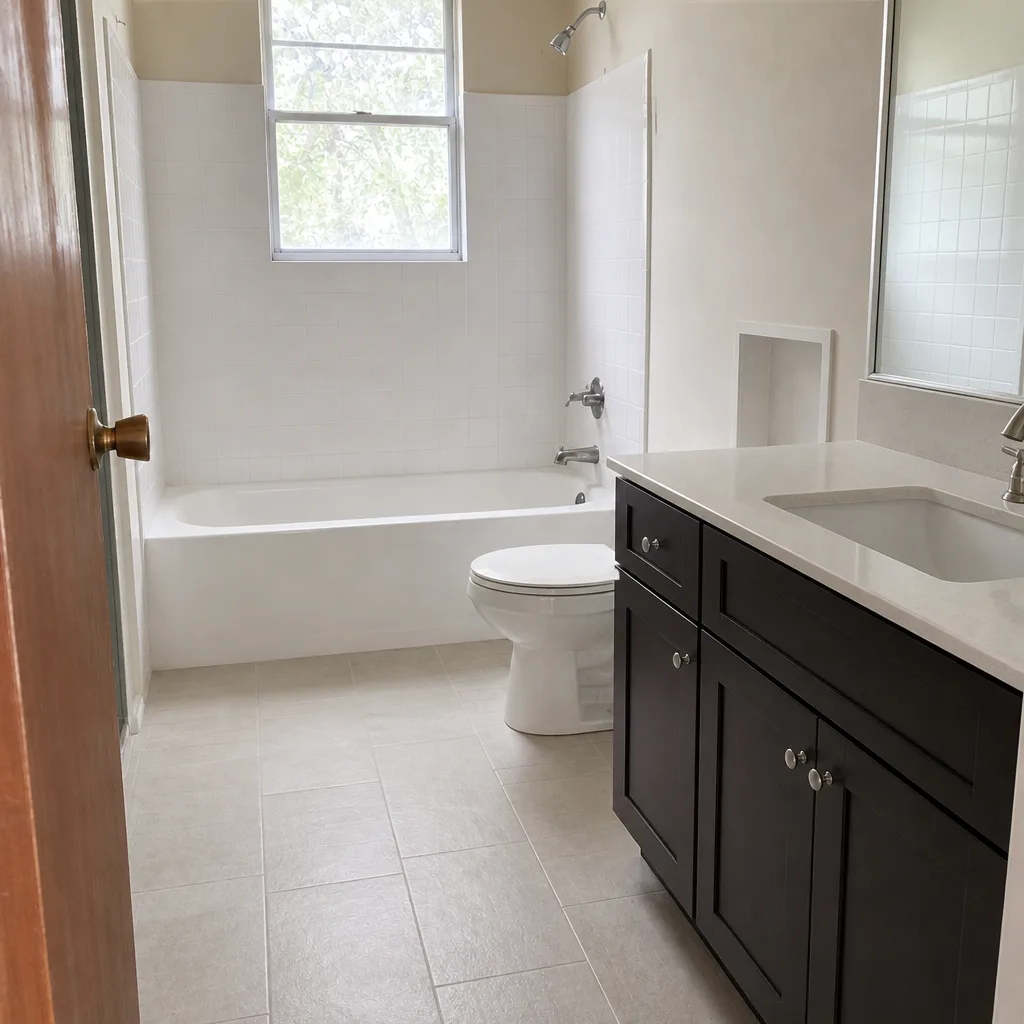 After
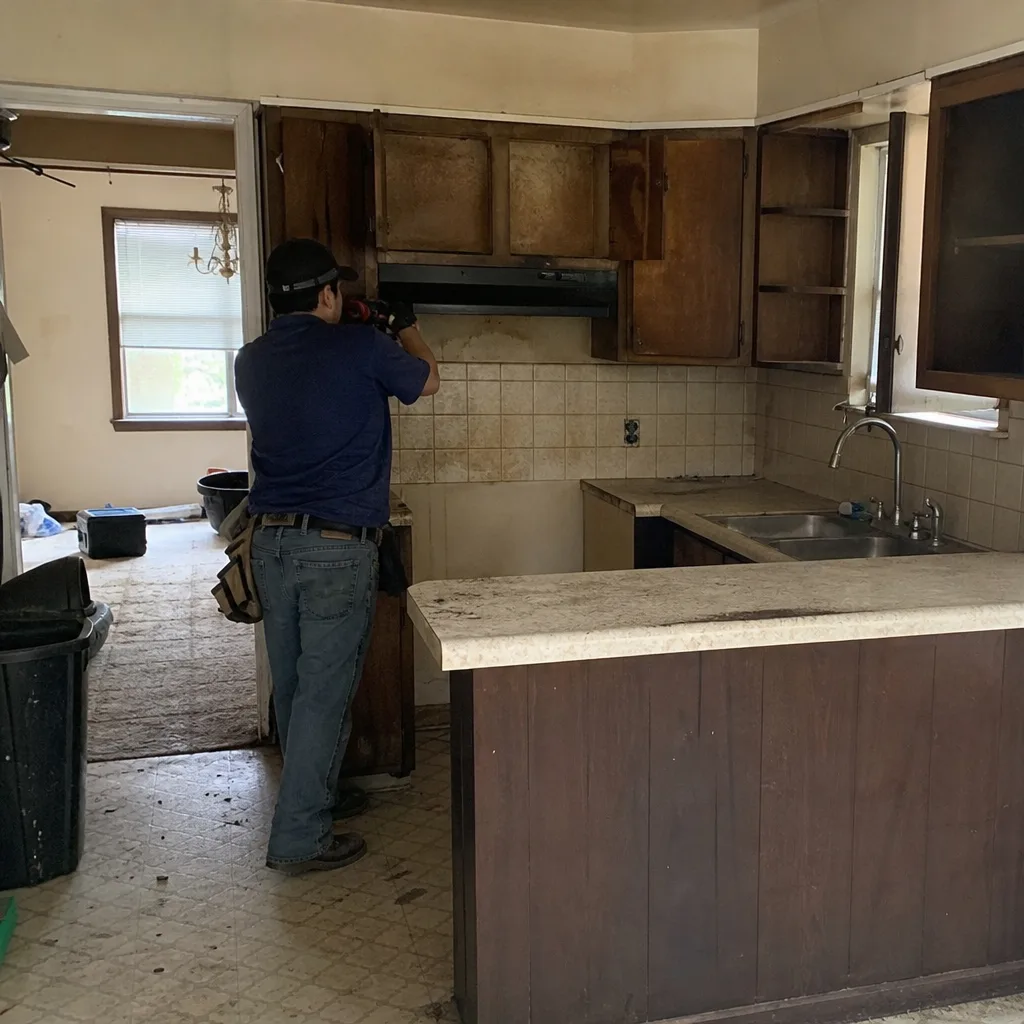
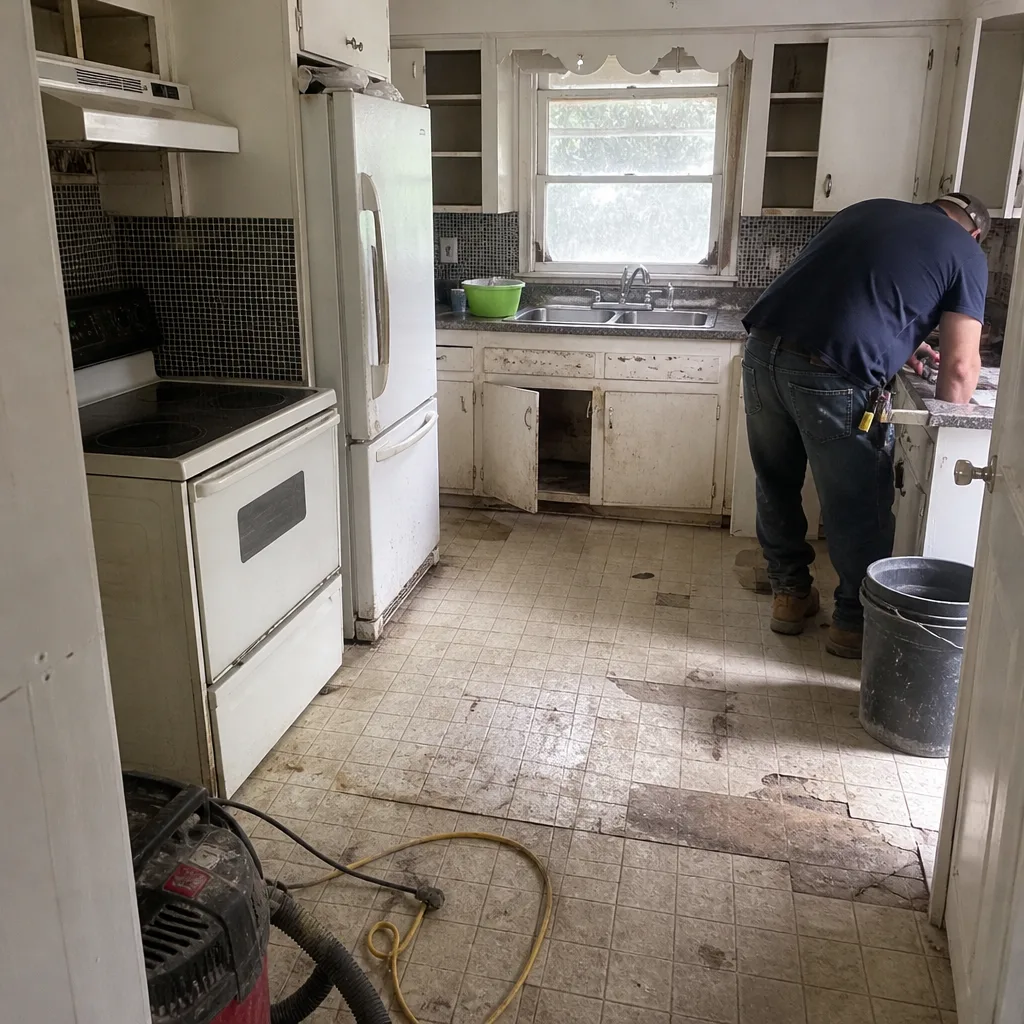 Before
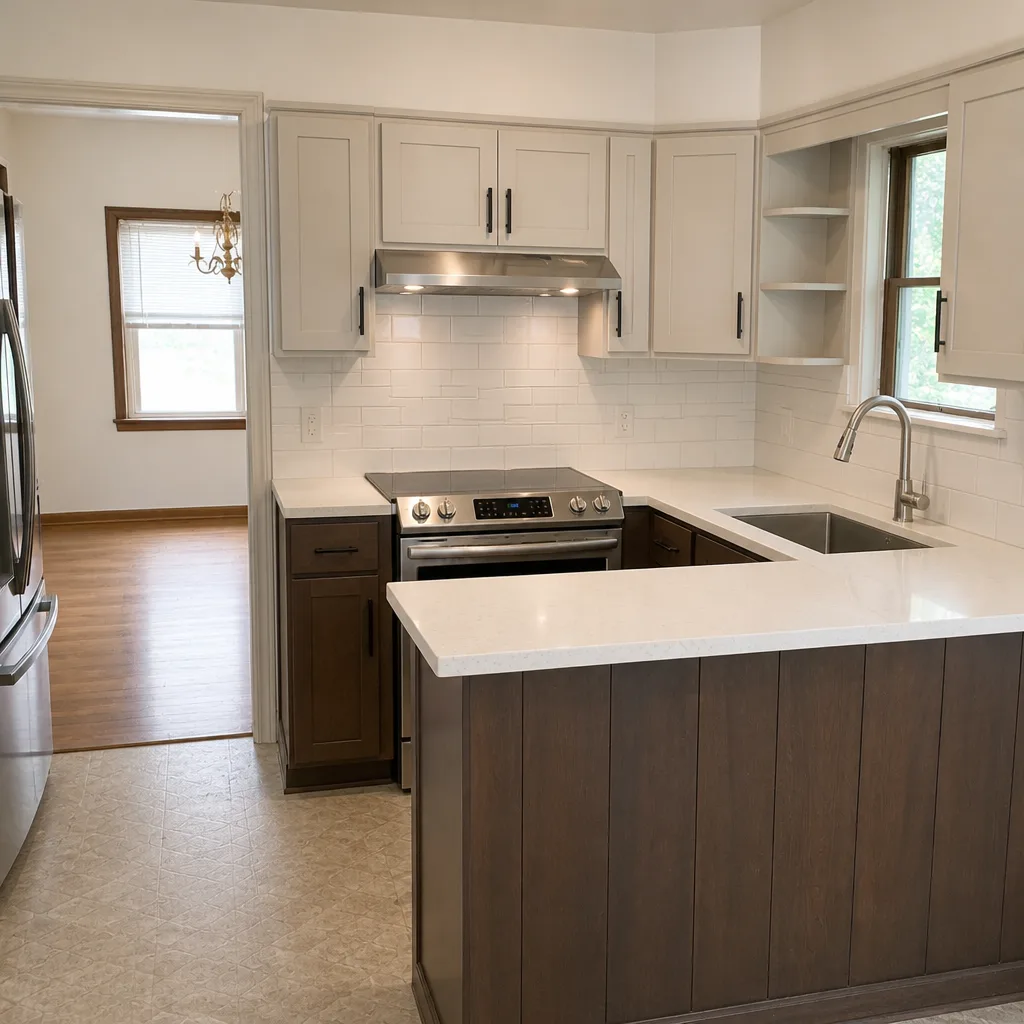
 After
 Before
 After
When to Call a Professional
Call a professional the moment you have a soft floor, a ceiling stain below the bathroom, a hollow wall tile, or visible corrosion around a supply valve. Call sooner if the home was built before 1985 and you’re considering removing old tile backer – disturbing certain materials is a job for a qualified abatement team, not a homeowner with a pry bar. There’s a real safety line here. High-voltage electrical, gas, and structural subfloor work all carry risk that a trained, insured crew is set up to manage. Rowan Construction Group Arlington offers free estimates in Arlington – call (844) 761-7521. Our technicians have up to 19 years of experience, they’re background-checked and uniformed, a live person answers the phone 24/7, and every visit ends with a documented photo record. That record is how we make sure the next visit starts from evidence, not from memory.
Frequently Asked Questions
A soft subfloor around the toilet base, and it’s the one most people miss because it hides under the vanity mat or a decorative rug. It usually means the wax ring has been leaking long enough to delaminate the subfloor, which adds $1,500 to $4,000 once it’s found. Call (844) 761-7521 for a free estimate – a written scope with a written price is standard.
Yes, for most scopes that move plumbing, electrical, or change the footprint or wall assembly. Pulling the permit isn’t optional; it’s how the work gets inspected to code. A bid that doesn’t mention the permit is a bid that’s leaving a step out. Ask to see the permit language in writing before signing.
If the stain only appears after a shower, the shower pan or the wall membrane is the likely source. If it appears near the toilet’s position on the ceiling below, the wax ring is a strong candidate. The single most useful test: don’t shower for two days and see if the stain dries. If it does, the shower is the source. Call (844) 761-7521 for an exact scope – estimates are free.
A qualified abatement inspection can add $1,500 to $6,000 to the scope, and it’s a genuine safety requirement. This is not a place to improvise. Our teams include the abatement line in the written scope before demolition so you know the number before work begins.
A full bath remodel with the warning-sign scope fully itemized usually runs six to ten weeks for the work, plus a week for the permits and pre-demolition inspections. Homes in Arlington with older material handling (abatement, drain stack upgrade) can push the timeline. We publish a written schedule with the quote so the timeline is a commitment, not a guess.
Not without a signed change order stating the price of the change. Every step is quoted flat with a written scope, and no work proceeds on a change until you sign. That discipline is why projects finish within a few percent of the number you agreed to. Call (844) 761-7521 to review a competitor’s quote side by side with ours at no charge.
The Bottom Line
The bathroom remodeling warning signs that change a budget are almost always the ones you can’t see from the doorway. The floor deflection, the hollow tile, the musty cabinet base, the exhausted fan, the corroded valve – all five are testable before a single bid is signed. Older Arlington homes bring vermiculite backer, galvanized supply, and cast-iron drain stacks into the mix, and the three demand inspection before demolition. A careful bid names all of it in writing, with a line item for the subfloor, the membrane, and the contingency behind each find. Under the Haven Standard, that’s the standard, and it’s the reason the finished price stays within a few percent of the agreed number. Call (844) 761-7521 to schedule your free estimate. If you’re planning larger work too, or want a second set of eyes on a quote, our team can connect you with the right independent local professional for Driveway & Pavers in Arlington, Fence Installation in Arlington, or a fresh look at the Rowan Construction Group Arlington home overview.
Written by the team at Rowan Construction Group Arlington.