Last updated November 18, 2026


Free written scope consultation - allowances, timeline, and change-order rules on paper before a single trade is scheduled
How to Hire a Construction Contractor in Arlington: A Step-by-Step Guide
Texas does not license general contractors at the state level. That means anyone in Arlington can print a business card tomorrow morning that says “general contractor,” take a deposit, and start framing the next day. No state exam, no state database, no state board to complain to when the work goes sideways. The homeowner’s vetting process is the only quality gate that exists. This guide walks through the documents to request, the questions to ask, and the exact contract language to demand, in order, before you sign anything.
Quick Answer
To hire a construction contractor in Arlington, verify four things before signing: proof the contractor carries general liability insurance naming you as additional insured, a written scope of work with line-item pricing instead of allowances, a contract with an enforceable change-order clause, and trade-specific licenses from any electrician or plumber on the job. Skip any of these and you carry the risk the contract should have carried.
Styles & brands we work with
- Kitchen remodeling
- Bathroom remodeling
- Home additions & ADU
- Roofing
- Windows & doors
- Driveway & pavers
- Fence
Table of Contents
- Why Texas Has No Statewide Licensure, and What That Means for You
- The Documents to Request Before the First Meeting
- Verifying Trade-Specific Licenses in Arlington
- How to Compare Bids That Use Different Formats
- The Five Change-Order Clauses Every Texas Contract Needs
- Red Flags in Contractor Communication
- Reference Check Questions That Surface Real Information
- Arlington Climate and Soil: What Local Conditions Do to Your Project
Why Texas Has No Statewide Licensure, and What That Means for You
The Texas Residential Construction Commission was abolished in 2009, and no replacement body took its place. There is no state-level registration for general contractors, no exam, and no disciplinary database where a homeowner can look up complaint history. The city of Arlington requires building permits for structural work, electrical, plumbing, and mechanical, and it inspects that work. The permit system checks the construction. It does not check whether the contractor will still answer the phone in eighteen months.
What fills the gap is documentation. A contractor who can produce an insurance certificate within ten minutes has an operation organized enough to produce one. A contractor who says “my insurance guy will send it next week” has told you something useful about how the rest of the project will run. In our experience across Arlington, the difference between a project that finishes within a few percent of its bid and one that drifts 25% over is almost never the crew’s skill. It’s whether the paperwork was real before the first shovel hit the ground.
Arlington adds one more layer: the city has its own permitting portal and its own inspection schedule, and a contractor who has not pulled many permits in Arlington will underestimate the timeline. Older neighborhoods like Interlochen and Dalworthington Gardens sit in different jurisdictions entirely, each with its own rules on setbacks and additions. Ask where your contractor has pulled permits in the last year and listen for specific addresses or subdivision names, not a vague “all over the Metroplex.”
The Documents to Request Before the First Meeting
Before anyone walks your property, ask for the paperwork. A serious Arlington contractor will have a packet ready. If the request feels inconvenient to them, that is the answer you needed.
- Certificate of insurance for general liability, with the homeowner named as additional insured. The certificate should carry the carrier’s name, the policy number, the coverage limits, and an expiration date that lands past the end of your project. Call the carrier to confirm it’s active.
- Workers’ compensation coverage or a written statement that they carry their own. If a worker is injured on your property and the contractor has no workers’ comp, your homeowner’s policy is the next stop for a claim.
- Trade-specific licenses for any electrician or plumber on the job. Texas does not license general contractors, but it does license the electricians and plumbers on your job site, and the roster should match names.
- A sample contract, not a handshake estimate. You want to read the change-order language, the payment schedule, and the warranty clause before the first meeting ends.
- A written example of a completed scope from a past job, so you can see how detailed their bids run.
These four documents turn a conversation about trust into a conversation about evidence. When we started Rowan Construction Group Arlington home, the founding discipline was a written price before any work starts, and the reason is simple: a customer with a written price in hand has something to compare, and a customer comparing is a customer who sleeps at night. Reviewing an estimate shouldn’t require a lawyer; it should require a folder.
Verifying Trade-Specific Licenses in Arlington
While general contractor licensure in Texas is a blank, the two trades that can burn your house down, or flood it, are tightly regulated.
Electricians (TECL)
Every electrician in Texas must hold a license issued by the Texas Department of Licensing and Regulation, verifiable through the TDLR online lookup tool by license number or name. Ask for the license number of the electrician scheduled for your job, and check that the license is active and not expired. If the contractor is a subcontractor, the name on the contract should match the name on the license.
Plumbers (RMP)
Plumbers in Texas need a Responsible Master Plumber (RMP) license on file with the Texas State Board of Plumbing Examiners, plus a separate plumbing contractor registration with the board. The RMP carries direct accountability for the plumbing work performed under their license. You can look it up on the board’s website by name or license number, and you should.
For roofing and general construction, licensure is absent, so the verification work shifts to insurance, workmanship warranty, and evidence of permits pulled with the city of Arlington on past projects. Roofing manufacturers matter here too: a GAF or Owens Corning installer who’s been factory-certified is a stronger signal than a generic roofer, because the certification requires ongoing training and a documented workmanship record. When you check a roofer, ask which manufacturer’s warranty program they’re enrolled in.
How to Compare Bids That Use Different Formats
The biggest trap in comparing bids is that three bids rarely use the same format. One uses allowances for tile and fixtures. Another specifies brands. A third gives a vague lump-sum number. You cannot compare them without converting them to the same format, and most homeowners skip this step and pick the lowest number. That number is almost never the lowest final cost.
Here’s how to normalize an allowance-heavy bid:
- Find every line marked “allowance.” Common in kitchens (tile, cabinet, countertop, appliances) and bathrooms (fixtures, tile, vanity).
- Fill each allowance with a mid-market material price for that item in Arlington. A mid-market cabinet for a 10×10 kitchen runs to a specific number, not a vague “up to $8,000.” Pick the number and write it in.
- Add your filled-in allowances to the base bid. That is the true low-end number.
- Add 15% to the total to account for mid-project upgrades, because allowance-heavy bids almost always come with change orders for the difference between the allowance and what you actually pick.
- Compare that adjusted number to a flat, line-item bid with named brands. The flat bid usually wins, and if it doesn’t, the price gap is real instead of hidden.
What “named brands” actually means: cabinets from KraftMaid or Wellborn, countertops from Cambria or Caesarstone, roofing from GAF or Owens Corning, fixtures from Kohler or Toto, pavers from Belgard or Techo-Bloc. A quote that names brands is a quote you can screenshot and compare. A quote that says “up to builder standard” is a quote with a hole in it. If you’re comparing scope for a Driveway & Pavers in Arlington project, ask specifically for the paver manufacturer and the base depth in inches, because those two numbers drive cost far more than square footage.
The Five Change-Order Clauses Every Texas Contract Needs
A contract that does not have an enforceable change-order clause is a contract where the price can move whenever the contractor decides it should. Under Texas law, the following five clauses should appear in any residential construction contract to protect both sides:
- Written-change requirement. A single sentence stating that no additional work proceeds and no additional cost is owed unless the change is documented in a written, signed change order. Verbal approval of anything does not bind the homeowner.
- Scope-and-price for each change. Every change order must specify exactly what is being added or removed and exactly what it costs, signed and dated by both parties before work begins.
- Timeline adjustment clause. State whether the schedule extends by the duration of the added work, and by exactly how much.
- Payment schedule tied to milestones. A contract that asks for a large deposit upfront (over 10%) shifts the risk to you. Milestone-based payments tied to completed, inspected work keep it balanced.
- Warranty clause with a defined duration. A one-year workmanship warranty in writing, plus a manufacturer’s warranty pass-through for the products used.
The discipline of a signed change order is the whole reason projects finish within a few percent of their agreed cost. We’ve watched bids drift when a contractor “just handles” a mid-project change and true-up paperwork comes later; it almost never works in the homeowner’s favor. Under Clause 1 of the Haven Standard, the price is written before anyone starts, and any change is signed before it moves. Get that sentence into your contract.
Red Flags in Contractor Communication
Most failed projects show warning signs in the first three conversations. Look for these:
- A vague scope of work. “We’ll handle the kitchen” is not a scope. You want line items for every phase: demo, rough electrical, plumbing, drywall, paint, cabinets, countertop, floor, trim, punch list.
- A verbal price agreement. A phone call or a napkin is not a bid. If there is no written price before work starts, walk away.
- Pressure to waive the three-day right of rescission. Texas gives homeowners three business days to cancel a home-solicited contract over $25. Any contractor who asks you to sign a waiver of that right is telling you what they’ll do when a problem erupts later.
- Cash-only pricing with no receipt. Cash is fine. No receipt is not, because there’s no proof of payment when the invoice dispute arrives.
- No physical address on the contract. A contractor who won’t put an address on the paperwork is difficult to serve with notice later, and the Texas courts require an address on residential construction contracts.
- Larger upfront deposit pressure. A demand for 50% or more before work begins usually signals cash-flow problems. Standard deposits in Arlington run much lower.
- No permit pulled. If the project touches structure, plumbing, or electrical, permits are required in Arlington. A contractor who offers to “skip the permit to save you money” is offering to skip the inspection too.
Reference Check Questions That Surface Real Information
“Were you happy with the work” gets you “yes” every time, including from the customer who is currently suing. Ask these instead, on the last three references the contractor provided:
- “What was the final cost compared to the original bid, and what caused the difference?”
- “What was the actual completion date versus the one in the contract? Was there a written change order for the delay?”
- “Did they pull permits, and did the inspector find anything?”
- “Who showed up on day one, and was the same crew on day forty?”
- “What did the contractor communicate to you when a problem came up, and how did they communicate it?”
- “If you had to hire them again, what would you insist on being different?”
The first question alone filters out half the contractors who provided references in a hurry. A contractor with a documented record can point to the number and say why it moved. A contractor without one will say “well, that job had some surprises.” Listen for the word “surprise” and call the next reference.
Arlington Climate and Soil: What Local Conditions Do to Your Project
North Texas weather leaves marks on construction in ways a national guide won’t mention. Arlington sits on expansive clay soils that swell in wet springs and shrink in dry summers, which is why foundation work, patio slabs, and additions here need engineered footings rather than a direct copy of a plan drawn for sandy Florida soil. When we walk a slab or an addition project in Arlington, the first question is when the soil report was done and what it found.
Hail season runs from March through June, and the standard asphalt shingle in Arlington should be a Class 3 or Class 4 impact-rated product. If you’re re-roofing and your contractor is quoting a standard 3-tab shingle in 2026, ask them why. A Tamko or Boral impact-rated line will cost more upfront and less the first time hail visits your roof. Meanwhile, the freeze event of February 2021 pushed most of the region toward upgraded attic insulation and freeze-protected plumbing rough-in, and while no one has forgotten, plenty of homes in Arlington still have the original foam pipe insulation and a hose bib that was never replaced. Those are the small items a careful contractor points out before they turn into a February emergency.
For additions and accessory dwelling units, Arlington has specific zoning rules for setbacks, height, and lot coverage. A contractor who pulls permits for additions in Arlington regularly knows the difference between an Home Additions & ADU in Arlington project that sails through and one that sits in review for four months. Ask how long the last permit they pulled took to issue, and expect a specific number of days.
Common Mistakes to Avoid
- Hiring off a single bid. A single bid tells you one number with no context. Three bids, converted to the same format, tell you a market price.
- Ignoring the insurance certificate. A certificate that lists the contractor’s name but doesn’t name you as additional insured is a piece of paper. Confirm the carrier first.
- Signing before the warranty clause is in. A one-year workmanship warranty should be printed, not promised. If it isn’t in the contract, it doesn’t exist.
- Waiving the three-day rescission right. No honest contractor will ask you to sign that waiver. Any one who does has told you everything you need to know.
- Comparing allowances to flat prices. An $80,000 bid with $18,000 in allowances is not an $80,000 project. Fill in the allowances and compare the real number.
- Not verifying the permit portal. Arlington’s permit system is public. Search the contractor’s active permits before you sign, and specifically look for active inspections in the last twelve months.
- Skipping the reference follow-up. Calling references is polite. Asking them what the final cost was is useful. Do the second one.
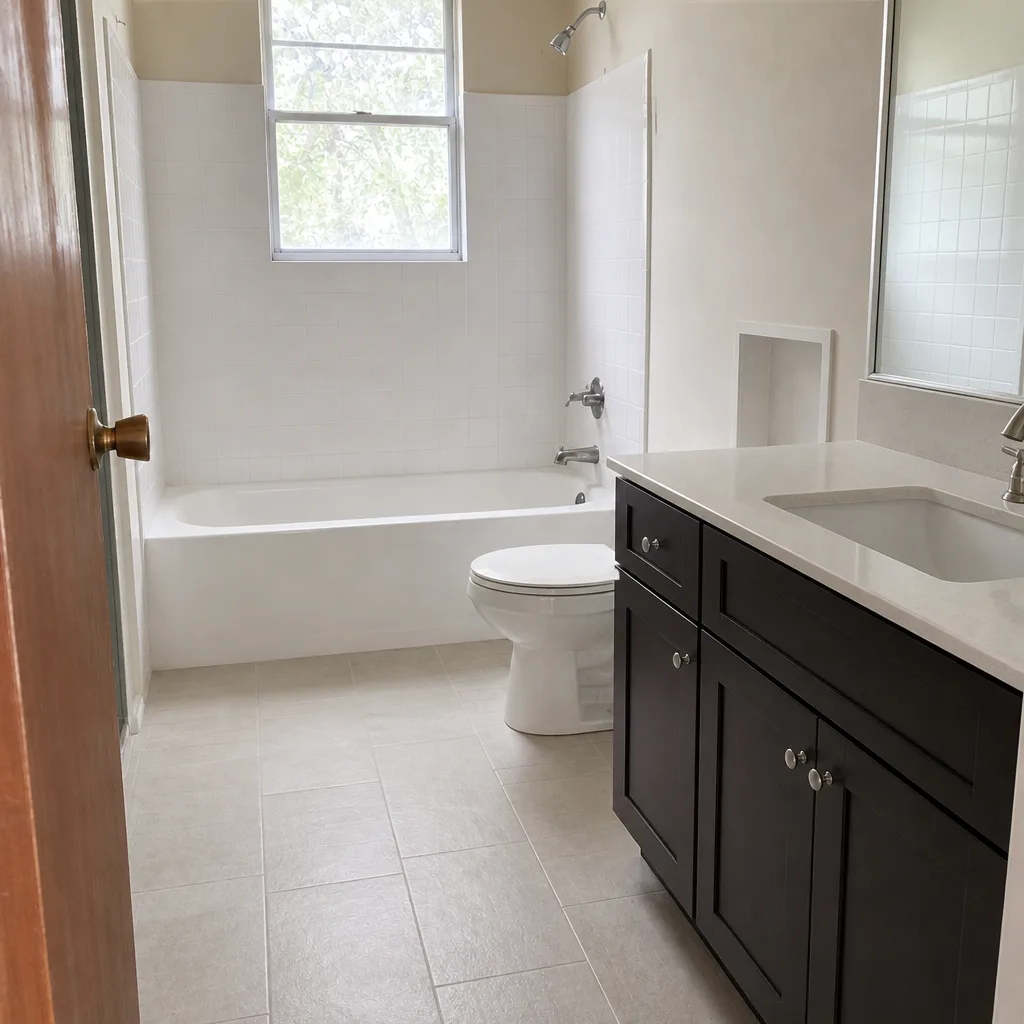
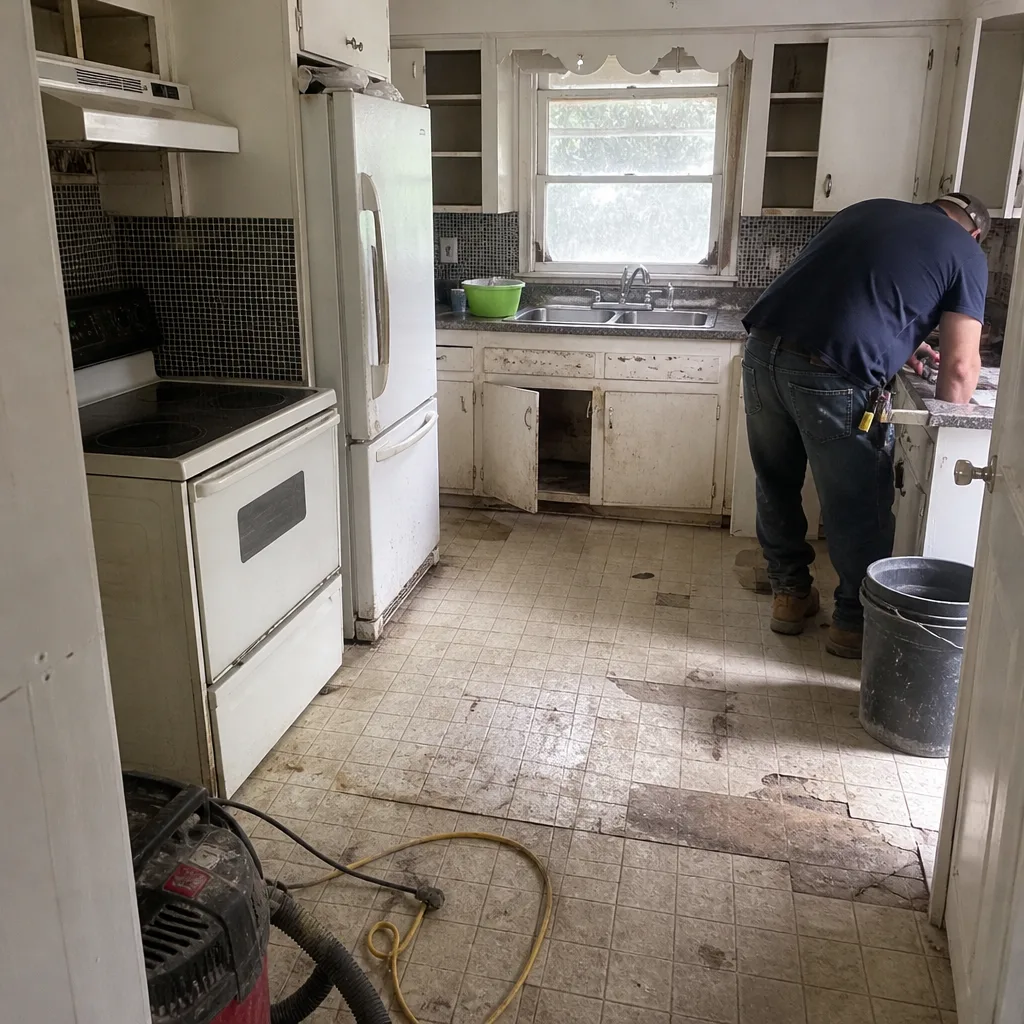
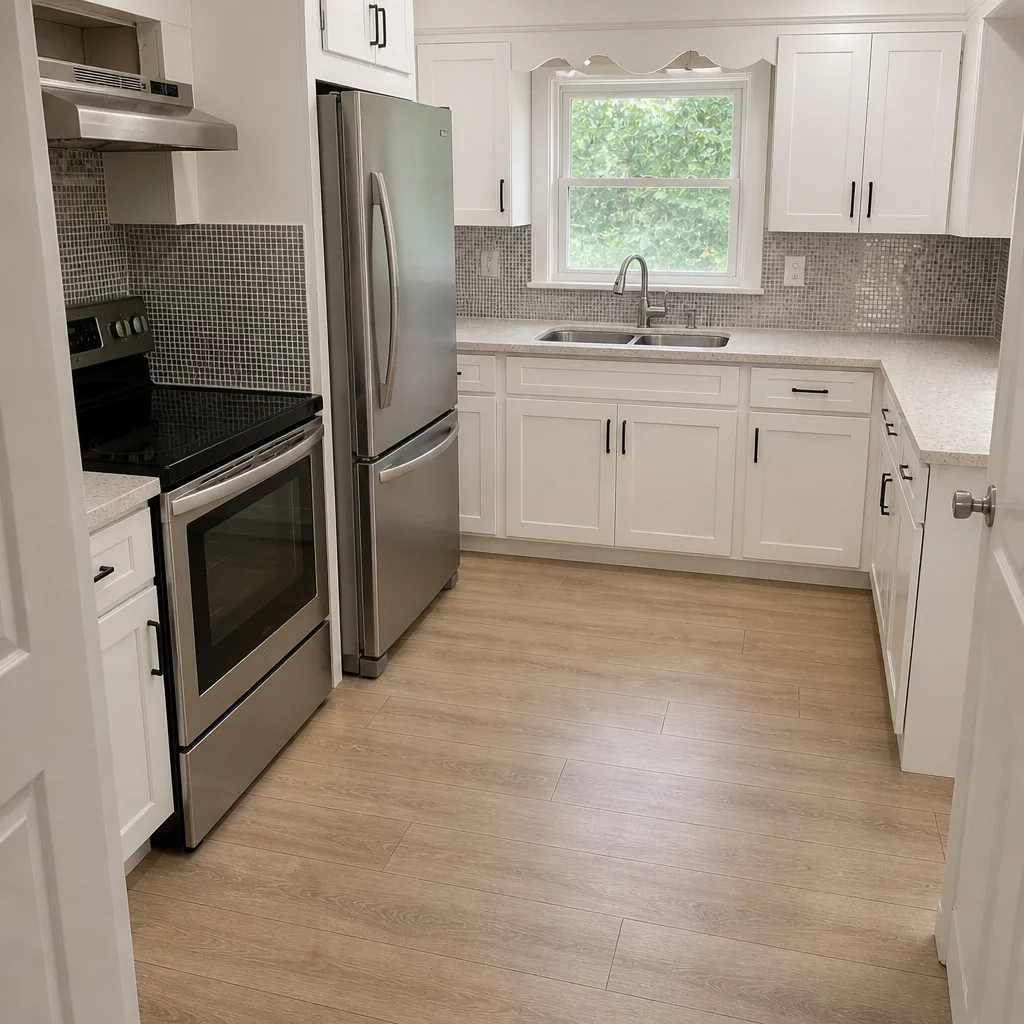
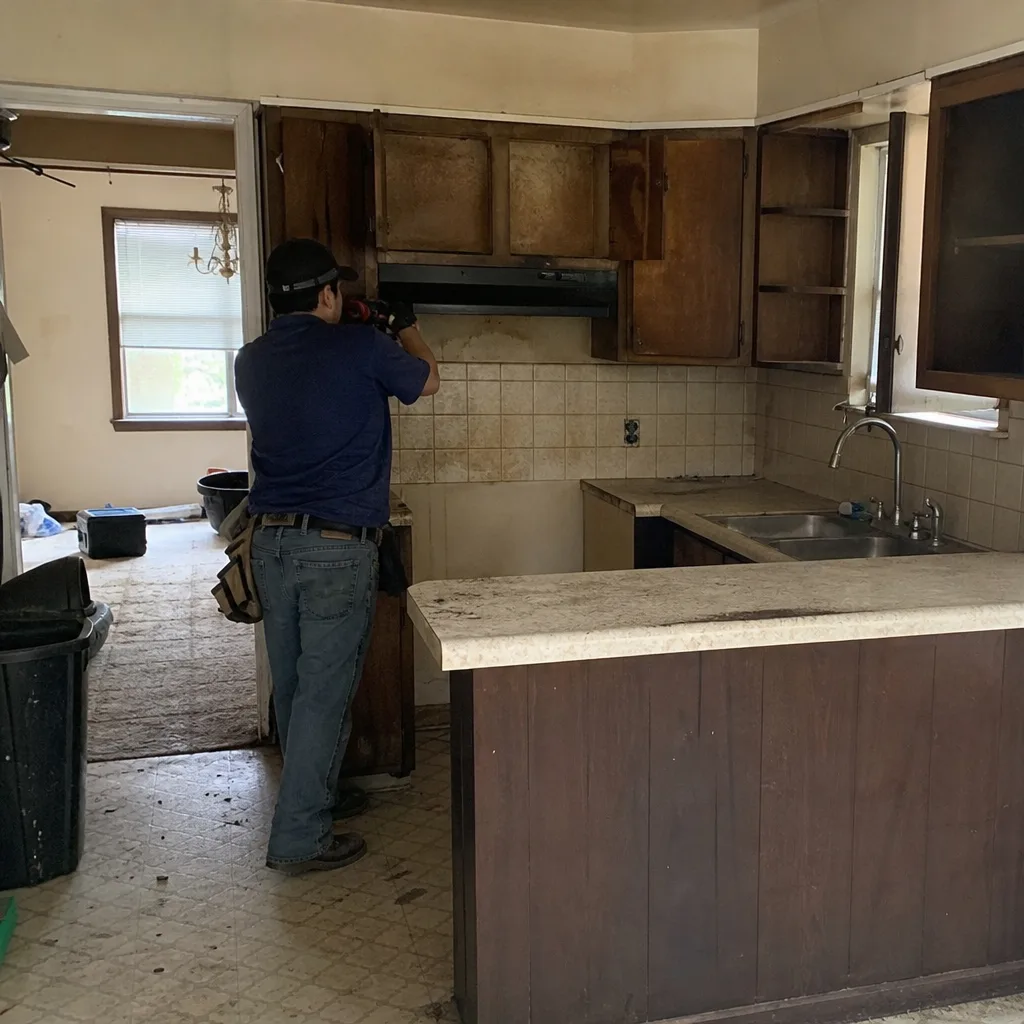
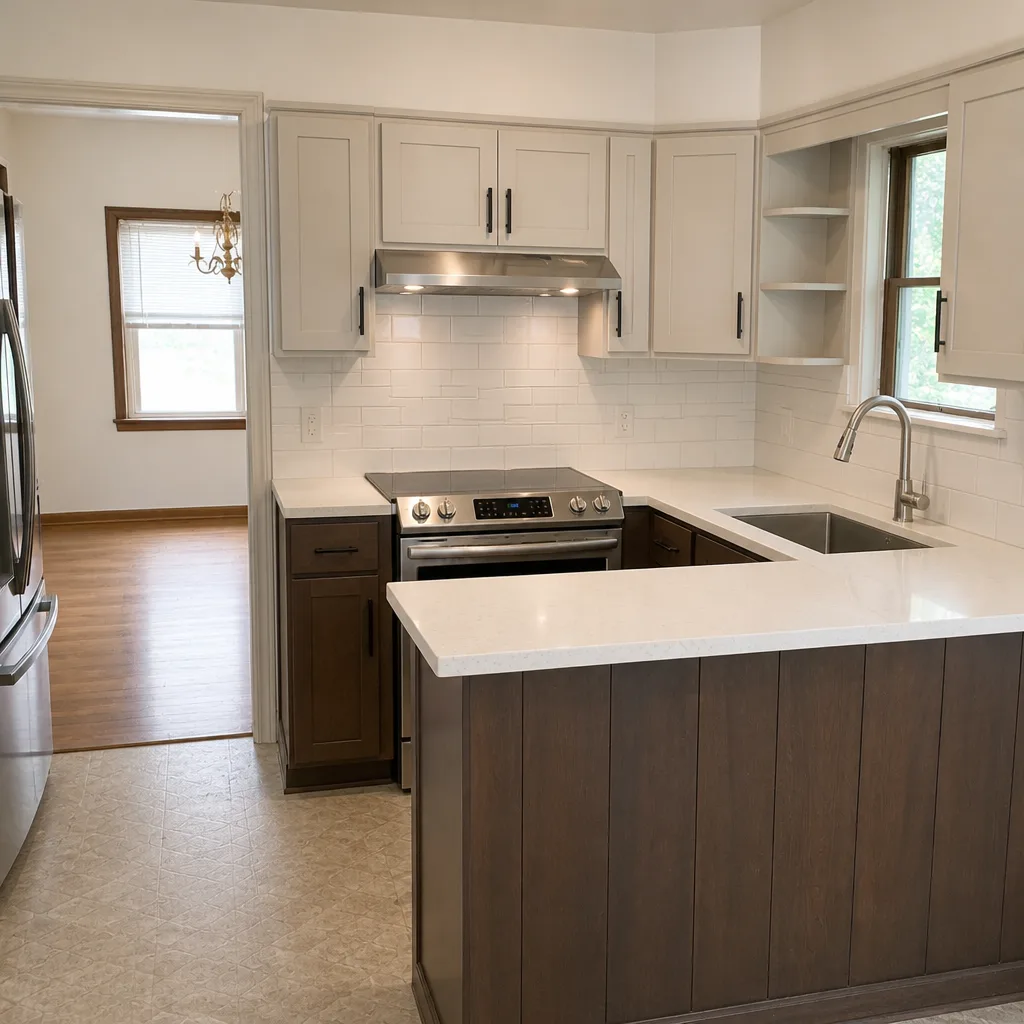
See the difference
 Before
 After
 Before
 After
 Before
 After
When to Call a Professional
Some projects are paperwork-heavy enough that the DIY route is a false economy. Structural changes to a load-bearing wall, additions and ADUs that touch Arlington zoning, any electrical panel work beyond swapping a breaker, plumbing rough-in for a new bathroom, and roofing work above a single story all warrant a call. The reason isn’t that the work is impossible to learn; it’s that the permit, the inspection, the warranty, and the general liability coverage that come with a professional crew are the actual deliverables, and they don’t come with a YouTube tutorial. Fence installation, driveway pavers, and roofing all have specific materials-and-base requirements that are easy to miss without the trade’s daily experience. Rowan Construction Group Arlington offers free estimates in Arlington – call (844) 761-7521 to schedule one. We bring a written price, a written scope, and a written warranty to every estimate, and we’ll review any competitor’s bid line by line at no charge so you can compare like for like.
Frequently Asked Questions
General contractors in Arlington typically add 15-25% to the cost of the trades they manage, or charge a flat project management fee that ranges from a few thousand dollars on a bathroom to substantially more on an addition. The line-item approach is the one you want in writing, because it lets you see what labor and materials actually cost before the markup. Ask for a written, line-item estimate before you sign; under our Haven Standard, the written price comes before any work starts, so nothing about the number is a surprise.
Texas does not issue a general contractor’s license, so there’s no state credential to verify for general construction work. What you can verify: electricians must hold a TECL license through the Texas Department of Licensing and Regulation, and plumbers need an RMP license through the Texas State Board of Plumbing Examiners. Ask for both license numbers in writing and look them up on the state registries before signing. Call (844) 761-7521 and we’ll walk you through what to verify, even if you don’t hire us.
A Texas residential construction contract should include a written scope with line items, a written change-order clause requiring signed approval before any additional work proceeds, a payment schedule tied to milestones rather than a large upfront deposit, a named warranty duration (a one-year workmanship warranty is standard), and the contractor’s physical business address. Whether or not it includes all five, the contract should also spell out who is responsible for pulling permits and scheduling inspections. Estimates in Arlington are free – call (844) 761-7521.
Yes, but you should not, and a contractor who asks you to sign the waiver is a red flag. Texas law gives homeowners three business days to cancel a home-solicited contract over $25, and the waiver must be signed separately from the contract itself. Waiving that right removes your ability to back out if you learn something about the contractor in the 72 hours after signing. If a quote feels rushed enough that a waiver is on the table, that’s the moment to slow down.
Fill every allowance with a mid-market material price, add the result to the base bid, then add 15% for mid-project upgrades before comparing. That converted number is the true like-for-like comparison. A quote that names a brand (a specified Kohler sink, a Tamko shingle, a Caesarstone slab) is a quote you can screenshot and compare. If your bid sheet still has “up to builder standard” for a major line item, ask for the specific brand before you sign anything.
A full kitchen remodel in Arlington typically runs 6-10 weeks from demo to punch list, and a bathroom remodel runs 3-5 weeks, assuming permits are pulled and inspections are scheduled on the city’s timeline. The variable that moves the schedule most is material lead time, especially cabinetry and stone countertops. Get the schedule in writing with milestones, and ask specifically which of those milestones trigger a payment. We answer calls live and will give you a written timeline with your free estimate – (844) 761-7521.
Ask for the certificate of insurance directly, then call the insurance carrier’s number printed on the certificate to confirm it’s active and that the homeowner is listed as additional insured. Do not accept a screenshot, and do not accept “my agent will send it over.” A valid certificate includes the carrier’s name, the policy number, the coverage limits, and an expiration date that lands past your project’s completion date.
The Bottom Line
Hiring a construction contractor in Arlington comes down to documentation. Verify insurance before you meet, verify trade licenses for electricians and plumbers, convert every bid to the same format before comparing numbers, and demand five change-order clauses in the contract. Ask reference questions that surface the final cost versus the original bid. Pull the Arlington permit records on your contractor before you sign. If the paperwork is real, the project can be too. If any step feels rushed, the guide has told you something useful about the next ninety days. Call (844) 761-7521 for a free estimate on any project in Arlington, and bring a competitor’s quote if you have one; we’ll review it line by line at no charge.
Written by the team at Rowan Construction Group Arlington.