Last updated November 18, 2026

Free written scope consultation - allowances, timeline, and change-order rules on paper before a single trade is scheduled
Driveway & Pavers Troubleshooting: Common Problems and How to Fix Them
Here’s the number that should change how you read every driveway quote: re-leveling one sunken paver section runs about $200 if the contractor just lifts and re-sands it. Done correctly, after diagnosing why the base washed out, it runs closer to $1,800. The cheap version looks finished in an afternoon and fails again in 18 to 36 months, because nothing was done about the water. In Arlington, where summer storms drop two inches in under an hour on black clay soil, that failure cycle is almost predictable. This guide maps every visible driveway symptom to its buried cause, so you can tell a real repair from a temporary patch before you sign anything.
Quick Answer
Sinking pavers are almost always a symptom of a base problem, not a paver problem. Loose or missing joint sand, washouts along the edge, and full-face cracks usually trace back to one of three root causes: failed base compaction, a broken edge restraint, or poor drainage moving water under the surface. The right fix treats the cause first, then re-levels and re-sands. Repair scopes in Arlington typically start around $200 to $400 for a localized reset and run $1,200 to $2,500 for a full base-and-drainage correction on a section that has washed out.
Styles & brands we work with
- Kitchen remodeling
- Bathroom remodeling
- Home additions & ADU
- Roofing
- Windows & doors
- Driveway & pavers
- Fence
Table of Contents
- The Three Causes of a Sinking Paver (and How to Tell Them Apart)
- Efflorescence: What the White Staining Actually Is
- Joint Sand Erosion vs. Displacement: Two Problems That Look Identical
- Cracked Pavers: Structural vs. Cosmetic
- Drainage and Storm Water in Arlington
- What to Gather Before You Call a Contractor
- What a Correct Repair Actually Involves
The Three Causes of a Sinking Paver (and How to Tell Them Apart)
Sinking is not one problem. It’s a symptom with three common root causes, and each one requires a different repair scope. Getting the diagnosis wrong is how homeowners end up paying for the same repair twice.
In our experience across Arlington driveways, the causes break down like this:
- Base compaction failure: The layer of crushed stone under the pavers (the base) was never compacted in proper lifts, usually two to four inches at a time. Density drifts, pavers rock and settle in a low area over two to five years.
- Edge restraint failure: The border that holds the outer row of pavers in place has loosened, tilted, or separated. Once the edge gives, the barrel of the driveway spreads outward and the field settles.
- Subsurface drainage failure: Water is pooling under the pavers or running beneath the edge instead of away from the driveway. On north Texas clay, water has nowhere to drain, so the soil under the base expands and shrinks and the base moves with it.
Here’s the diagnostic sequence we walk on every assessment, and you can run the same three checks yourself:
- Walk and tap. Step on the low section. A hollow or rocking sound means the base beneath has voids. A firm step down without rocking suggests the base is intact and the joint sand or edge is the issue.
- Check the edge. Look at the outer border row on the downslope side. If you can slip a finger under the restraint or see daylight between the border and the field, the edge is the culprit and the field is moving because of it.
- Watch it in rain. After a storm, note where the water stands and where it leaves the driveway. Water sheeting over the top and running off cleanly points to the base or edge. Water disappearing into a joint and reappearing in the yard points to a drainage problem.
A repaired base with a failed edge restraint will sink again. A repaired edge with a drainage problem will sink again. The scope has to match the cause, and that’s the whole reason a written scope matters before anyone picks up a tool. If you’re evaluating a driveway replacement rather than a repair, our Driveway & Pavers in Arlington page walks through base thickness and permitting for new installs.
Efflorescence: What the White Staining Actually Is
Efflorescence is a white, powdery, or crusty mineral deposit that appears on the surface of concrete pavers. It is not mold, and it is not a sign of a defective paver. It’s water-soluble salts, mostly calcium hydroxide, migrating to the surface with moisture and crystallizing as the water evaporates. The salt is in the cement, in the base, and in the soil; the water carries it, and the sun leaves it behind.
Which brings us to the part most product shelves get wrong. Two categories of product are sold as efflorescence removers, and only one of them actually works long term:
- Efflorescence removers are mild acids, usually buffered hydrochloric or phosphoric, that chemically dissolve the salt deposit. They work, and they work on the mineral rather than the surface.
- Bleach-based cleaners oxidize the visible stain for a few weeks. The salt is still there. On the next wet-then-dry cycle it comes back, and the homeowner concludes the efflorescence is unfixable when it was never removed in the first place.
A note for Arlington conditions: efflorescence tends to peak after the wet spring, when the ground saturates and then dries hard in the first hot week of June. If the staining appears every year and won’t go away, the salts are being drawn from deeper in the base, and the fix is drainage in front of the pavers, not another acid wash.
Joint Sand Erosion vs. Displacement: Two Problems That Look Identical
Missing joint sand is one of the most common paver complaints, and it presents two ways that look the same from standing height but demand completely different repairs.
Joint sand erosion is sand leaving the joint entirely, usually from wind, rain wash, or the pressure of a car tire rolling over a joint. The joint is empty. The pavers themselves are stable. The fix is refilling with the correct joint sand, and for a driveway exposed to weather and vehicle weight, the right product is polymeric sand (a sand with a binder that cures and resists washout). After a polymeric refill, joints stay filled for multiple seasons instead of a few weeks.
Joint sand displacement is a drainage problem in disguise. The sand is being pushed out from below or from the side by water moving under the driveway. The joints keep draining themselves after every storm because water is lifting the sand and carrying it downstream. You refill them with polymeric sand, and within one or two wet seasons the joints are open again. The intervention is not more sand; it’s re-grading the surrounding grade and, where needed, adding a drainage channel or French drain along the low edge to move water away from the driveway.
To tell them apart, watch the joints after a heavy rain. If they drain cleanly from the top down and stay filled for a season, you have erosion. If water pushes upward or the sand collects at the bottom edge of the driveway, you have displacement, and a re-grading conversation is coming.
Cracked Pavers: Structural vs. Cosmetic
A cracked paver is either a structural signal or an isolated cosmetic defect, and the crack pattern tells you which.
- Corner cracks – a chunk broken off one corner, often from a heavy load or a bad lift during install – are usually cosmetic. The paver is intact around it and the base is doing its job. Replacing the single unit is the whole repair.
- Full-face fractures – a crack running clean across the paver’s top from edge to edge – almost always indicate something moving underneath. That pattern traces to a full-face load flexing the unit over a void in the base. A cluster of full-face fractures in one area is close to diagnostic of base failure.
- Cracked borders and edge pavers point back to the edge restraint. The border is taking lateral load it wasn’t meant to take because the restraint has loosened.
The sequence matters: replacing a cracked paver without addressing the void below is a three-month fix, not a long-term one. The same principle applies to fence posts in the same soil, which is why we talk about base preparation the same way on our Fence Installation in Arlington page. On this site it’s soil and water that drive the repair bill either way.
Drainage and Storm Water in Arlington
Arlington sits on expansive clay soil, the kind that swells with water and shrinks as it dries. That single fact drives most driveway paver failures here. In a wet cycle the clay under a driveway expands and pushes the base up. In a dry cycle it contracts and pulls away, leaving voids under the pavers. Repeat that cycle for five to seven years and the compacted base loosens, joints open, and low sections appear.
Which is why the diagnosis has to start with where the water comes from. Three drainage habits make the biggest difference on an Arlington driveway:
- Slope the yard toward the driveway, not into it. Gutters that discharge within three feet of the driveway push water under the edge. Extend downspouts to six feet or more.
- Keep the grade along the driveway running away from the house and the slab. A grade that dips toward the driveway edge near the garage apron is the highest-risk spot in the whole layout.
- Check the slope across the driveway itself. A driveway should fall between 1% and 2% across its width so water exits the surface and doesn’t pool.
When drainage is the cause, the correct repair is a base and drain correction, not a re-sand. That distinction is the single most common reason a driveway repair fails on the second go-round.
What to Gather Before You Call a Contractor
The information you collect before the estimate call changes the estimate itself. Five items make the difference between a quote based on guessing and a quote based on evidence:
- Photos from before and after any previous repair. A photo of the driveway before last year’s re-sand tells the contractor whether the problem is in the same section or a new one.
- Age of the install and the base. A base that’s 15 years old with no maintenance history has a different expected condition than one that’s 3 years old.
- The original material brand. Belgard, Techo-Bloc, and other manufacturers stock matching pavers years later, which can mean a color and profile match instead of a mixed-in replacement unit.
- Records of the original install, if any. Contract, drawings, and any warranty paperwork tell you what base depth and material the installer used.
- A written note on when the problem first appeared. After the first storm of a season, after a gutter change, or gradually over years – the timing is a diagnostic clue.
This is why we make a photo record and a written scope a standard part of the process at Rowan Construction Group Arlington. The customer leaves any visit with documentation of what was found and what was proposed, and that’s what makes the second opinion on a competitor’s quote possible – free, line by line, whether or not you hire us.
What a Correct Repair Actually Involves
A repair that lasts starts with the base, not the sand. The scope of a proper correction on a washed-out section typically follows this sequence:
- Lift the affected pavers and stack them. Photograph the exposed base and edge.
- Excavate the failed base in lifts and remove any saturated clay or organic material.
- Re-grade the sub-base for drainage away from the driveway edge and house.
- Install crushed stone base in layered lifts, compacting each lift before the next. This is the step that gets skipped when a contractor “just re-levels.”
- Reset the edge restraint and secure it to the base. This is what stops the field from spreading again.
- Re-lay pavers, check slope, and fill joints with polymeric sand; cure per manufacturer spec before the first drive.
On an Arlington driveway, that sequence runs roughly $1,200 to $2,500 for a localized correction and more for a full section. A written, flat-price quote for the work – before anyone picks up a tool, with the same scope printed on the page – is the whole point of the discipline we build our work around. If you’re comparing a repair against a full replacement, our Rowan Construction Group Arlington home page covers the trades and standards behind every project, and our Home Additions & ADU in Arlington page covers how the same drainage thinking applies when you build onto a slab.
Common Mistakes to Avoid
- Re-sanding without checking for drainage. Filling the joints on a displaced-sand driveway buys a season at most, and it makes the next repair more expensive because the problem went undiagnosed.
- Bleaching efflorescence instead of removing it. The white returns on the next wet/dry cycle. An efflorescence remover dissolves the salt; a bleach cleaner only oxidizes the visible stain.
- Treating a full-face crack like a cosmetic defect. Replacing a single cracked unit over a void leaves the next paver to crack. Fix the base or the crack returns within a year.
- Ignoring the edge restraint. It’s the lower-outside corner of the entire driveway system and the first thing to fail after a hard freeze-thaw cycle in Arlington.
- Patching a low spot with sand or a paver “flag.” It’s a thin overlay that makes the low spot look flat today and hides the failing base below.
- Sealing a wet driveway. Sealant applied over efflorescence traps moisture and makes the white staining worse. Dry, cured surface only.
- Skipping the written scope. A repair sold by the hour or by the “section” without a line-item scope is a repair with no warranty and no way to compare quotes.
See the difference
 Before
 After
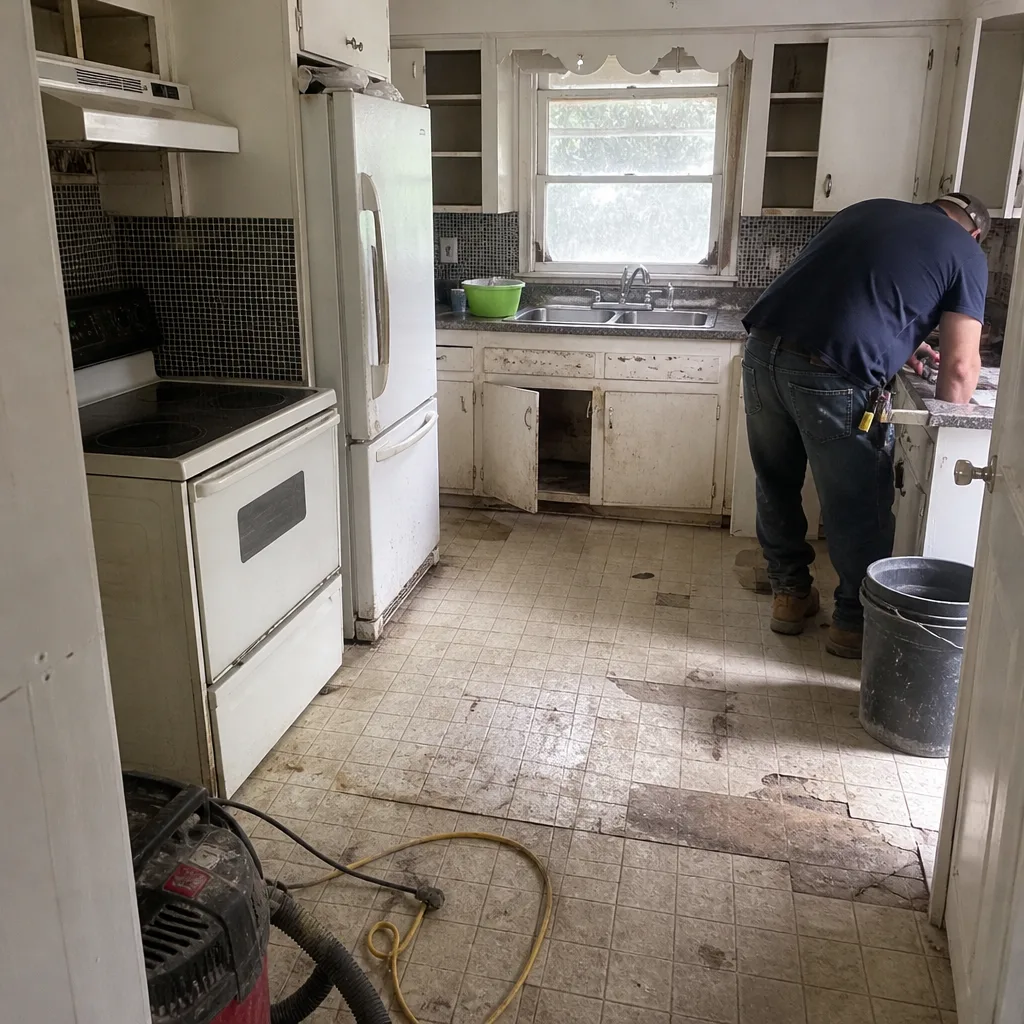 Before
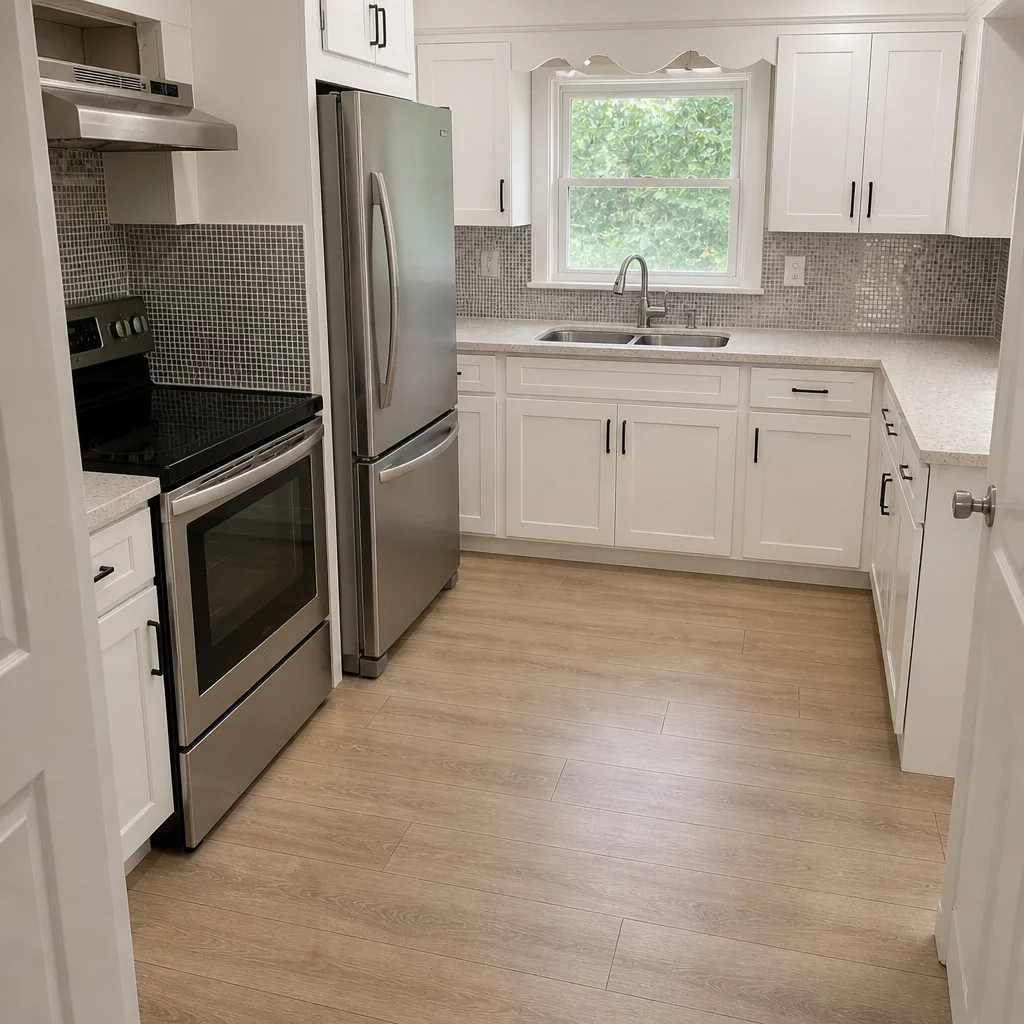 After
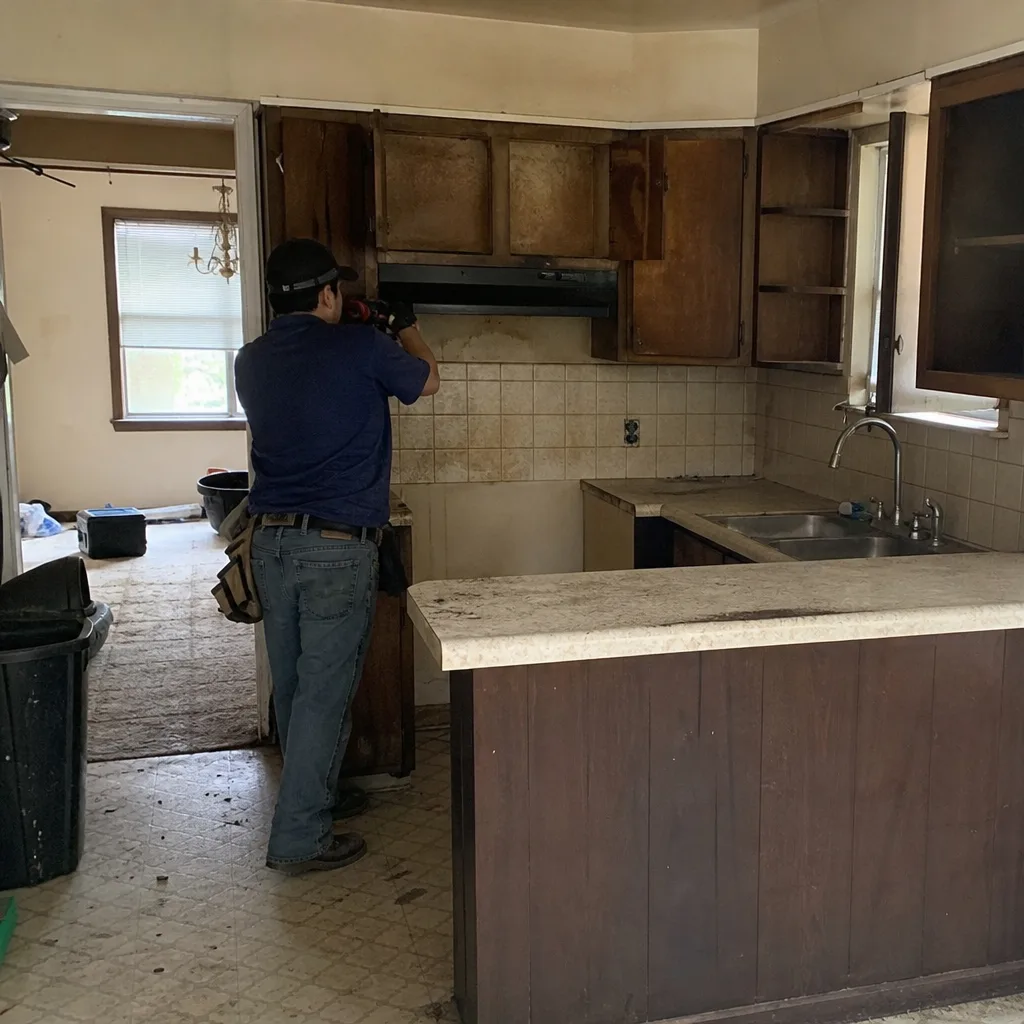 Before
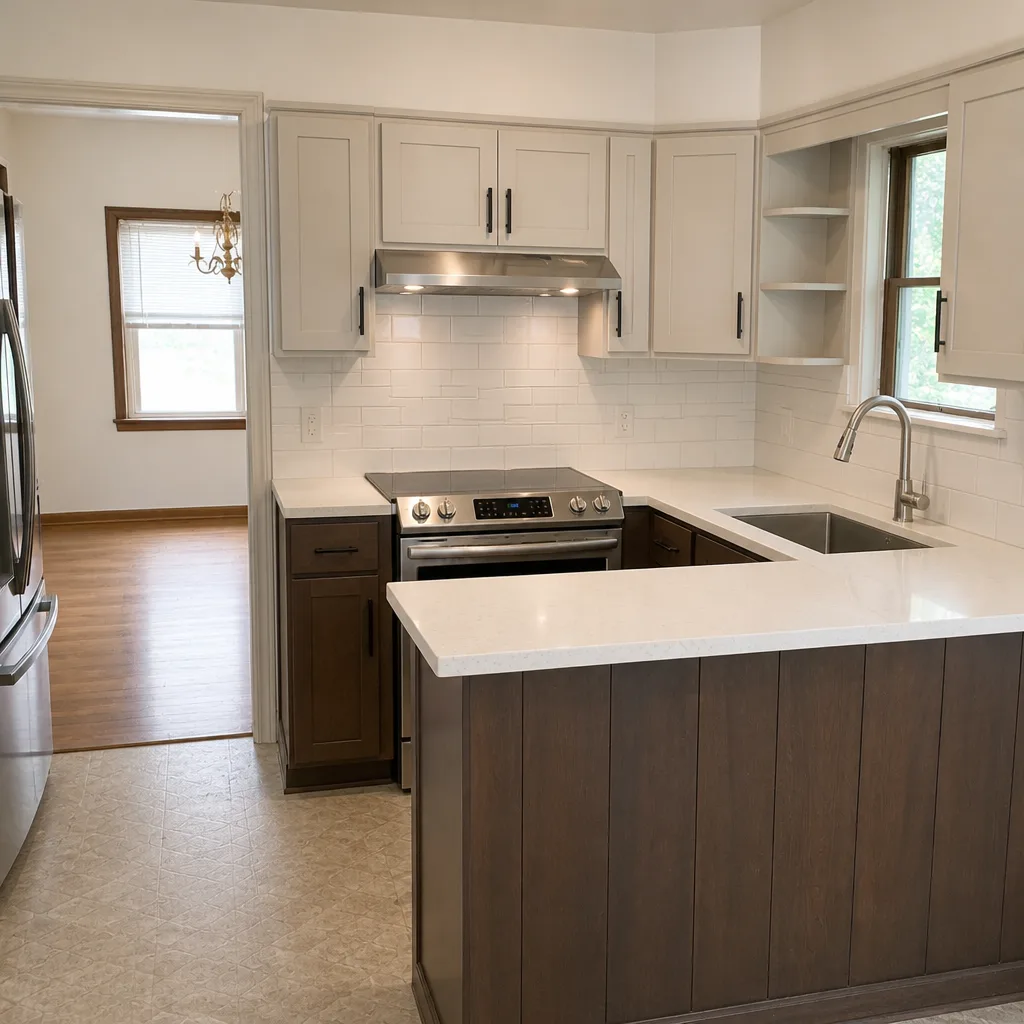 After
When to Call a Professional
Call a professional when you’re looking at one of three conditions: a sunken section wider than a few feet (that’s a base diagnosis, not a homeowner touch-up), standing water after every storm in the same spot (that’s a drainage correction), or full-face fractures clustered in one area (that’s a base failure indicator). Springs, sub-base excavation, edge restraint anchoring, and polymeric sand curing are all work that goes wrong quietly when rushed. A wrong repair here doesn’t show up until the next rainy season, at which point you’ve paid twice. Rowan Construction Group Arlington offers free estimates in Arlington – call (844) 761-7521 to schedule yours. Our technicians have up to 19 years of experience, crews are background-checked and uniformed, and every visit includes a documented photo record as a standard part of the service. Bring a written competitor’s estimate and we’ll review it line by line at no charge.
Frequently Asked Questions
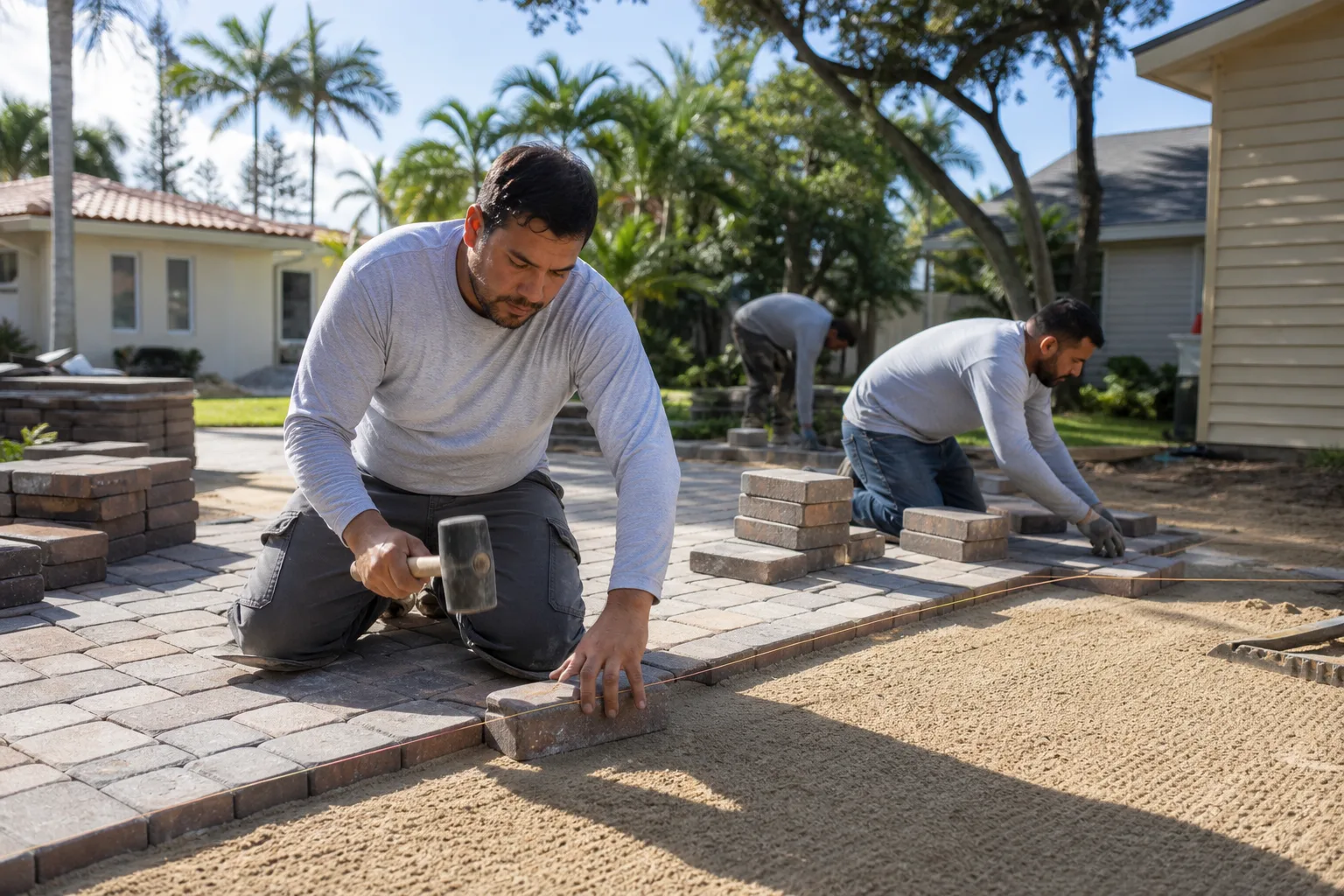
Fixing a localized sunken section in Arlington typically costs $200 to $400 for a simple lift-and-reset, and $1,200 to $2,500 when the base and drainage need correcting. The variable is what’s under the pavers, not the pavers themselves. Call (844) 761-7521 for an exact quote – estimates are free.
No, and that’s the point of a written scope. At Rowan Construction Group, no work proceeds on a change until a signed change order is in place – the price you agree to is the price you pay, within a few percent on every project. That’s why we write the flat price before anyone picks up a tool.
Permit requirements vary by scope and by the work’s impact on storm water runoff, so the written quote notes which permits apply and who pulls them. Repairs to existing hardscape often don’t require a permit; new installs that change the runoff footprint usually do. Ask during the estimate and it’s confirmed in writing.
Because efflorescence is a mineral migration from the base and soil, not a surface stain. Bleach cleaners oxidize the visible white but don’t remove the salt, so the next wet-dry cycle brings it back. An efflorescence remover treats the mineral, and if the recurrence is annual, the drainage under the driveway is worth looking at.
Yes, if the joints have eroded and the pavers themselves are firm. The job requires polymeric sand for a driveway (regular sand washes out faster), a dry surface, and careful filling and curing. If the sand keeps coming out within a season, that’s displacement, not erosion, and it’s a drainage fix rather than a sanding job.
Repair is the right call when the failure is localized to one section and the rest of the pavers are firm and level. Replacement is worth pricing when failures are scattered across the driveway or the base is failing everywhere. A written side-by-side repair and replacement quote makes the decision obvious in dollars, and we’ll review a competitor’s estimate against ours for free.
The Bottom Line
Every driveway paver problem has a visible symptom and a buried cause, and the fix that lasts is the one that treats the cause. Sinking pavers, efflorescence, joint sand that keeps disappearing, and full-face cracks almost always trace back to the base, the edge restraint, or drainage. The cheap repair is the one that treats the symptom, and in Arlington’s storm cycle it comes back in 18 to 36 months at double the cost. Ask for a written scope. Ask what’s under the pavers. And ask for the photo record of what the crew found. That’s the difference between a repair and a repeat.
Call (844) 761-7521 to schedule a free, no-hassle estimate for your Arlington driveway – written price before any work starts, every time, and a free second opinion on any written estimate you’re already holding.
Written by the team at Rowan Construction Group Arlington.